




Search
Related News
- 00
0000-00
How digital transformation improves aerospace fastener traceability - 00
0000-00
GE Aerospace Completes Key Open Fan Low-Pressure Turbine Tests in Poland - 00
0000-00
How creep limits high-temperature materials for advanced propulsion - 00
0000-00
Honeywell Joins Xiamen Aviation Park, Complementing Taikoo Landing Gear Repairs - 00
0000-00
How single-crystal casting expertise builds aerospace process moats
How to evaluate moving block suppliers for mixed-fleet operations




Evaluate moving block suppliers against the fleet you will actually operate: different braking capabilities, train lengths, onboard systems, and levels of signaling equipment. A credible proposal must explain how each train is safely represented, how separation is maintained between different train types, and what service remains available when equipment or communications fail.
Advertised minimum headway is useful only when its assumptions match your railway. A system demonstrated with identical trains on an isolated line may require substantial adaptation for legacy vehicles, engineering trains, or a staged fleet replacement. The strongest selection process connects every performance claim to a defined operating scenario, supporting evidence, and a contractual acceptance criterion.
Define what “mixed fleet” means before comparing proposals
Different vehicle models do not necessarily create the same challenges as different signaling capabilities. Two fleets fitted with compatible communications-based train control (CBTC) equipment may share moving block operation while using different braking parameters. A CBTC-equipped passenger train and an unequipped maintenance vehicle present a different problem: the signaling system needs an assured means of detecting and protecting both.
Prepare a fleet and operating matrix before issuing detailed technical questions. Include:
- Train formations, permitted lengths, and whether vehicles can couple or divide.
- Braking characteristics, brake interfaces, and relevant load and adhesion conditions.
- Existing automatic train protection equipment, onboard networks, and available installation space.
- Positioning equipment, train integrity arrangements, and train identification methods.
- Routes, depot access, engineering movements, rescue operations, and migration stages.
Identify which combinations must operate together and when. An engineering vehicle restricted to overnight possessions may justify a different arrangement from one required to move between passenger services. Likewise, temporary coexistence during migration should not automatically dictate the permanent signaling architecture.
Ask how each train becomes a safe movement constraint
Moving block operation depends on assured train position and a safe limit for the following train’s movement. The supplier should explain how its system determines the leading train’s protected rear position and calculates a braking envelope for the following train, including allowances for uncertainty and system response.
For a mixed fleet, ask whether braking models are configurable by vehicle type and formation, and how the correct model is selected. A configuration database is only part of the answer. The proposal must address incorrect train identification, inconsistent formation data, unavailable brake information, and changes after coupling or maintenance.
Request the evidence used to establish braking parameters. It should connect vehicle behavior to the signaling model, covering applicable conditions such as load, gradient, brake build-up time, and reduced adhesion. A nominal deceleration figure alone does not describe the full stopping process. Credit for regenerative braking, where proposed, needs a justification consistent with its assured availability.
Suppliers may apply a conservative common model or support separate models for different fleets. A common model can simplify configuration but may constrain better-performing trains. Fleet-specific models can improve operational flexibility while increasing validation and configuration-management work. Compare both options against timetable needs and the effort required to maintain them safely.
Position uncertainty deserves similar attention. Wheel slip, wheel slide, wheel wear, missed reference points, and equipment faults can affect localization. Ask how uncertainty grows, when movement is restricted, and how confidence is restored. For variable formations, the supplier must also explain how train length and integrity are assured before track behind the train is released.
Distinguish compatible interfaces from proven interoperability
“Open architecture” and “standards-based” are insufficient evidence that equipment from different suppliers will work together. Interoperability depends on interface behavior, timing, data meaning, software versions, operating rules, and the safety responsibilities assigned to each subsystem.
Ask suppliers to identify the exact boundary of their interoperability claim. Does it cover onboard and wayside train protection, automatic train operation, supervision, radio communications, or only selected data exchanges? Two systems may exchange timetable information without supporting interoperable movement authority or train protection.
Require interface control documents and evidence from representative integration testing. Where access is commercially restricted, define what the operator, independent assessor, and future replacement contractor can receive. Interface availability should include change control and ongoing access rights; documentation that cannot be used to maintain or replace equipment offers limited protection against supplier dependence.
Responsibility also matters at the vehicle boundary. Brake commands, traction inhibition, door status, speed sensing, and cab activation may involve the signaling supplier, vehicle manufacturer, and retrofit contractor. Each interface needs a named design owner, agreed failure behavior, and an acceptance method. Leaving these boundaries unresolved until installation creates avoidable redesign and commissioning risk.
Examine unequipped trains and degraded operation together
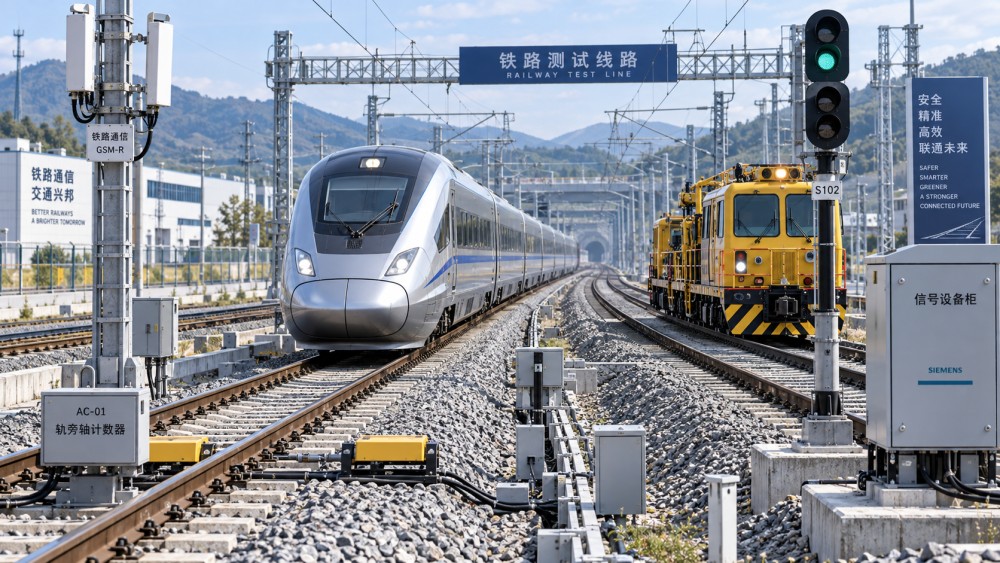
A proposal should show how it protects vehicles that cannot continuously report an assured position. Depending on the architecture, secondary train detection, protected routes, fixed-block fallback, or restricted operating procedures may be necessary. The presence of axle counters or track circuits alone does not establish that every mixed-operation scenario is supported.
Ask how detected occupancy affects movement authorities and route release. A long occupied detection section may require a substantial protected area around an unequipped train. That can be acceptable for occasional engineering access but disruptive if such movements are frequent during passenger service.
Use a scenario matrix to compare supplier responses consistently:
Separate the safe response from the recovery process. A system may stop trains safely yet require lengthy manual intervention before service resumes. Evaluate which failures affect one train, one zone, or the wider line, and which recovery actions require staff on the track.
Radio resilience should be assessed through coverage assumptions, interference conditions, handover behavior, redundancy, and failure containment. Average data throughput says little about whether safety-related messages arrive within the system’s permitted timing limits. The relevant question is how communications behavior affects protection, availability, and recovery.
Compare usable capacity under identical assumptions
Ask every shortlisted supplier to model the same infrastructure, timetable, fleet mix, and operating rules. Otherwise, apparent performance differences may come from different assumptions about station dwell, terminal turnaround, junction conflicts, or the proportion of slower trains.
Include different train orderings. A service pattern with alternating fleet types can behave differently from one that groups similar trains together. The result depends on braking envelopes, acceleration, stopping patterns, route geometry, and the location of operational bottlenecks. A headline minimum separation cannot represent all these interactions.
Require the model to expose its constraints. If station dwell or a terminal throat limits throughput, reducing open-line separation may produce little timetable benefit. Conversely, improvements in train regulation or recovery may be more valuable than a smaller theoretical headway.
Include disturbed service as well as nominal running. Delayed departures, temporary speed restrictions, a train operating under restrictions, and loss of a communications component can reveal differences hidden by an ideal timetable. Simulation supports comparison, but acceptance should connect model assumptions to verified subsystem behavior and integrated testing.
Evaluate the safety case and migration plan as one delivery problem
A SIL4 claim does not establish that a complete mixed-fleet application is safe. Safety integrity relates to defined functions and their development and assurance arrangements. The application still needs a safety argument covering the actual vehicles, interfaces, operating rules, infrastructure, and foreseeable failures.
Request the scope of existing independent assessment, outstanding conditions, and the assumptions that the operator must satisfy. Separate evidence reusable from a proven product from evidence that must be developed for your installation. Previous approval can support a proposal without eliminating application-specific work.
Migration often carries more integration risk than the final architecture. Ask for a sequence showing vehicle retrofits, wayside installation, software baselines, testing possessions, commissioning areas, and entry into service. Every intermediate configuration needs a defined operating envelope.
Rollback requires equal attention. The supplier should identify when rollback remains possible, what data or equipment must be restored, and how trains already converted will operate. A plan that simply says “return to the previous system” leaves configuration compatibility and operational readiness unresolved.
Make the acceptance programme traceable to these stages. Factory integration testing, representative onboard testing, site testing, and operational demonstrations should address the relevant risks at each point. Define access to logs, test tools, and defect records so that unresolved behavior can be investigated across supplier boundaries.
Make lifecycle obligations part of the technical decision
Mixed-fleet compatibility must survive software updates, vehicle modifications, component replacement, and future fleet purchases. Ask who maintains the compatibility matrix and who funds regression testing when one subsystem changes.
Evaluate lifecycle cost through specific obligations: licensing, diagnostic access, test equipment, spares, cybersecurity maintenance, software support, staff training, and obsolescence management. A low initial price can lose its advantage if routine vehicle changes require extensive proprietary engineering services.
Cybersecurity maintenance also needs an operational method. Ask how patches are assessed, tested, deployed, and recovered without losing control of approved configurations. Remote support arrangements should define access permissions, records, and responsibility for restoring service.
Contract terms should secure the information needed to operate and maintain the system: usable interface documentation, configuration records, diagnostic data, maintenance instructions, and appropriate software access arrangements. Future competition depends on practical access to these resources as well as contractual wording.
Build the shortlist around evidence and unresolved obligations
Use mandatory acceptance gates before applying weighted scores. A proposal that cannot safely accommodate a required vehicle category or demonstrate a workable migration sequence should not compensate through attractive nominal capacity or price.
For proposals that pass those gates, score operational performance, integration effort, recovery capability, delivery confidence, and lifecycle support. Keep evidence strength visible beside each score. A claim supported by comparable service records and representative testing deserves different confidence from one dependent on substantial new development.
Before award, turn the preferred proposal’s assumptions into named obligations. Record which party supplies braking evidence, approves interfaces, validates formations, provides testing access, and maintains compatibility after changes. Each obligation needs a deliverable, an owner, and an acceptance condition.
The defensible choice is the supplier that can demonstrate how your required fleet combinations will operate, recover, and evolve—and commit to the work needed to make that behavior verifiable.
Related News
- How to evaluate moving block suppliers for mixed-fleet operationsOct 16, 2026Evaluate moving block suppliers for mixed-fleet operations. Discover how to compare safety, interoperability, capacity, and lifecycle costs to make a confident choice.
- How CBTC supports subway train density management at peak hoursSep 26, 2026Subway train density management: discover how CBTC uses moving-block control, real-time supervision, and smarter regulation to boost peak-hour capacity safely.
- How a CBTC fallback system keeps trains moving after link lossOct 13, 2026CBTC fallback system: learn how rail operators maintain safe train movement, restore positioning, and limit disruption after communication link loss.
- How a CBTC fallback system keeps trains moving after link lossSep 24, 2026CBTC fallback system: learn how rail operators maintain safe train movement, restore positioning, and limit disruption after communication link loss.