




Search
Related News
- 00
0000-00
What drives rail vehicle dynamics cost during high-speed bogie design? - 00
0000-00
How rail transit integration testing exposes interface failures before commissioning - 00
0000-00
How to verify aircraft composite material certification for flight use - 00
0000-00
How to qualify titanium aircraft forgings for fatigue-critical parts - 00
0000-00
How to prepare objective evidence for a Nadcap audit
Automatic Train Control: Key Functions and Safety Benefits




Why does automatic train control matter so much in modern rail systems?
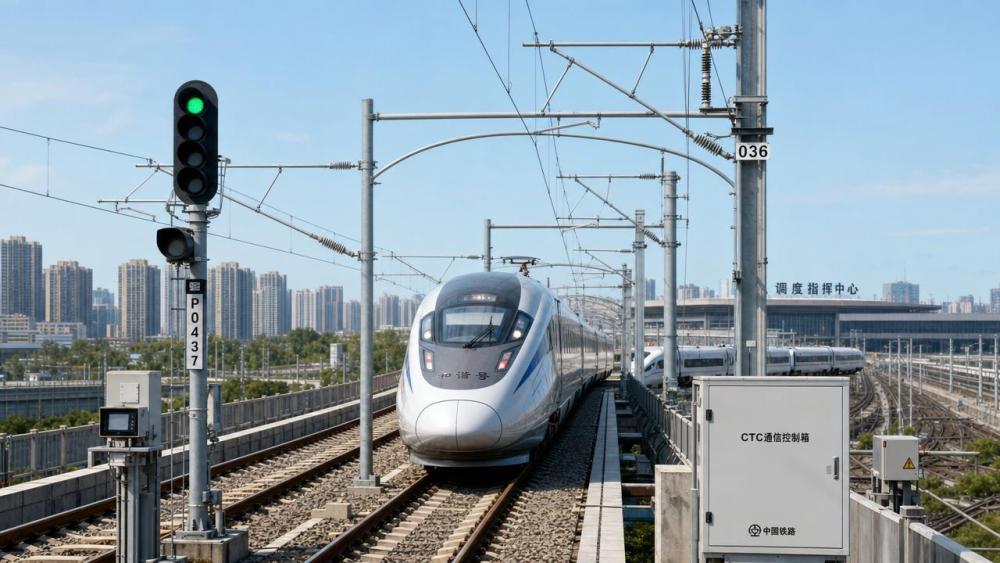
Automatic train control sits at the center of safe, stable, and efficient railway operations.
It is not just a signaling feature. It is the logic that helps trains keep safe speed, safe distance, and predictable response.
That matters even more on high-speed lines, dense metro corridors, and mixed networks with tight operating margins.
In simple terms, automatic train control links train movement rules with real-time monitoring and intervention.
When speed rises, headways shrink, and service frequency increases, manual control alone cannot deliver consistent protection.
That is why automatic train control is closely tied to CBTC, train positioning, SIL4 safety architecture, and lifecycle reliability.
Across advanced transport research, it is often assessed alongside bogie dynamics, traction performance, braking response, and maintenance strategy.
This broader view is important because operational safety never depends on one subsystem alone.
What does automatic train control actually do during operation?
A common misunderstanding is that automatic train control simply means automatic driving.
In practice, its role is wider and more safety-critical.
The system continuously checks movement authority, train speed, braking curves, route status, and separation from other trains.
If the train exceeds allowed limits, the system can warn, restrict, or intervene automatically.
Most automatic train control functions can be understood through three layers:
- Protection, which prevents overspeed, signal passing, and unsafe train separation.
- Operation, which supports punctual running, smoother acceleration, and stable station approaches.
- Supervision, which shares status data with dispatch, maintenance, and control centers.
On conventional lines, these functions may rely on fixed blocks and trackside signaling.
On urban rail or advanced EMU networks, automatic train control is often integrated with CBTC or related digital signaling platforms.
That integration improves both safety logic and traffic capacity, especially where short headways are essential.
How is automatic train control different from CBTC, ATP, and automatic train operation?
This is one of the most searched questions, and the confusion is understandable.
Automatic train control is often used as an umbrella term, while ATP, ATO, and CBTC describe specific functions or architectures.
A quick comparison makes the relationships clearer:
In real projects, automatic train control may include ATP and ATO functions, while CBTC provides the digital framework for control decisions.
So the better question is not which term is correct.
The better question is how much protection, automation, and communication reliability the system actually delivers.
That is also the approach used in professional rail intelligence analysis, where terminology matters less than functional safety and operational evidence.
Where do the biggest safety benefits of automatic train control show up?
The safety value of automatic train control becomes clear when networks operate close to their limits.
Higher speeds, busy junctions, shorter headways, and degraded weather all increase the need for fast and repeatable system response.
Its main safety benefits usually appear in five areas:
- Overspeed prevention during normal running, curve approach, and station entry.
- Collision risk reduction through controlled spacing and movement authority enforcement.
- Safer degraded-mode handling when communication, braking, or route information changes unexpectedly.
- More consistent emergency braking logic across fleet types and operating conditions.
- Better human-factor protection, especially when fatigue, distraction, or visibility becomes a concern.
On high-speed corridors, these benefits connect directly with vehicle dynamics and infrastructure condition.
A train traveling at 300 km/h or more needs safe control margins that reflect braking distance, adhesion, and route profile.
That is why automatic train control should be evaluated together with traction, pantograph behavior, track quality, and predictive maintenance data.
In that sense, the safety benefit is not only accident prevention.
It also supports stable service, fewer disruption cascades, and better long-term asset protection.
What should be checked before judging whether an automatic train control system is suitable?
A useful evaluation starts with the operating context, not the marketing label.
A metro line, an intercity EMU corridor, and a mixed freight-passenger route do not need identical control logic.
More practical assessment usually focuses on these points:
- Whether the control architecture fits fixed block, moving block, or hybrid operation.
- How train positioning accuracy is maintained during signal loss or transition zones.
- Whether SIL4-related safety integrity claims are supported by certification evidence.
- How well the system interfaces with traction, braking, onboard diagnostics, and control centers.
- What lifecycle burden appears in software updates, spare parts, testing, and maintenance access.
Implementation timelines also deserve attention.
The core hardware may be installed faster than the validation, interoperability checks, and operational migration work around it.
In actual projects, the more difficult issue is often transition management.
That includes staff training, legacy interface handling, and proof that safety performance remains stable after upgrades.
For that reason, technical review should always include lifecycle MRO considerations, not only installation scope.
Which mistakes create risk when people talk about automatic train control?
Several mistakes appear repeatedly in rail research and project screening.
They usually come from treating automatic train control as a standalone product instead of a system-of-systems function.
Another frequent mistake is separating signaling decisions from broader transport engineering.
Experienced analysts usually look across rolling stock, infrastructure, maintenance, and safety certification together.
That cross-disciplinary view is especially useful on platforms like AATS, where rail signaling sits beside vehicle systems, MRO, and transport safety analysis.
So, how should automatic train control be researched or compared next?
A solid starting point is to frame automatic train control as an operational safety decision, not only a technology topic.
That changes the questions worth asking.
Instead of focusing only on brand, architecture name, or peak capacity claims, compare systems against real route demands.
Look at train density, braking profile, upgrade path, communication redundancy, and maintenance access.
It also helps to track how automatic train control connects with CBTC migration, predictive maintenance, and long-term infrastructure risk reduction.
That is where technical understanding becomes commercially useful.
If the goal is better evaluation, the next step is practical: define the line conditions, list the safety-critical interfaces, and compare evidence rather than labels.
For ongoing research, it is also worth following sources that connect signaling, rolling stock, maintenance, and compliance into one framework.
That kind of integrated view makes automatic train control easier to judge in real operational terms.
Related News
- How signaling redundancy design for metro systems limits single-point failuresSep 04, 2026Explore signaling redundancy design for metro systems: prevent single-point failures with independent CBTC paths, failover testing, and resilient operations.
- Electronic Interlocking System vs Legacy Signaling: What MattersJul 15, 2026Electronic interlocking system vs legacy signaling: compare safety, capacity, diagnostics, integration, and lifecycle cost to choose the smarter rail upgrade path.
- Digital Rail Signaling Systems: Key Factors for Safer Network UpgradesJul 08, 2026Digital rail signaling systems are reshaping safer network upgrades. Explore key factors like interoperability, SIL4 safety, migration planning, and lifecycle value.
- How to Evaluate a Rail Signaling Supplier in Europe for SIL4 and Lifecycle RiskJun 30, 2026Rail signaling supplier Europe guide: learn how to assess SIL4 evidence, integration capability, cybersecurity, and lifecycle risk to choose a safer, more resilient long-term partner.