




Search
Related News
- 00
0000-00
What drives rail vehicle dynamics cost during high-speed bogie design? - 00
0000-00
How rail transit integration testing exposes interface failures before commissioning - 00
0000-00
How to verify aircraft composite material certification for flight use - 00
0000-00
How to qualify titanium aircraft forgings for fatigue-critical parts - 00
0000-00
How to prepare objective evidence for a Nadcap audit
Automatic Train Control Technology Trends to Watch in 2026




Rail operators are entering 2026 with a sharper focus on capacity, punctuality, and safety resilience. In that context, automatic train control technology is no longer just a signaling upgrade. It has become a strategic system layer that shapes how urban metros, mainline corridors, and high-speed networks manage throughput, risk, and lifecycle cost.
The topic matters because traffic density is rising while tolerance for disruption is falling. Better headway control, more precise train positioning, stronger SIL4 architectures, and data-driven maintenance are now central to network performance. For organizations tracking advanced transit systems through AATS, this is where engineering decisions and investment logic increasingly meet.
Why automatic train control technology is moving to the center
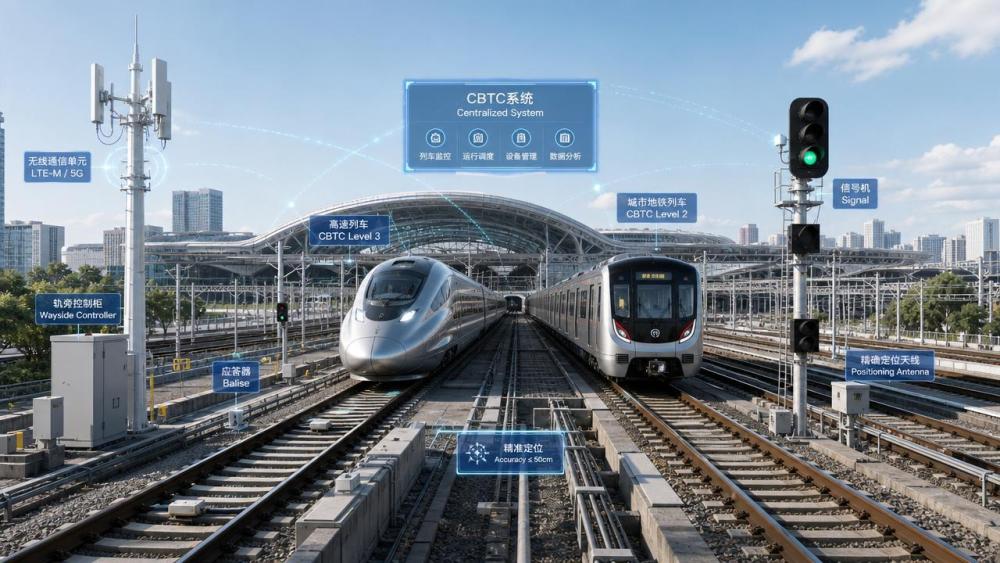
Automatic train control technology combines train protection, train operation, and supervisory functions into one coordinated control framework. In practical terms, it helps maintain safe separation, regulates speed, supports routing logic, and reduces dependence on manual intervention where consistency is critical.
That core role is expanding. Networks want shorter headways without compromising safety margins. Rolling stock builders want smoother interoperability. Infrastructure owners want fewer service interruptions. Investors want assets that stay compliant and scalable over long operating lives.
In older projects, automatic train control technology was often judged by installation scope and initial performance. In 2026, it is judged more broadly: upgrade compatibility, cybersecurity exposure, maintainability, digital diagnostics, and the ability to support phased network expansion all matter.
This is especially relevant in rail environments linked to CBTC, moving block control, EMU operations, and high-speed corridor modernization. The system is no longer isolated from the rest of the asset base. It now interacts closely with traction systems, onboard processors, communications networks, maintenance platforms, and safety certification workflows.
The trends shaping 2026
Several developments are redefining what leading automatic train control technology looks like. They are technical, but they also affect procurement strategy, deployment sequencing, and long-term operational risk.
CBTC is becoming more adaptive
CBTC platforms are moving beyond basic capacity gains. The next step is adaptability under mixed operating conditions, including partial degradation, variable passenger loads, and extension into more complex junctions.
This matters because real networks rarely operate under ideal assumptions. More mature automatic train control technology must keep service stable when communications quality changes, platform dwell patterns shift, or maintenance windows alter routing options.
Real-time positioning is gaining strategic value
Accurate train positioning has always been important, but tighter service models raise the standard. Operators increasingly need higher confidence in position data across tunnels, transition zones, depots, and high-interference environments.
Better positioning supports more than safe spacing. It improves timetable adherence, energy optimization, incident response, and post-event analysis. That makes position integrity a commercial issue as much as a control issue.
SIL4 design is being evaluated more holistically
SIL4 remains the benchmark for critical rail safety functions, but attention is shifting from label compliance to architecture quality. Redundancy, fault isolation, fail-safe logic, software assurance, and lifecycle validation are under closer review.
In other words, automatic train control technology is being assessed on how safely it behaves in abnormal conditions, not only how well it performs in normal service.
Predictive maintenance is becoming part of control strategy
A notable shift in 2026 is the integration of diagnostic data from signaling assets, onboard units, trackside equipment, and communications links. This allows maintenance teams to detect drift before failures affect operations.
That approach aligns with the broader AATS view of transport systems. Reliability does not come from isolated hardware quality alone. It comes from understanding wear, performance variance, inspection intervals, and failure patterns across the whole system.
Where the business value becomes visible
The strongest case for automatic train control technology is not a single benefit. It is the combination of operational, financial, and compliance value that appears over time.
This is why automatic train control technology is increasingly discussed alongside transit infrastructure MRO, digital twins, inspection systems, and rolling stock performance. The control layer affects the economics of the entire operating environment.
Different rail scenarios require different priorities
Not every network needs the same configuration. The right automatic train control technology depends on service model, asset age, speed profile, and upgrade constraints.
- Dense metro lines usually prioritize CBTC maturity, resilient communications, and recovery performance after service disturbance.
- High-speed and intercity corridors often place more weight on braking curves, positioning confidence, interoperability, and safety case depth.
- Mixed-traffic or legacy networks need migration pathways that protect service continuity while replacing older signaling logic.
- New-build transit systems can focus earlier on digital integration, maintainability, and future capacity rather than retrofit compromises.
That distinction is important when evaluating suppliers or project schedules. A strong solution in one corridor may not translate directly to another if operational constraints differ.
What to examine before selecting a direction
The most useful evaluation questions are rarely limited to headline performance claims. Decision quality improves when technical and commercial filters are considered together.
Architecture and interoperability
Check whether the platform can integrate with existing rolling stock, wayside assets, and operating software. Interfaces, migration logic, and supplier dependency deserve early scrutiny.
Safety evidence and validation depth
SIL4 claims should be supported by transparent design discipline, testing scope, and documented failure behavior. The key issue is trust under degraded conditions.
Maintainability and diagnostic access
A system that performs well on day one but offers weak fault visibility can create hidden lifecycle cost. Diagnostic granularity and predictive maintenance readiness are now major differentiators.
Scalability and cybersecurity
Automatic train control technology must scale with future service plans while resisting cyber and communications vulnerabilities. Digital expansion without security discipline increases operational exposure.
Why the wider transport ecosystem is paying attention
Interest in automatic train control technology extends beyond signaling specialists because its effects touch procurement, financing, project execution, and public asset reliability. In the AATS context, that makes it part of a larger advanced transport intelligence picture.
The same logic seen in aerospace is relevant here. High-performance systems depend on tightly managed materials, software assurance, redundancy, and lifecycle monitoring. Whether the issue is turbine blade durability or moving block control integrity, the commercial value comes from reliable performance under demanding conditions.
That cross-sector perspective helps explain why control technology decisions are gaining board-level visibility. They influence asset utilization, expansion timing, compliance confidence, and the long-term credibility of major transport programs.
A practical way to prepare for 2026 decisions
A useful next step is to assess automatic train control technology through three lenses at the same time: operational need, upgrade path, and evidence quality. Looking at only one usually leads to a distorted comparison.
Start with the real bottleneck. It may be headway, failure recovery, maintainability, or future expansion. Then compare whether candidate systems solve that issue within existing asset and compliance constraints.
After that, examine data access, safety documentation, interface maturity, and long-term support logic. Those details often determine whether a project remains efficient after commissioning.
In 2026, the most credible automatic train control technology will not be defined only by advanced functions. It will be defined by how well it aligns safety, capacity, maintainability, and lifecycle economics in real operating conditions.
Related News
- How signaling redundancy design for metro systems limits single-point failuresSep 04, 2026Explore signaling redundancy design for metro systems: prevent single-point failures with independent CBTC paths, failover testing, and resilient operations.
- Electronic Interlocking System vs Legacy Signaling: What MattersJul 15, 2026Electronic interlocking system vs legacy signaling: compare safety, capacity, diagnostics, integration, and lifecycle cost to choose the smarter rail upgrade path.
- Digital Rail Signaling Systems: Key Factors for Safer Network UpgradesJul 08, 2026Digital rail signaling systems are reshaping safer network upgrades. Explore key factors like interoperability, SIL4 safety, migration planning, and lifecycle value.
- How to Evaluate a Rail Signaling Supplier in Europe for SIL4 and Lifecycle RiskJun 30, 2026Rail signaling supplier Europe guide: learn how to assess SIL4 evidence, integration capability, cybersecurity, and lifecycle risk to choose a safer, more resilient long-term partner.