




Search
Related News
- 00
0000-00
How load spectra determine fatigue life in aerospace composites - 00
0000-00
How condition monitoring technology sensors detect rail defects early - 00
0000-00
How track design choices affect high-speed rail infrastructure costs - 00
0000-00
How CBTC supports subway train density management at peak hours - 00
0000-00
How traction converter losses affect high-speed rail efficiency
How to Evaluate Communication-Based Train Control Architecture




How to Evaluate Communication-Based Train Control Architecture
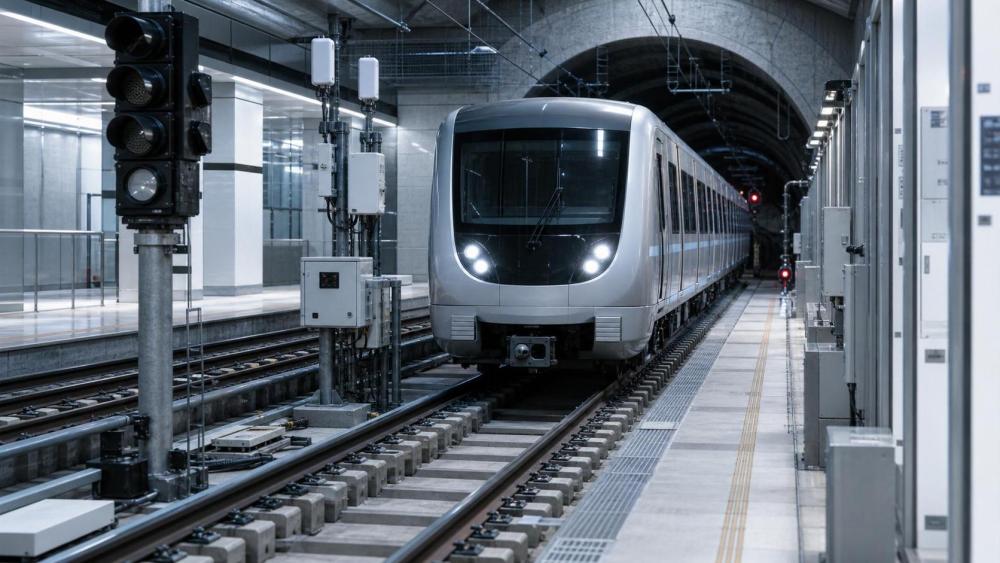
Evaluating communication-based train control architecture requires more than comparing feature lists. The real question is whether the architecture can support safe, stable, expandable operations over time.
That matters because a CBTC decision affects headway, disruption recovery, maintenance workload, cybersecurity exposure, and upgrade cost for years after commissioning.
In practice, a strong communication-based train control architecture should balance safety integrity, train positioning confidence, communications resilience, and integration with existing rail assets.
A narrow comparison often misses the bigger issue. Two suppliers may both claim moving block capability, but their architectural assumptions can produce very different operational outcomes.
The most reliable evaluation starts with system behavior. Look at how the architecture performs under degraded modes, handover events, mixed traffic conditions, and maintenance constraints.
Start with the operating objective
Before comparing vendors, define what the railway actually needs. That sounds obvious, but many communication-based train control architecture reviews begin with technology, not operating targets.
Set measurable objectives first. These usually include minimum headway, line capacity, recovery time after disruption, service availability, future extension needs, and staffing assumptions.
A metro line with dense urban service has different priorities from an intercity corridor, airport link, or brownfield upgrade. The communication-based train control architecture must reflect that context.
This is also where lifecycle strategy enters the discussion. If the network plans automation upgrades later, the architecture should already support that migration path.
Key early questions
- What peak headway must the line achieve and sustain?
- How much tolerance exists for communication loss or positioning uncertainty?
- Will legacy interlockings, ATP layers, or onboard equipment remain in service?
- Is unattended or driverless operation part of the long-term roadmap?
- How fast must maintenance teams diagnose and restore faults?
Evaluate the core safety architecture
Safety remains the first filter in any communication-based train control architecture assessment. Feature richness means little if the safety logic is hard to validate or fragile under abnormal conditions.
Review the allocation of vital functions across wayside, onboard, and zone controller layers. Clear separation of responsibilities usually supports easier verification and safer fault containment.
SIL4 compliance should be verified as part of a broader argument, not treated as a standalone badge. The strength lies in how hazards are identified, mitigated, and validated.
Pay close attention to degraded mode logic. A mature communication-based train control architecture defines graceful fallback behavior rather than relying on manual intervention too early.
What to check in safety review
- Hazard analysis structure and independence of safety assessment
- Fallback mode behavior during radio loss, balise failure, or positioning conflict
- Redundancy logic for vital processors and field interfaces
- Recovery rules after restart, reboot, or partial subsystem isolation
- Evidence from similar operating environments, not only laboratory testing
Check train positioning and movement authority logic
Train positioning is central to communication-based train control architecture performance. If location confidence degrades too often, the line may lose the headway benefit that justified CBTC in the first place.
Assess how the system combines odometry, transponders, beacons, maps, and correction references. The goal is not theoretical accuracy alone, but stable operational confidence.
Movement authority calculations should also be reviewed under high-density traffic. Short headways depend on both accurate train localization and predictable update timing.
More importantly, test what happens when confidence drops. Some architectures become conservative quickly, causing avoidable braking, lower throughput, and timetable instability.
Useful assessment points
- Positioning accuracy across tunnels, depots, curves, and switch zones
- Tolerance to wheel slip, wheel wear, and adverse rail conditions
- Refresh rate for movement authority updates
- Operational impact of uncertainty inflation during degraded conditions
- Consistency between simulated and field-measured behavior
Review communications resilience, latency, and coverage
The communications layer is often where communication-based train control architecture claims look strong on paper yet weaken during deployment. Coverage maps alone are not enough.
Evaluate end-to-end latency, handover performance, packet loss tolerance, and channel congestion under realistic traffic loads. Dense passenger peaks and maintenance windows both matter.
A resilient architecture should tolerate local failures without collapsing line performance. Redundant paths, segmented zones, and clear failover priorities reduce system-wide consequences.
This is also the right place to bring cybersecurity into architecture review. Secure communication design is now part of operational reliability, not a separate compliance box.
Communications review checklist
- Radio coverage continuity in tunnels, platforms, depots, and transition zones
- Handover performance at line speed and during dense train intervals
- Impact of interference, equipment aging, and maintenance access constraints
- Segregation of operational traffic from non-vital data flows
- Patch management, authentication design, and incident response procedures
Measure interoperability and brownfield fit
Many projects do not start on a clean sheet. That is why communication-based train control architecture evaluation must include legacy interfaces from the beginning.
Brownfield networks may retain interlockings, platform screen doors, ATS layers, depot systems, or mixed rolling stock fleets. Interface complexity can become the real project risk.
Ask whether the architecture supports staged migration. A practical system can coexist with older signaling during transition without generating unstable operational boundaries.
Vendor claims of openness should be tested through documented interface standards, existing integration cases, and ownership clarity for interface validation.
Assess maintainability, diagnostics, and lifecycle cost
A communication-based train control architecture can meet performance targets and still become expensive to live with. Maintainability should therefore sit beside safety and capacity in the scorecard.
Look at fault isolation depth, event logging quality, remote diagnostics, spare strategy, and software version control. These details shape mean time to repair and maintenance staffing pressure.
The strongest architectures make field support predictable. They reduce hidden dependence on specialist vendor teams for routine restoration and minor upgrades.
Lifecycle cost should also include training, cybersecurity updates, obsolescence planning, and test environment maintenance. Initial capex rarely tells the full story.
Practical cost drivers
- Frequency of software patching and regression testing
- Availability of local technical support and trained maintainers
- Replacement cycle for radio and processing hardware
- Ease of root cause analysis after intermittent failures
- Dependence on proprietary tools for routine diagnostics
Use a weighted evaluation model
To compare options fairly, translate requirements into a weighted model. This keeps communication-based train control architecture selection grounded in evidence rather than presentation quality.
Typical weighting categories include safety case maturity, positioning robustness, communications resilience, migration fit, maintainability, cybersecurity, and total lifecycle economics.
Use scenario-based testing inside the evaluation. For example, score supplier responses to radio shadow zones, degraded interlocking interfaces, wheel slip, depot entry transitions, and partial subsystem outage.
That approach exposes differences that brochures usually hide. It also produces a clearer audit trail for procurement review and investment approval.
Make the final decision on operational confidence
The best communication-based train control architecture is not simply the most advanced one. It is the one that delivers safe, repeatable performance in the network you actually operate.
A sound decision combines technical depth with long-term practicality. Safety integrity, redundancy design, positioning confidence, brownfield compatibility, and maintainability should all pull in the same direction.
When evaluating communication-based train control architecture, the clearest signal is operational confidence under real constraints. That is what turns a signaling selection into a durable infrastructure decision.
The most effective next step is to build an evaluation matrix around live operating scenarios, then test each architecture against safety, resilience, and lifecycle demands before tender commitment.
Related News
- How CBTC supports subway train density management at peak hoursSep 26, 2026Subway train density management: discover how CBTC uses moving-block control, real-time supervision, and smarter regulation to boost peak-hour capacity safely.
- How a CBTC fallback system keeps trains moving after link lossSep 24, 2026CBTC fallback system: learn how rail operators maintain safe train movement, restore positioning, and limit disruption after communication link loss.
- How safe train control technology reduces headway without raising riskAug 23, 2026Safe train control technology explained: learn how moving block, SIL4 design, and fail-safe control cut headway while protecting braking distance, reliability, and real-world rail capacity.
- EASA Tightens SIL4 Rules for EU-Bound CBTC ExportsAug 09, 2026CBTC exports to the EU face tighter SIL4 compliance as EASA updates rules. Learn the March 2027 deadline, IV&V impact, and how suppliers can protect market access.