




Search
Related News
- 00
0000-00
What drives rail vehicle dynamics cost during high-speed bogie design? - 00
0000-00
How rail transit integration testing exposes interface failures before commissioning - 00
0000-00
How to verify aircraft composite material certification for flight use - 00
0000-00
How to qualify titanium aircraft forgings for fatigue-critical parts - 00
0000-00
How to prepare objective evidence for a Nadcap audit
When do ultra high temp materials outperform nickel superalloys?




Nickel-based superalloys remain the baseline material system for the hot sections of modern gas turbines because they balance high-temperature strength, creep resistance, oxidation resistance, castability, repairability, and an unusually mature qualification base. That baseline matters. An alternative does not outperform a nickel superalloy simply because it can survive a higher laboratory temperature.
Ultra high temp materials become the stronger choice when the operating environment pushes beyond the point where increasingly sophisticated nickel alloy chemistry, thermal barrier coatings, and internal cooling can still provide an acceptable life, efficiency, or maintenance outcome. For technical evaluators, the practical question is therefore narrower than “which material withstands more heat?” It is: can a different material architecture reduce the system-level penalty of keeping a nickel superalloy alive?
That penalty can include compressor bleed air consumed for cooling, added component mass, limited turbine inlet temperature margin, coating degradation, short inspection intervals, and manufacturing constraints around complex cooled geometries. In the right location, ceramic matrix composites, refractory-metal systems, ultra-high-temperature ceramics, and emerging composite architectures can change that trade-off. In the wrong location, they introduce brittleness, oxidation exposure, joining problems, uncertain repair routes, and qualification risk without delivering a meaningful operational gain.
The comparison begins with component temperature, not engine temperature
Discussions of high-temperature materials often use turbine inlet temperature or combustor temperature as shorthand. Those figures are useful at a system level, but they are not enough for material selection. A component’s actual metal or composite temperature depends on local gas temperature, heat flux, cooling geometry, coating condition, dwell time, pressure, vibration, and transient exposure. A turbine vane platform, a rotating blade airfoil, a combustor liner, and an exhaust nozzle may all experience “high temperature,” yet require fundamentally different material behavior.
Nickel superalloys can operate in gas paths far hotter than their nominal uncooled capability because cooling passages and environmental coatings manage the substrate temperature. This has enabled very high performance in aero-engines and industrial gas turbines. But cooling has a cost: air diverted from the compressor cannot contribute directly to the thermodynamic cycle in the same way, and more elaborate internal passages increase casting difficulty and inspection burden.
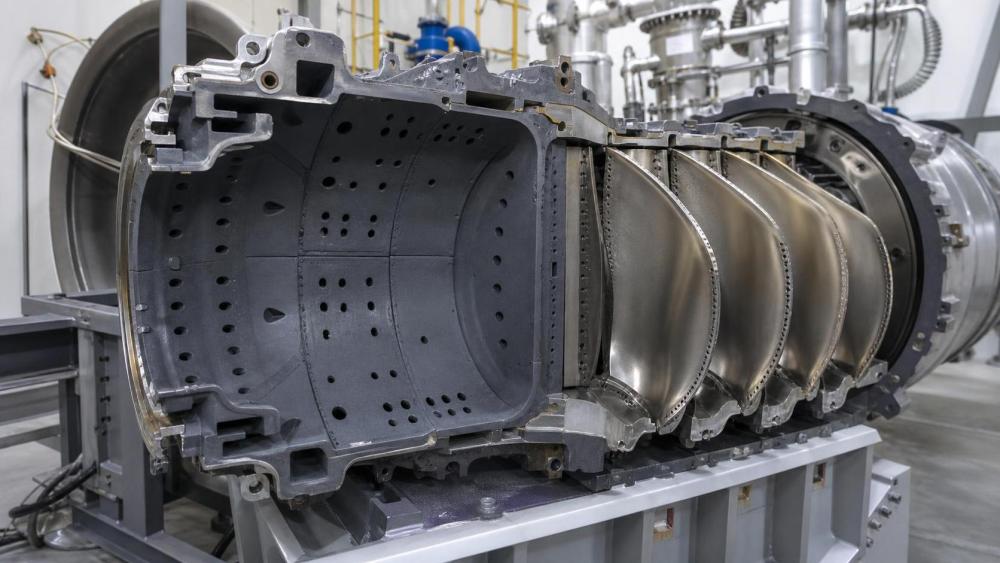
Ultra high temp materials are most compelling where their higher usable temperature can reduce these system penalties. Ceramic matrix composites (CMCs), especially silicon-carbide-fiber-reinforced silicon carbide systems, are already the most visible example in aerospace propulsion. Their value is not merely that they tolerate heat. Their lower density and potential for reduced cooling demand can improve the component and engine-level balance, particularly in static hot-section parts.
Where advanced materials can create a real advantage
The strongest case generally appears in parts that are hot, relatively lightly loaded, exposed to long thermal dwell periods, and difficult to cool efficiently. Combustor liners, shrouds, nozzle flaps, exhaust components, transition ducts, and selected turbine structures are common candidates. These parts can benefit when a material retains sufficient strength at higher temperature while allowing the designer to simplify cooling arrangements or increase thermal margin.
For static structures, CMCs can outperform nickel superalloys through a combination of lower density, lower cooling-air requirement, and high-temperature capability. Their lower density is particularly relevant in aircraft engines, where rotating mass and installed mass both influence design decisions. Their lower thermal expansion can also be useful in carefully designed assemblies, although it creates compatibility challenges when the CMC is joined to metallic cases, seals, or fasteners.
Refractory metals and refractory-metal alloys are a different proposition. Materials based on molybdenum, niobium, tantalum, tungsten, or related systems offer exceptionally high melting points and can retain useful strength at temperatures beyond the practical range of many nickel alloys. Their application is constrained by oxidation sensitivity, density, fabrication difficulty, and the need for robust protective coatings or controlled environments. They are therefore more plausible in specialized propulsion, thermal-processing, vacuum, space, or short-duration high-heat-flux applications than as a direct replacement for turbine blade alloys in an oxidizing commercial aero-engine.
Ultra-high-temperature ceramics, including zirconium- and hafnium-based carbide or diboride families, occupy an even more demanding temperature regime. They can be relevant for leading edges, thermal protection systems, rocket-related hardware, and hypersonic vehicle concepts where heat flux and surface temperature exceed the range addressed by conventional superalloys. However, high temperature capability alone does not resolve the central engineering problem: these materials must survive oxidation, thermal cycling, impact, manufacturing variation, and attachment to the rest of the vehicle.
Rotating hardware remains the hardest test
Replacing nickel superalloys in rotating turbine blades is far more difficult than replacing them in stationary parts. A blade material must withstand not only high temperature and oxidation, but also sustained centrifugal stress, vibration, fatigue, foreign-object damage risk, coating interaction, and complex internal cooling requirements. Directionally solidified and single-crystal nickel superalloys remain difficult to displace because their entire processing and qualification ecosystem has been optimized around these demands.
A material that has superior strength at temperature but lower fracture tolerance, poorer impact resistance, or uncertain behavior under multi-axial cyclic loading may be unsuitable for a rotating airfoil. This is why claims that “ceramics will replace turbine blades” should be treated as an application-specific hypothesis rather than a general forecast. In many near- and medium-term programs, the more likely outcome is a mixed-material hot section: advanced ceramics in selected static components, nickel superalloys retained in the most demanding rotating structures, and coatings and cooling upgraded across both.
Temperature capability is only one selection criterion
Technical teams should evaluate ultra high temp materials against the dominant failure mechanism of the specific part. A material choice that improves creep life may worsen thermal-shock resistance. A coating that limits oxidation may crack under repeated thermal cycling. A lighter composite may create a difficult interface with adjacent metallic hardware. The screening process needs to make those trade-offs explicit.
The distinction between peak temperature and exposure profile deserves particular attention. A brief, localized temperature excursion may be manageable with a coating or thermal barrier. A long dwell at elevated temperature can instead drive creep, oxidation, coating recession, and interface degradation. Conversely, a material that performs well in sustained heat may fail under rapid cycling. Procurement specifications should request mission-representative data, not only headline maximum-temperature figures.
Coatings are part of the material system
No evaluation should treat a high-temperature substrate as an isolated material. For nickel superalloys, bond coats, thermal barrier coatings, aluminide systems, and internal cooling geometry work together to produce the usable operating envelope. For CMCs, environmental barrier coatings are equally central because moisture, oxygen, and combustion contaminants can degrade silicon-based matrices and fibers at elevated temperature.
This changes how competing options should be compared. The relevant question is not whether a bare CMC, refractory alloy, or superalloy has the highest temperature rating. It is whether the complete substrate-coating-cooling-interface system delivers predictable life in the intended environment. A promising substrate paired with an immature coating can be a weaker production option than a well-understood superalloy system with a proven repair route.
Environmental conditions matter. Marine operating environments, industrial gas turbines using variable fuels, aircraft operating near salt-laden airfields, and high-speed propulsion systems with severe thermal transients impose different corrosion and contamination exposures. Sulfur, calcium-magnesium-alumino-silicate deposits, moisture, particulate erosion, and fuel-borne contaminants can alter ranking decisions. Qualification evidence should therefore reflect the intended duty cycle and environment, not a generic “high-temperature” test condition.
Manufacturing readiness often decides the program outcome
In a research setting, a material may demonstrate exceptional thermal performance in coupon testing. In production, the decision expands to fiber supply, powder quality, preform repeatability, infiltration or densification control, non-destructive inspection, machining, coating deposition, joining, scrap rates, and traceability. The industrial bottleneck may not be the material itself; it may be capacity for a specialized coating, a limited source of high-temperature fiber, or insufficient inspection capability for complex internal features.
Nickel superalloys retain a major advantage because the ecosystem is deep. Vacuum melting, precision investment casting, directional solidification, single-crystal processing, hot isostatic pressing, heat treatment, coating application, and repair procedures are supported by a mature supplier base. That does not eliminate supply risk, especially for critical alloying elements and aerospace-qualified capacity, but it reduces uncertainty compared with emerging material routes.
For CMCs and refractory systems, evaluators should ask whether the supplier can demonstrate repeatable properties at production scale, not just development capability. Relevant evidence may include lot traceability, process qualification records, non-destructive evaluation plans, property allowables, coating durability records, and configuration-controlled repair or disposal instructions. Aerospace programs may also need to consider Nadcap-accredited special processes where applicable, customer-specific approvals, and airworthiness or safety assurance requirements. The precise certification path depends on the platform and jurisdiction and should be verified for the individual program.
Supply-chain questions that should be asked early
- Is there more than one qualified source for the critical fiber, powder, coating feedstock, or casting route?
- Can the supplier provide evidence for process capability across the expected production rate?
- What inspection methods detect relevant defects, and what are their demonstrated detection limits?
- Are machining, coating repair, joining, and field repair controlled by qualified procedures?
- Which materials, coatings, or process steps create export-control, geographic concentration, or long-lead-time exposure?
- What happens when a component reaches its service limit: repair, recoat, controlled replacement, or disposal?
The business case should be measured at system level
Ultra high temp materials often look expensive when compared on raw material price or component purchase price. That comparison can be misleading. A higher-cost CMC component may be justified if it reduces cooling demand, enables a higher cycle temperature, lowers weight, extends inspection intervals, or prevents a larger downstream failure. But the reverse is also true: an advanced material can destroy value if it requires a new assembly method, more frequent replacement, specialized inspection, and costly spares inventory while delivering only marginal performance improvement.
Technical evaluation teams should ask for a lifecycle model that includes design changes around the part. This should cover cooling-air effects, coatings, new tooling, yield loss, qualification testing, spares, inspection, field handling, repairability, and operational consequences of an unplanned removal. It should also distinguish a development-program business case from a fleet-support business case. A material may be attractive in a clean-sheet engine or hypersonic demonstrator but unattractive as a retrofit into an existing certified fleet.
For rail, industrial thermal processing, and advanced transit infrastructure, the same principle applies even where the material is not inside a turbine. High-temperature braking systems, propulsion-adjacent shielding, specialized furnace fixtures, power electronics enclosures, fire-resilient structures, and maintenance equipment may benefit from advanced materials only when the reduced downtime, higher operating temperature, or safety margin offsets procurement and service complexity. The operating context must lead the selection.
Common assumptions that deserve scrutiny
One frequent assumption is that higher melting point means better high-temperature performance. In service, oxidation, creep, thermal expansion mismatch, and crack growth often govern well before melting becomes relevant. Another is that eliminating cooling is always beneficial. Reduced cooling can improve cycle efficiency, but the surrounding assembly may still require thermal management to protect seals, cases, sensors, and joints.
It is also risky to assume that a lightweight material automatically produces a lighter system. Additional insulation, attachment hardware, protective coatings, thicker sections, or conservative safety factors can erode the mass benefit. Likewise, “ceramic” should not be treated as a single performance category. Monolithic ceramics, oxide-oxide CMCs, silicon-carbide CMCs, and ultra-high-temperature ceramic systems have sharply different strength, oxidation, toughness, processing, and application profiles.
Finally, laboratory durability should not be equated with certified service life. Real operating damage may involve vibration, rub events, particle impact, thermal gradients, moisture exposure, maintenance handling, and manufacturing defects that are absent from short test campaigns. The more novel the material system, the more important it is to understand the gap between coupon data, subcomponent evidence, and fleet-representative experience.
A practical decision path for evaluators
The most effective evaluation starts by identifying the current constraint. Is the part limited by substrate temperature, cooling-air consumption, creep life, oxidation, mass, distortion, thermal fatigue, or maintenance burden? Without that diagnosis, a materials comparison becomes a generic contest of datasheet values.
Next, define a mission-representative operating envelope: temperature distribution, pressure, stress state, thermal cycles, environment, expected life, damage scenarios, and allowable maintenance actions. Use this to compare complete material systems rather than bare materials. At this stage, an engineering team can often eliminate options that appear attractive only under steady-state or uncoated conditions.
The remaining candidates should then pass through manufacturability and qualification gates. A material with a theoretical performance advantage but no credible inspection method, repair path, or stable supply route should be treated as a development risk rather than a production-ready alternative. Cost analysis belongs after those gates, because early unit-cost comparisons commonly miss the cost of qualification and service support.
Nickel superalloys will continue to be the rational choice for many highly stressed, rotating, and repair-intensive hot-section applications. Ultra high temp materials outperform them when the operating constraint is genuinely temperature-driven and when their thermal capability translates into a system benefit that survives the realities of coatings, interfaces, manufacturing, certification, and lifecycle support. The strongest selections are usually not wholesale substitutions. They are deliberate placements of each material system where its limitations are manageable and its advantage is difficult to reproduce by further refining a nickel alloy.
Related News
- How to evaluate a thermal barrier coating supplier for turbine bladesSep 07, 2026Thermal barrier coating supplier evaluation guide for turbine blades—compare process control, approvals, testing, traceability, and lifecycle value with confidence.
- When do ultra high temp materials outperform nickel superalloys?Aug 31, 2026Ultra high temp materials outperform nickel superalloys when heat, cooling demand, weight, and lifecycle limits require smarter material choices. Explore key selection factors.
- What to check before choosing a single crystal turbine blade supplierAug 25, 2026Single crystal turbine blade supplier selection starts with process control, alloy capability, cooling feature accuracy, traceability, and lead-time risk. Learn what buyers should check before requesting quotes.
- How Film Cooling Hole Design Affects Turbine Blade Cooling EfficiencyAug 14, 2026Film cooling hole design directly impacts turbine blade cooling efficiency, durability, and performance—discover how geometry, angle, and spacing influence real results.