




Search
Related News
- 00
0000-00
How fatigue fracture analysis testing identifies crack initiation risks - 00
0000-00
When should a transit system engineering consultant join an EPC project? - 00
0000-00
What drives aerospace forging price for titanium engine casings? - 00
0000-00
How rail fail safe systems prevent unsafe routes during signal faults - 00
0000-00
What should a rail signaling supplier provide for SIL4 projects?
Thermal Barrier Coatings: Blade Life and Failure Risks




Why do turbine blade thermal barrier coatings matter so much in service life planning?
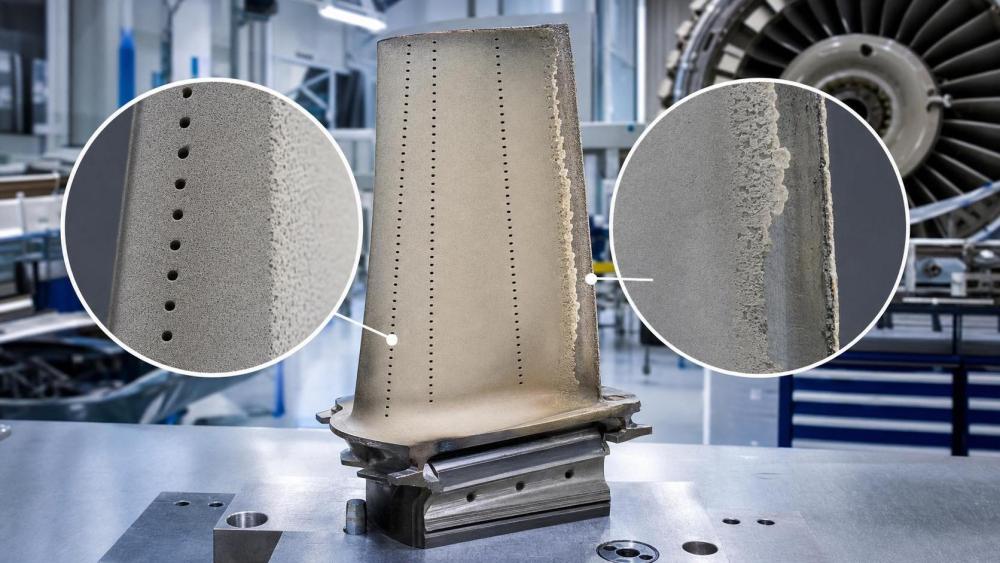
Turbine blade thermal barrier coatings are not just a surface finish. They are a controlled heat shield for parts facing extreme gas temperature, oxidation, and thermal cycling.
In simple terms, the coating helps the metal stay cooler than the surrounding hot gas. That temperature gap directly influences creep resistance, oxidation rate, and repair interval.
For blade maintenance, the real question is not whether the coating exists. It is whether the coating still protects the substrate as intended after long exposure.
This matters because a degraded coating can hide damage progression. A blade may still look serviceable while bond coat oxidation or local spallation is already accelerating base metal distress.
Within the AATS technical framework, this topic sits beside turbine cooling, superalloy creep, aerospace heat treatment, and lifecycle risk control. That broader view is important during inspection decisions.
When engine exposure becomes more severe, even small coating losses can shift metal temperature enough to shorten safe service margin. That is why thermal barrier coating condition belongs in every serious blade life review.
What exactly fails first: the ceramic top coat, the bond coat, or the cooling design around it?
The short answer is that failure rarely starts from one isolated cause. Turbine blade thermal barrier coatings usually fail through interaction between coating layers, substrate condition, and local cooling effectiveness.
The ceramic top coat often shows the visible symptom first. That may appear as cracking, thinning, roughness change, edge recession, or local spallation around hot spots.
However, the hidden driver is frequently the thermally grown oxide between the ceramic and the bond coat. As this oxide thickens, it raises stress and weakens adhesion.
Cooling design also shapes failure timing. If film cooling holes are partially blocked, distorted, or contaminated, local surface temperature rises and coating damage speeds up.
In practical maintenance work, more common triggers include:
- Repeated thermal cycling during start-stop operation
- Foreign object impact or handling damage during removal
- CMAS attack from ingested dust or sand
- Bond coat oxidation beyond expected growth limits
- Over-temperature events linked to combustion or cooling imbalance
So the better question is not which layer fails first in theory. It is which mechanism is dominating on a specific blade set under actual duty history.
Which warning signs suggest coating damage is becoming a real failure risk?
Some warning signs are obvious, but many are subtle. A small discolored patch can be more serious than a larger cosmetic mark if it sits near a high-heat region.
The most useful approach is to combine visual condition, operating history, and known blade temperature zones. That avoids overreacting to harmless surface variation and missing dangerous degradation.
The table below helps separate routine observations from stronger concern indicators.
A good rule is this: once turbine blade thermal barrier coatings show recurring local loss, the focus should shift from repair cosmetics to root-cause control.
Can damaged turbine blade thermal barrier coatings always be repaired, or is replacement safer?
Not every damaged coating should be repaired. The answer depends on coating loss area, substrate exposure, oxidation depth, crack pattern, and the remaining life of the blade itself.
A repair makes sense when the substrate remains structurally sound and the damage stays within approved process limits. In that case, recoating can restore thermal protection economically.
Replacement is usually the better path when metal distress has already advanced. If creep, wall thinning, microcracking, or severe oxidation exist, coating restoration alone does not remove the underlying risk.
This is where maintenance planning often becomes tricky. A blade may pass a narrow dimensional check yet still carry an unfavorable combination of coating damage and thermal history.
Before deciding, confirm these points:
- Whether the base alloy has stayed within repairable oxidation limits
- Whether cooling passages remain open and dimensionally acceptable
- Whether previous repair cycles already consumed too much life margin
- Whether the recoating process matches the approved engine standard
In many cases, the safest decision comes from combining inspection data with fleet trend analysis, not from a single isolated blade condition.
How should inspection intervals change when operating conditions become harsher?
Inspection intervals should not stay fixed when the thermal environment changes. Turbine blade thermal barrier coatings age faster under hotter, dirtier, or more cyclic service.
That sounds obvious, but interval adjustments are often delayed because visible damage lags behind internal degradation. By the time spallation becomes obvious, bond coat damage may already be advanced.
More severe conditions usually include frequent starts, rapid load transitions, dust ingestion, coastal contaminants, fuel quality variation, and reduced cooling efficiency.
A practical interval review should consider:
- Change in mission profile and dwell time at peak temperature
- Evidence of recurrent hot-section distress in similar hardware
- Contaminant exposure that may drive CMAS or corrosion
- Repair process consistency across previous overhaul cycles
This mirrors a wider principle seen across AATS coverage, from aero-engines to rail infrastructure maintenance: inspection timing should follow actual risk intensity, not only calendar routine.
When thermal data, borescope trends, and repair findings are reviewed together, service intervals become more defensible and less reactive.
What mistakes most often lead to avoidable coating failure?
The biggest mistake is treating turbine blade thermal barrier coatings as a standalone surface issue. In reality, coating life depends on metallurgy, cooling performance, process quality, and operating discipline.
Another common error is accepting generic repair assumptions. Different blade alloys, coating systems, and engine zones do not age in the same way.
The following pitfalls appear often in failure reviews:
- Judging coating health only by visible area loss
- Ignoring oxide growth beneath apparently stable coating
- Missing the connection between blocked cooling holes and local spallation
- Applying repair cycles without reviewing accumulated thermal exposure
- Failing to compare findings across multiple blades from the same set
More reliable outcomes come from disciplined condition records. Photographs, location mapping, coating loss patterns, and prior process history all help turn inspection into a repeatable decision process.
That level of traceability is increasingly important in sectors where safety, certification, and lifecycle economics must be balanced together.
So what is the smartest next step when coating condition is uncertain?
Start by framing the uncertainty correctly. The issue is rarely just coating appearance. The real issue is whether the blade still has enough thermal protection margin for the next service period.
If the condition looks borderline, gather three things before making a decision: location-specific damage evidence, operating exposure history, and repair cycle records.
Then compare those findings against approved limits, known fleet patterns, and local cooling condition. That gives a stronger basis for repair, closer monitoring, or retirement.
Turbine blade thermal barrier coatings remain one of the clearest indicators of how well a hot-section component is surviving its environment. Read correctly, they reveal much more than surface wear.
For ongoing work, it helps to build a simple review standard covering coating loss zones, oxidation clues, cooling feature condition, and interval adjustment triggers. That turns scattered observations into better risk control.
Where deeper technical comparison is needed, cross-checking blade coating behavior with turbine cooling, superalloy life, heat treatment quality, and predictive maintenance data usually leads to better decisions than judging the coating alone.
Related News
- What drives thermal barrier coating cost for turbine blade repairs?Sep 18, 2026Thermal barrier coating cost for turbine blade repairs depends on condition, repair scope, coatings, inspection, and turnaround. Learn how to compare quotes confidently.
- How to evaluate a thermal barrier coating supplier for turbine bladesSep 07, 2026Thermal barrier coating supplier evaluation guide for turbine blades—compare process control, approvals, testing, traceability, and lifecycle value with confidence.
- When do ultra high temp materials outperform nickel superalloys?Aug 31, 2026Ultra high temp materials outperform nickel superalloys when heat, cooling demand, weight, and lifecycle limits require smarter material choices. Explore key selection factors.
- What to check before choosing a single crystal turbine blade supplierAug 25, 2026Single crystal turbine blade supplier selection starts with process control, alloy capability, cooling feature accuracy, traceability, and lead-time risk. Learn what buyers should check before requesting quotes.