




Search
Related News
- 00
0000-00
How fatigue fracture analysis testing identifies crack initiation risks - 00
0000-00
When should a transit system engineering consultant join an EPC project? - 00
0000-00
What drives aerospace forging price for titanium engine casings? - 00
0000-00
How rail fail safe systems prevent unsafe routes during signal faults - 00
0000-00
What should a rail signaling supplier provide for SIL4 projects?
Aero-Engine MRO Pricing: What Drives Overhaul Costs




Aero-Engine MRO Pricing: What Drives Overhaul Costs
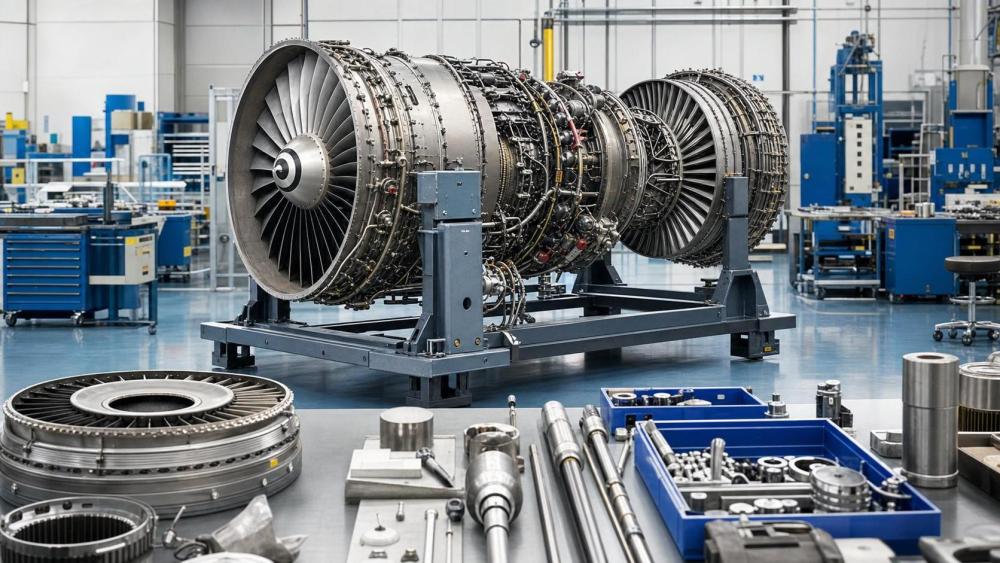
Understanding aero-engine MRO pricing is essential for accurate budget planning and supplier comparison.
For most operators, overhaul cost is never just a labor number.
It reflects engine condition, parts exposure, compliance burden, and the urgency of returning assets to service.
That is why two similar shop visit quotes can differ sharply.
In practice, aero-engine MRO pricing is shaped by technical scope and commercial assumptions at the same time.
A quick review of headline price is not enough.
The real decision comes from understanding what cost items are fixed, variable, and condition-driven.
This also helps reduce lifecycle surprises after teardown begins.
Why Aero-Engine MRO Pricing Varies So Much
The biggest driver is engine type.
A high-thrust turbofan carries a different parts value and repair profile than a regional or business aviation engine.
Module architecture matters too.
Engines with hot-section complexity, advanced coatings, and tight cooling tolerances usually raise overhaul pricing.
Another major factor is operating history.
Engines exposed to harsh environments often show more erosion, corrosion, and thermal fatigue.
That raises inspection findings and replacement rates.
From a sourcing view, aero-engine MRO pricing is rarely stable across fleets with different mission profiles.
Short-cycle operations can be especially expensive.
Frequent starts and stops may accelerate wear in discs, seals, combustor hardware, and rotating components.
This means overhaul cost depends on how the engine was used, not only on age.
The Core Cost Drivers Inside an Overhaul Quote
Most quotes include several layers of cost.
The visible labor rate is only one piece.
1. Work Scope Definition
A performance restoration visit costs less than a full overhaul.
Disassembly depth, module separation, and mandatory inspections all change the final bill.
If scope language is vague, pricing risk moves to the buyer.
2. LLP and Material Replacement
Life-limited parts can dominate aero-engine MRO pricing.
Discs, shafts, seals, blades, vanes, and combustor parts are high-value items.
When replacement thresholds are near, overhaul cost rises quickly.
3. Repair Capability and Salvage Rate
A capable shop can repair parts that another shop may scrap.
That difference affects overhaul pricing more than many buyers expect.
Processes like coating restoration, crack blending, dimensional recovery, and precision welding improve salvage economics.
4. Compliance and Documentation
Regulatory release, traceability, inspection records, and approved process control all add cost.
For certified environments, documentation quality is part of the product.
5. Turnaround Time Pressure
Expedited slots cost more.
Priority material sourcing, overtime labor, and schedule reshuffling all appear in aero-engine MRO pricing.
How Hot-Section Condition Changes Overhaul Cost
The hot section usually creates the largest pricing uncertainty.
Turbine blades, nozzles, shrouds, combustor liners, and coatings operate under extreme temperature and stress.
Even small defects can change repairability.
Creep exposure, oxidation, film cooling blockage, and thermal cracking often determine whether a part is repaired or replaced.
This is where teardown findings matter most.
A quote based on average condition may look competitive at first.
But if hot-section distress is above expectation, the final invoice can move far beyond the estimate.
In real procurement reviews, this is often the largest gap between quoted and realized overhaul pricing.
What to Check When Comparing Supplier Quotes
A low headline number can hide expensive assumptions.
A stronger comparison uses a line-by-line review.
- Check whether teardown inspection is included or billed separately.
- Confirm assumptions for LLP consumption and scrap rate.
- Review repair versus replace logic for hot-section parts.
- Verify whether outside vendor processes are marked up.
- Ask how service bulletins and mandatory upgrades are priced.
- Compare turnaround commitments with penalties or exceptions.
- Examine warranty coverage for repaired and replaced components.
This kind of review makes aero-engine MRO pricing easier to normalize across suppliers.
It also prevents decision bias caused by incomplete quote structure.
A Practical Framework for Cost Evaluation
A useful approach is to separate price into four buckets.
- Base shop labor and standard inspection cost.
- Expected repair cost under normal condition assumptions.
- Variable material exposure, especially LLPs and hot-section hardware.
- Schedule, logistics, documentation, and contingency charges.
This framework helps identify which part of aero-engine MRO pricing is controllable.
It also highlights where risk sharing should be negotiated.
For example, fixed labor may be clear, while replacement exposure should be capped or staged.
More mature suppliers usually explain these buckets without being pushed.
Questions That Improve Negotiation Quality
Better questions often lower total risk more than aggressive price pressure.
- What historical salvage rate has the shop achieved for this engine family?
- Which repairs are performed in-house, and which are outsourced?
- How often do final invoices exceed estimate bands?
- What is the average turnaround by module and condition class?
- How are non-routine findings approved and communicated?
- What documentation supports traceability, release, and repair pedigree?
These questions bring transparency into overhaul pricing before the engine enters the shop.
They also help separate truly capable suppliers from low-bid providers.
Market Signals Affecting Aero-Engine MRO Pricing
Recent market shifts are making aero-engine MRO pricing less predictable.
Parts shortages, constrained repair capacity, and long lead times are key factors.
More noticeably, advanced materials and tighter certification expectations raise process cost.
This matters for turbine components, coatings, forgings, and high-value castings.
Another signal is longer planning horizon.
Buyers increasingly secure shop slots early to avoid downtime-driven premium charges.
That means overhaul cost management now starts well before induction.
Conclusion: Use Aero-Engine MRO Pricing as a Risk Signal
Aero-engine MRO pricing should be read as a technical and commercial signal, not just a purchase number.
The best quote is not always the lowest one.
The better choice is the supplier that explains scope clearly, controls repair quality, and manages material exposure transparently.
When comparing overhaul pricing, focus on condition assumptions, hot-section risk, LLP exposure, compliance depth, and turnaround realism.
That approach supports stronger budgeting, cleaner negotiations, and fewer surprises after teardown.
If a quote cannot explain its cost logic, it is probably hiding future cost.
Related News
- What drives thermal barrier coating cost for turbine blade repairs?Sep 18, 2026Thermal barrier coating cost for turbine blade repairs depends on condition, repair scope, coatings, inspection, and turnaround. Learn how to compare quotes confidently.
- How to evaluate a thermal barrier coating supplier for turbine bladesSep 07, 2026Thermal barrier coating supplier evaluation guide for turbine blades—compare process control, approvals, testing, traceability, and lifecycle value with confidence.
- When do ultra high temp materials outperform nickel superalloys?Aug 31, 2026Ultra high temp materials outperform nickel superalloys when heat, cooling demand, weight, and lifecycle limits require smarter material choices. Explore key selection factors.
- What to check before choosing a single crystal turbine blade supplierAug 25, 2026Single crystal turbine blade supplier selection starts with process control, alloy capability, cooling feature accuracy, traceability, and lead-time risk. Learn what buyers should check before requesting quotes.