




Search
Related News
- 00
0000-00
How fatigue fracture analysis testing identifies crack initiation risks - 00
0000-00
When should a transit system engineering consultant join an EPC project? - 00
0000-00
What drives aerospace forging price for titanium engine casings? - 00
0000-00
How rail fail safe systems prevent unsafe routes during signal faults - 00
0000-00
What should a rail signaling supplier provide for SIL4 projects?
How to Compare Traction Systems for Rail Metro Projects




How to Compare Traction Systems for Rail Metro Projects
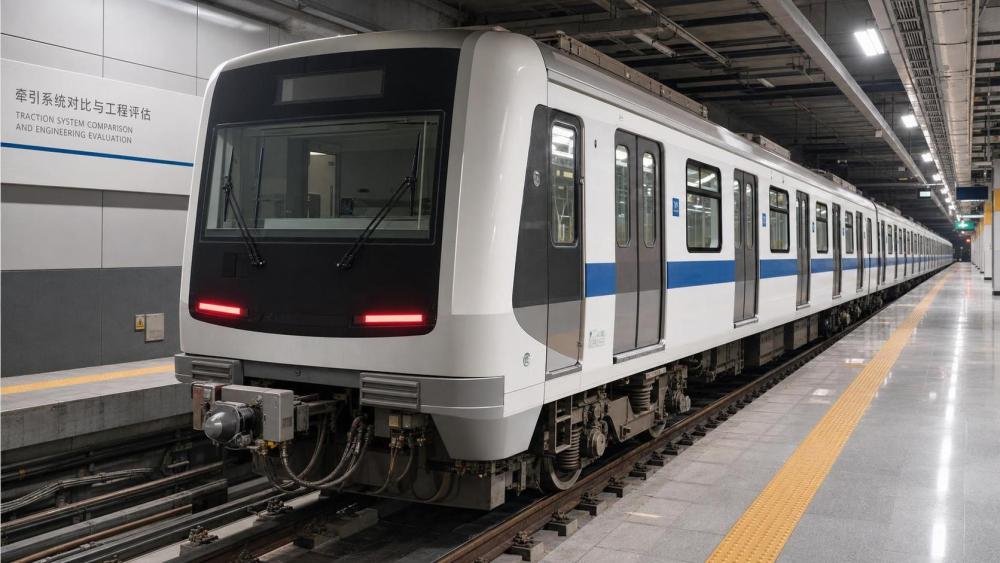
Choosing the right traction systems for rail metro projects requires more than checking power ratings or supplier claims.
Technical teams need a practical way to compare efficiency, reliability, maintainability, safety interfaces, and long-term operating cost.
That matters even more in metro networks with dense headways, frequent braking, platform constraints, and strict service availability targets.
In real procurement work, the best traction systems for rail metro projects are not always the highest-powered options.
They are the systems that match route conditions, duty cycles, maintenance capability, and lifecycle expectations with the fewest hidden compromises.
A structured comparison helps separate marketing claims from engineering reality and supports cleaner tender decisions.
Start with the operating profile, not the catalog
The first mistake in comparing traction systems for rail metro projects is treating all metro lines as similar.
They are not.
A line with short station spacing creates repeated acceleration and braking stress.
A suburban metro extension may place more weight on sustained speed, gradient handling, and thermal stability.
This is why route modeling should come before supplier scoring.
Define the duty cycle in measurable terms.
- Station spacing and average dwell time
- Maximum gradient and curve resistance
- Passenger loading variation by time period
- Ambient temperature, tunnel ventilation, and humidity
- Headway targets and service recovery expectations
- Power supply characteristics and regenerative energy acceptance
Once this baseline is clear, traction systems for rail metro projects can be compared against actual operating pressure instead of nominal specifications.
Compare the traction architecture in practical terms
Not every traction architecture delivers the same benefits under metro conditions.
The comparison usually includes traction motors, converters, control software, cooling design, auxiliary integration, and fault tolerance.
For many projects, the core choice often narrows to motor type, converter technology, and train-level redundancy strategy.
Motor technology
Three-phase AC induction motors remain common because they are mature, robust, and familiar to maintenance teams.
Permanent magnet motors may offer efficiency gains and lower mass, but they can raise cost, sourcing, and thermal management questions.
The right decision depends on whether energy savings justify the procurement and support complexity.
Converter and semiconductor platform
IGBT-based converters are well established in traction systems for rail metro projects and benefit from broad field experience.
Newer semiconductor approaches may improve switching performance or energy efficiency, but metro buyers should verify service maturity first.
A small efficiency advantage means little if replacement parts are difficult to secure over a long contract period.
Distributed resilience
Redundancy is not only a safety topic.
It directly affects service continuity.
When comparing traction systems for rail metro projects, ask how the train behaves after a converter, motor, cooling unit, or control channel fault.
A degraded but operable train can protect timetable stability far better than a high-performance design that fails hard.
Focus on energy use and recovery under real metro duty
Energy performance is one of the biggest decision drivers for traction systems for rail metro projects.
Still, headline efficiency numbers can be misleading without route context.
Metro systems brake often, so regenerative performance deserves close attention.
The useful question is not whether regeneration exists.
The useful question is how much energy is actually recoverable in daily traffic.
- Can the power network absorb regenerated energy reliably?
- Does the line use wayside storage or reversible substations?
- How does the traction control system optimize blended braking?
- What is the performance under crush load and peak heat?
- How stable is adhesion control during low-traction conditions?
From a lifecycle view, even modest energy differences matter across a large fleet.
But savings should be validated with realistic timetable simulation, not ideal bench values.
Reliability and maintenance often decide the winner
In metro operations, reliability usually outweighs small differences in peak performance.
A slightly less efficient system may still be the better choice if failures are rarer and repairs are faster.
That is why traction systems for rail metro projects must be scored on maintainability, not only engineering output.
Look beyond mean time between failures.
Ask how quickly a failed module can be isolated, removed, tested, and replaced.
Maintenance checkpoints worth testing
- Module accessibility from depot conditions
- Diagnostic depth and remote fault tracing
- Spare parts commonality across fleet generations
- Cooling system cleaning and contamination tolerance
- Software update control and cybersecurity discipline
- Training burden for technicians and operators
AATS frequently tracks how maintenance capability shapes long-term fleet economics.
The pattern is consistent.
Systems with clear diagnostics and parts support usually create fewer surprises after warranty handover.
Check integration with braking, signaling, and safety systems
Traction cannot be assessed in isolation.
For modern metros, traction systems for rail metro projects must work smoothly with braking, TCMS, CBTC, train protection, and network power control.
A technically strong traction package may still underperform if interfaces are weak.
More obvious signals appear during abnormal scenarios.
Examples include wheel slip, emergency braking transitions, low-voltage events, and degraded mode running.
This integration view is especially important in unattended or highly automated metro lines.
Use lifecycle cost instead of purchase price alone
Many procurement teams still feel pressure to compare traction systems for rail metro projects through initial bid price.
That approach is risky.
A lower purchase price can be offset by higher energy use, shorter overhaul intervals, software lock-in, or expensive spare inventories.
A stronger method is to compare lifecycle cost categories across a defined service horizon.
- Initial procurement and commissioning
- Energy consumption by route profile
- Scheduled maintenance labor and consumables
- Unscheduled failure cost and lost availability
- Midlife refurbishment or obsolescence management
- Spares, technical support, and software rights
In practice, this is where more disciplined metro decisions are made.
It also reduces the chance of selecting traction systems for rail metro projects that look competitive only during tender opening.
A practical evaluation framework for supplier comparison
To make comparison more consistent, build a weighted scorecard before final negotiations begin.
That keeps late-stage discussions from drifting toward brand preference or incomplete claims.
- Define route-specific performance requirements and operating assumptions.
- Set weights for energy, reliability, maintenance, safety integration, and cost.
- Request evidence from field references, test reports, and failure history.
- Run timetable and energy simulations using the same duty profile.
- Review maintainability with depot and spare support teams.
- Test degraded mode behavior and interface compatibility.
- Compare lifecycle cost over the same service duration.
When done well, this process turns traction systems for rail metro projects into a measurable engineering decision.
It also gives procurement teams a clear audit trail for why one option outperforms another.
Final takeaway
The smartest way to compare traction systems for rail metro projects is to connect technical detail with operational reality.
Look at architecture, energy recovery, reliability, maintainability, interface quality, and lifecycle cost as one decision set.
That approach usually reveals which solution will perform well not only at acceptance, but throughout daily metro service.
For teams involved in planning, tendering, or technology review, the next step is simple.
Build the comparison around your route, your maintenance reality, and your long-term service targets.
That is how traction systems for rail metro projects should be selected when performance, resilience, and value all matter.
Related News
- When does condition based predictive maintenance pay off for traction convertersAug 20, 2026Condition based predictive maintenance pays off for traction converters when it improves intervention timing, parts planning, and fleet priorities—cutting failures, waste, and disruption.
- EMU Traction Converters Explained: Key Performance Metrics That Matter in Specification ReviewsJul 10, 2026EMU traction converters explained clearly: discover the key performance metrics that shape efficiency, thermal stability, reliability, and smarter procurement decisions.
- EMU Traction System Engineering: Key Risks in Converter IntegrationJul 07, 2026EMU traction system engineering insights on converter integration risks, covering interfaces, thermal loads, software coordination, and EMC control to improve delivery success.
- Traction Converters vs Inverters: Key Differences That Affect EMU PerformanceJul 03, 2026Traction converters vs inverters explained: learn how traction converters influence EMU efficiency, braking, reliability, and lifecycle cost for smarter technical evaluation.