




Search
Related News
- 00
0000-00
What drives rail vehicle dynamics cost during high-speed bogie design? - 00
0000-00
How rail transit integration testing exposes interface failures before commissioning - 00
0000-00
How to verify aircraft composite material certification for flight use - 00
0000-00
How to qualify titanium aircraft forgings for fatigue-critical parts - 00
0000-00
How to prepare objective evidence for a Nadcap audit
High Speed Traction Systems: Efficiency, Heat Load, and Lifecycle Cost




Why do high speed traction systems matter so much in rail investment decisions?
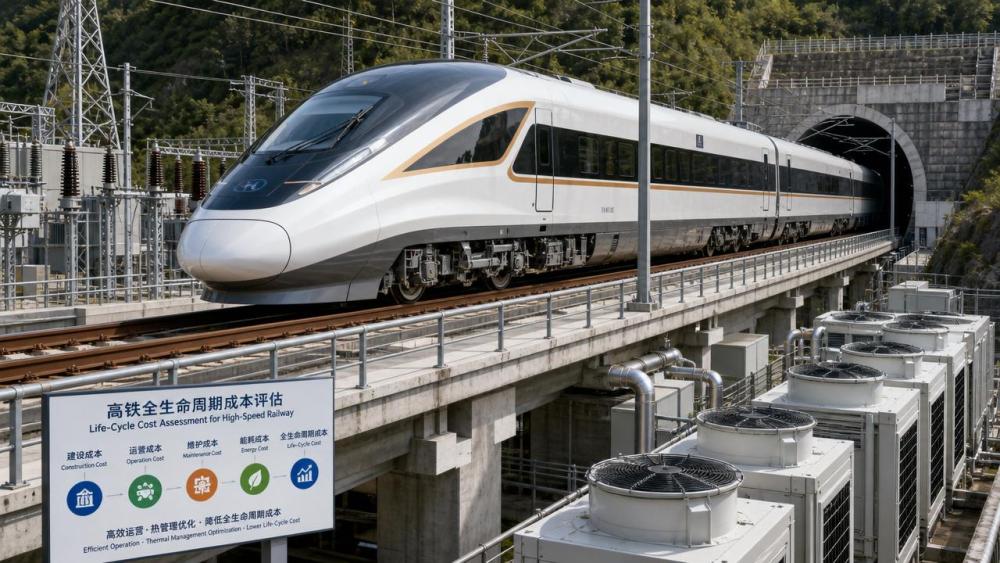
High speed traction systems do far more than move a train.
They shape energy draw, thermal behavior, acceleration, timetable resilience, and the long-term cost profile of the fleet.
That is why they sit close to the center of any rolling stock purchase, refurbishment, or platform upgrade review.
In practical terms, the wrong traction architecture can create hidden losses.
These often appear as excess heat load, faster insulation aging, higher cooling demand, and more unplanned downtime.
The better systems balance converter efficiency, motor performance, control stability, and maintainability under real duty cycles.
This is also why industry platforms such as AATS examine traction systems alongside aerodynamics, bogie dynamics, signaling, safety integrity, and lifecycle maintenance.
For high-speed rail, the traction package is not an isolated subsystem.
It interacts with vehicle weight, onboard cooling, network power quality, maintenance planning, and project economics.
When people compare high speed traction systems, what should they actually look at?
A common mistake is comparing only rated power and headline efficiency.
Those figures matter, but they rarely tell the whole ownership story.
A more useful view is to compare high speed traction systems across five linked dimensions.
- Converter and motor efficiency across real operating speeds, not just peak points.
- Heat load under continuous operation, tunnels, hot climates, and repeated acceleration cycles.
- Maintenance access, modular replacement time, and spare parts commonality.
- Compatibility with train control, braking strategy, and onboard diagnostics.
- Lifecycle cost, including energy, cooling, overhaul, downtime, and residual value.
In many tenders, the best-performing option on paper is not the lowest-cost option over twenty or thirty years.
The key is to test how the system performs under the route profile that really matters.
A 350 km/h intercity corridor, a mixed stopping pattern, and a hot coastal environment create very different stress patterns.
That is where structured comparison becomes more valuable than brochure language.
Is heat load really a major issue, or is efficiency the bigger concern?
In high speed traction systems, these two questions are inseparable.
Every efficiency loss becomes heat somewhere in the train.
That heat must be managed by cooling hardware, airflow design, and maintenance discipline.
If thermal margins are too narrow, component life drops faster than many cost models predict.
Power semiconductors, insulation systems, capacitors, and bearings are all sensitive to sustained temperature stress.
The result may not be immediate failure.
More often, it appears as shortened maintenance intervals, degraded reliability, or higher summer failure rates.
In actual applications, several factors increase heat pressure on high speed traction systems.
- Repeated acceleration on dense service patterns.
- High ambient temperature and dusty environments.
- Restricted airflow caused by packaging constraints.
- Tunnel operation with demanding ventilation conditions.
- Aging cooling components that reduce real thermal margin.
This is one reason advanced transit evaluation increasingly resembles aerospace thinking.
AATS often connects rail traction topics with thermal management ideas familiar in aero-engine materials and cooling systems.
The context differs, but the engineering logic is similar.
Heat is never just a by-product.
It is a direct input into durability, service continuity, and cost.
How should lifecycle cost be judged beyond the purchase price?
Purchase price remains important, but it is only one layer.
For high speed traction systems, lifecycle cost usually comes from a wider set of variables.
Energy consumption is the most visible line item, yet not always the largest source of risk.
Unexpected replacement cycles, software dependence, and low spare interchangeability can quietly raise total ownership cost.
A practical review normally asks four questions.
What does the energy profile look like over the real timetable?
High speed traction systems should be assessed using route simulation, not generic averages.
Station spacing, gradients, climate, and regenerative braking conditions all change the result.
Which parts define the overhaul cycle?
Look closely at converters, cooling units, filters, bearings, insulation health, and control electronics.
A system with attractive efficiency but difficult overhaul access can become expensive in service.
How strong is the diagnostic and predictive maintenance layer?
Better monitoring reduces unnecessary component changes and catches thermal drift earlier.
This matters even more where service disruption penalties are high.
Can the platform support long service life without vendor lock-in risk?
Long-term software support, spare strategy, and subsystem openness deserve direct contract review.
In many projects, this is where lifecycle cost moves sharply.
What mistakes are most common when selecting high speed traction systems?
The most common mistake is treating all high speed traction systems as broadly similar once power targets are met.
In reality, design philosophy varies in ways that affect operating economics for decades.
Another mistake is reviewing thermal performance only at initial commissioning.
A system may pass acceptance tests and still struggle after years of contamination, filter aging, and harsher service conditions.
There is also a tendency to undervalue integration.
Traction behavior affects braking coordination, pantograph-power interaction, onboard energy management, and even maintenance windows.
More careful evaluations usually avoid three traps.
- Choosing by peak technical specification instead of route-matched performance.
- Ignoring heat load impact on cooling, reliability, and depot work.
- Leaving software support and spare strategy too vague in supply agreements.
Where long service life is expected, these details are not minor.
They often decide whether the fleet remains predictable or turns into a recurring recovery project.
So what is a sensible next step before comparing suppliers?
Start by defining the route, climate, and operating pattern that the traction system must survive, not just serve.
Then build an evaluation matrix that covers efficiency, heat load, maintainability, diagnostics, and long-term support.
That matrix should also reflect infrastructure conditions such as power supply quality, depot capability, and service disruption cost.
AATS is useful in this context because it frames rail technology in a wider engineering and compliance environment.
High-speed transport decisions rarely sit in one silo.
Traction choices connect with maintenance strategy, safety systems, component certification, and capital planning.
The strongest approach is usually a staged one.
- Clarify service profile and thermal boundary conditions.
- Request route-based efficiency and heat rejection evidence.
- Compare module replacement time and overhaul assumptions.
- Review diagnostics, software support, and spare continuity.
- Model lifecycle cost using realistic downtime and climate data.
High speed traction systems reward careful scrutiny.
When efficiency, heat load, and lifecycle cost are evaluated together, decision quality improves noticeably.
The next useful move is to turn technical comparison into a documented selection standard.
That makes future upgrades, tenders, and risk reviews far easier to manage.
Related News
- When does condition based predictive maintenance pay off for traction convertersAug 20, 2026Condition based predictive maintenance pays off for traction converters when it improves intervention timing, parts planning, and fleet priorities—cutting failures, waste, and disruption.
- EMU Traction Converters Explained: Key Performance Metrics That Matter in Specification ReviewsJul 10, 2026EMU traction converters explained clearly: discover the key performance metrics that shape efficiency, thermal stability, reliability, and smarter procurement decisions.
- EMU Traction System Engineering: Key Risks in Converter IntegrationJul 07, 2026EMU traction system engineering insights on converter integration risks, covering interfaces, thermal loads, software coordination, and EMC control to improve delivery success.
- Traction Converters vs Inverters: Key Differences That Affect EMU PerformanceJul 03, 2026Traction converters vs inverters explained: learn how traction converters influence EMU efficiency, braking, reliability, and lifecycle cost for smarter technical evaluation.