




Search
Related News
- 00
0000-00
What aerospace materials engineering certification should verify for fastener traceability - 00
0000-00
How propulsion system aerodynamics affects fuel burn at cruise - 00
0000-00
How derailment prevention systems are evaluated for high-speed rail safety - 00
0000-00
When does bridge structural health monitoring justify the cost - 00
0000-00
Anatel Approves Spacesail Constellation for Commercial Use in Brazil
CBTC Signaling Technology in Metro: Capacity, Safety, and Upgrade Risks




CBTC signaling technology metro investment has moved from a specialist topic to a board-level decision in many urban rail programs. Cities want more trains, tighter headways, better punctuality, and safer operations, yet most networks must achieve that within aging infrastructure, constrained maintenance windows, and rising lifecycle cost pressure.
That is why CBTC is being discussed not only as a signaling upgrade, but as an operating model. For organizations tracking advanced transport systems through AATS, the real question is no longer whether CBTC matters. It is how capacity gains, safety logic, supplier choices, and upgrade risk should be judged together.
Why CBTC has become a strategic metro issue
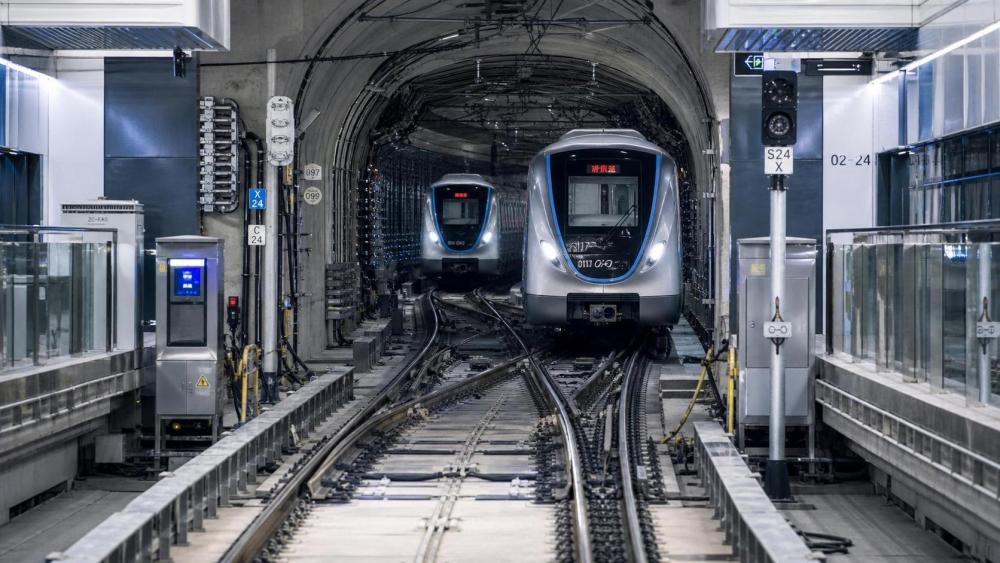
Urban rail demand rarely grows in a smooth line. Peak loads rise faster than off-peak traffic, interchange stations become bottlenecks, and timetable recovery margins shrink.
In that context, conventional fixed-block signaling can limit how closely trains may run. Adding rolling stock alone does not solve the problem if the signaling architecture still enforces conservative separation.
CBTC signaling technology metro operators use is attractive because it supports more precise train localization, continuous communication, and dynamic movement authority. In practical terms, that means shorter safe headways and more flexible traffic management.
The wider industry also pays attention because CBTC sits at the intersection of safety certification, digital control, communications resilience, and maintainability. Those are themes already familiar across aerospace and advanced transit sectors, where high reliability is not optional.
What CBTC means in operational terms
At its core, CBTC replaces broad assumptions about train position with far more granular knowledge. The system continuously exchanges data between trainborne equipment and wayside control.
That data supports automatic train protection, and often integrates with automatic train operation and automatic train supervision. The result is not just train separation. It is a coordinated operating environment.
Many metro projects adopt moving block or quasi-moving block principles. Instead of relying only on fixed track sections, the system calculates safe distance according to real-time train status, speed, braking curves, and route conditions.
This is why CBTC signaling technology metro projects can support higher throughput without simply expanding tunnels or building new lines. Digital control extracts more performance from the same physical asset base.
The architecture behind the promise
A typical CBTC environment includes onboard controllers, zone controllers, interlockings, radio communication networks, trackside detection support, operation control center interfaces, and safety-certified software.
Performance depends on the whole chain. Weak radio coverage, software integration defects, or poor fallback design can reduce the value of an otherwise advanced system.
Where the business value actually comes from
The headline benefit is capacity. Shorter headways can allow more trains per hour, which may postpone expensive civil expansion and improve revenue opportunities on crowded corridors.
But capacity is only one part of the business case. A well-implemented CBTC program can also improve timetable stability, reduce knock-on delays, and support more predictable service recovery after disruption.
Energy performance may improve as well. Better speed regulation and traffic coordination can reduce unnecessary braking and acceleration cycles, especially when integrated with modern traction and supervision systems.
There is also a maintenance dimension. Richer operating data helps identify communication faults, braking anomalies, and degradation patterns earlier. That fits the broader shift toward predictive maintenance across advanced transport infrastructure.
Safety is not just a feature claim
In signaling, safety claims must be traceable. That means formal hazard identification, independent assessment, robust software governance, and evidence that the system achieves the required integrity level.
For CBTC, the discussion usually leads to SIL4 functions, fail-safe principles, redundancy, and graceful degradation. A mature system should remain controllable even when communication quality drops or equipment fails.
This is one reason AATS readers often compare rail signaling with aerospace safety culture. In both sectors, reliability depends on disciplined system engineering, validation rigor, and clear treatment of edge cases.
A metro authority may accept advanced automation only when fallback rules are explicit. Can trains continue in restricted mode? How quickly can operations recover? What happens during mixed fleet conditions? Those details shape real safety outcomes.
Cybersecurity now sits inside the safety conversation
CBTC signaling technology metro networks rely on communications and software interfaces, so cybersecurity can no longer be treated as a separate IT matter.
System segmentation, secure remote access, patch management, and incident recovery planning are now part of prudent technical due diligence.
The difficult part: upgrading live metro systems
Most upgrade risk appears during transition, not in the tender presentation. Brownfield metro lines involve legacy interlockings, varied rolling stock generations, limited night possessions, and tight public service obligations.
A new CBTC layer must coexist with old signaling for a period, sometimes across multiple depots and operating rules. The technical challenge is integration. The commercial challenge is disruption control.
Migration strategy therefore matters as much as the end-state design. Overlay deployment, phased cutover, shadow mode testing, and mixed-mode operation all carry different time, cost, and risk profiles.
Another common issue is radio performance in tunnels, stations, and maintenance areas. Coverage gaps or interference can undermine the consistency needed for a high-performance CBTC environment.
Obsolescence also deserves more attention than it usually receives. Software versions, processor platforms, telecom standards, and supplier support windows may age faster than core civil assets.
- Check whether fleet retrofit scope includes all onboard interfaces, not only headline train types.
- Review degraded mode scenarios before approving aggressive headway assumptions.
- Treat possession time and testing access as key commercial constraints.
- Ask how spare parts, software support, and cybersecurity updates will be governed after commissioning.
How to compare suppliers and proposals
Two CBTC proposals may promise similar headways yet carry very different delivery risk. Comparison should extend beyond price, nominal capacity, and automation level.
What matters is evidence. Has the supplier delivered on comparable brownfield lines? How mature is the interface management process? What independent safety assessment has already been completed?
Commercial structure matters too. Some contracts push interface risk onto the operator or civil contractor. Others define clearer accountability for testing, data migration, and system acceptance.
This is where a B2B intelligence platform such as AATS becomes useful. Market reporting, technology comparison, and project case interpretation help separate strong technical narratives from proven execution capability.
Useful evaluation dimensions
- Installed base on lines with similar fleet mix, climate, and ridership intensity.
- Interoperability with existing interlockings, depot systems, and supervision platforms.
- Safety case maturity, assessor track record, and certification roadmap.
- Radio network resilience, cybersecurity governance, and maintainability tools.
- Long-term upgrade model, local support depth, and parts obsolescence planning.
What to examine before the next decision gate
A disciplined review starts with the operating problem, not the technology label. Is the main issue corridor saturation, service irregularity, staffing model, legacy asset age, or future automation readiness?
From there, the decision framework should connect expected headway improvement with migration complexity, fleet retrofit cost, safety evidence, and long-term support obligations.
CBTC signaling technology metro programs deliver strong value when the operational target is clear and the upgrade path is realistic. They disappoint when capacity claims are accepted without examining integration, fallback operation, and maintainability.
The next sensible step is to build a short evaluation matrix around capacity, safety, migration, telecom resilience, lifecycle support, and supplier credibility. That usually reveals whether a project is genuinely ready for procurement, pilot testing, or a deeper technical review.
Related News
- EASA Tightens SIL4 Rules for EU-Bound CBTC ExportsAug 09, 2026CBTC exports to the EU face tighter SIL4 compliance as EASA updates rules. Learn the March 2027 deadline, IV&V impact, and how suppliers can protect market access.
- How Unmanned Rail Operations Signaling Affects Headway, Safety, and Recovery TimeAug 07, 2026Unmanned rail operations signaling shapes headway, safety, and recovery time. Discover how CBTC, positioning accuracy, and degraded-mode design determine real driverless rail performance.
- EASA Extends SIL4 Rules to CBTC CertificationAug 07, 2026EASA extends SIL4 rules to CBTC certification, reshaping market access, audits, and procurement. Learn what suppliers, bidders, and EU-focused buyers must prepare now.
- EU Tightens SIL4 Rules for CBTC VerificationAug 06, 2026EU Tightens SIL4 Rules for CBTC Verification: learn how the new ERA-backed third-party requirement reshapes EU certification, project timelines, and export readiness for rail suppliers.