




Search
Related News
- 00
0000-00
How train crossing pressure waves in China affect nearby structures - 00
0000-00
How fatigue fracture analysis testing identifies crack initiation risks - 00
0000-00
How a CBTC fallback system keeps trains moving after link loss - 00
0000-00
When should a transit system engineering consultant join an EPC project? - 00
0000-00
What drives aerospace forging price for titanium engine casings?
How Aerospace Material Creep Changes Titanium Part Life




Titanium is valued in aerospace because it combines low weight, corrosion resistance, and strong mechanical performance. Yet titanium part life is not defined by strength alone. In hot sections, engine-adjacent structures, and highly stressed forged components, aerospace material creep titanium behavior can quietly reshape service expectations.
That matters well beyond metallurgy. A small shift in temperature exposure, stress concentration, or forging quality can change dimensional stability, fatigue reserve, inspection intervals, and replacement cost. For organizations comparing materials, processes, and suppliers, creep is a lifecycle issue as much as a lab property.
Within the broader AATS industry context, this topic sits at the intersection of aircraft lightweighting, engine reliability, certification readiness, and long-term MRO planning. It is also one reason material evaluation now requires both technical data and realistic application judgment.
Why creep changes titanium part life
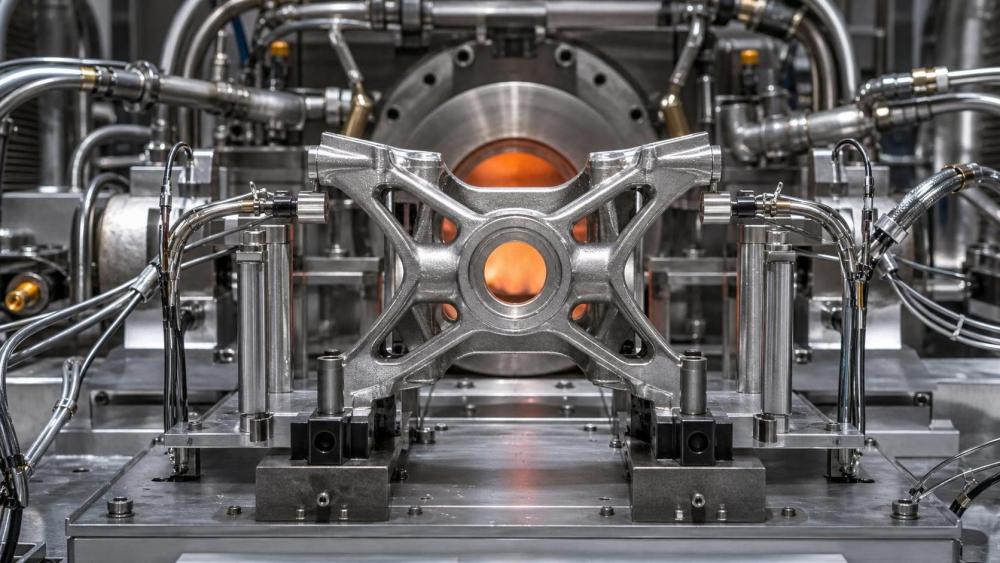
Creep is time-dependent deformation under load, usually becoming more important at elevated temperature. In aerospace, that simple definition has complex consequences because parts rarely see constant loads or perfectly uniform heat.
For titanium alloys, creep often appears before obvious failure. A bracket, casing feature, fastener zone, or forged structural detail may stay intact while gradually losing shape tolerance or load path accuracy.
In practical terms, aerospace material creep titanium performance affects three life questions. How long does the part hold geometry, how long does it retain fatigue margin, and how confidently can maintenance teams predict its remaining useful life.
This is why titanium parts near hot airflow, bleed systems, nacelle zones, or engine-adjacent structures deserve more scrutiny than a simple room-temperature strength comparison would suggest.
What drives creep in aerospace titanium
Temperature is the first driver, but not the only one. Two titanium parts made from the same nominal alloy can age differently when stress state, microstructure, surface condition, or section thickness changes.
Microstructure and heat treatment
Creep resistance depends heavily on alpha-beta balance, grain size, and phase distribution. Heat treatment choices that favor one performance target can reduce stability under long thermal exposure.
A forged titanium component may show excellent static properties but weaker creep behavior if process control leaves a microstructure that coarsens, redistributes phases, or supports localized deformation over time.
Stress concentration and geometry
Sharp transitions, thin walls, bolt interfaces, and local attachment points can create high-stress regions. Creep rarely develops evenly across a part. It tends to concentrate where load and heat combine.
That means drawing design, machining quality, and feature placement all matter. Even a strong alloy can lose life when geometry amplifies local creep strain.
Environment and exposure history
Oxidation, dwell periods, thermal cycling, and off-design operating conditions can all accelerate damage. Creep behavior in a test coupon may not fully represent a part exposed to variable mission conditions.
This is one reason aerospace material creep titanium assessment should include realistic exposure assumptions, not only nominal design temperature.
Where the issue shows up most clearly
Not every titanium component faces meaningful creep risk. The concern rises when a part combines sustained load, elevated temperature, tight dimensional control, and long service duration.
These examples show why part life is rarely a single number. The same titanium grade may be low risk in a cool airframe bracket and much more sensitive in a hot, constrained assembly.
Why the industry is paying closer attention
Aircraft design keeps pushing for lighter structures, tighter thermal margins, and longer maintenance intervals. That increases the value of titanium, but also increases the penalty for weak creep assumptions.
The commercial side matters too. Suppliers are often compared on forging capability, heat treatment discipline, certification readiness, and consistency across batches. Creep performance connects all of those factors.
AATS regularly frames technical topics through both engineering and procurement logic. In that context, aerospace material creep titanium is not only a design issue. It also affects supplier qualification, export credibility, and lifecycle risk visibility.
This aligns with broader transportation trends. Whether the application is aircraft structures or advanced transit systems, high-reliability platforms depend on materials that keep shape and function over long service periods.
How to evaluate titanium creep risk in real programs
The most useful evaluation approach is comparative rather than abstract. Instead of asking whether a titanium alloy is good, ask whether its creep behavior is appropriate for the exact load, temperature, and life model.
Key signals in data review
- Creep strain curves at relevant temperature, not only ultimate strength data.
- Exposure duration assumptions behind the test result.
- Microstructure consistency after forging and heat treatment.
- Evidence of behavior after thermal cycling, not only steady-state tests.
- Links between creep performance and fatigue or crack initiation data.
Questions worth asking suppliers
Process capability often tells more than brochure claims. Ask how the forge route is controlled, how grain structure is verified, and how heat treatment repeatability is documented across production lots.
Also examine whether the supplier can relate material data to actual component geometry. A part-level explanation is more valuable than generic alloy tables.
Where Nadcap, aerospace heat treatment discipline, or high-temperature process records are involved, the quality system should support traceability from raw stock to final part condition.
How creep interacts with fatigue, maintenance, and cost
Creep rarely acts alone. A titanium part that slowly deforms may also experience changing stress distribution, which can accelerate fatigue damage in neighboring zones.
That is why aerospace material creep titanium review should be integrated with durability planning. The real question is not only whether deformation occurs, but whether it changes crack growth risk, alignment, or assembly performance.
Maintenance planning can shift quickly when creep is underestimated. Inspection frequency may rise, replacement stock may increase, and lifecycle cost can exceed the savings gained from lightweight design.
In some programs, the cheapest-looking material route becomes the most expensive once service exposure, rework, and downtime are included.
A practical framework for the next decision
A useful next step is to organize evaluation around application reality. Start with the true thermal envelope, then map local stress features, expected dwell time, microstructure control points, and inspection strategy.
- Separate room-temperature strength from high-temperature life expectations.
- Compare alloy data with part geometry and load path, not in isolation.
- Look for process evidence that supports repeatable creep resistance.
- Connect material choice to maintenance interval and total ownership cost.
- Use supplier discussions to test whether data is application-specific.
For teams working across aerospace materials, MRO planning, and supplier comparison, that structure creates a clearer basis for judgment. It also fits the broader AATS view that reliability comes from linking material behavior, process quality, and lifecycle performance.
When titanium is being considered for hot or highly stressed use, the best decisions usually come from one disciplined question: how will this part age in service, not just how strong is it on day one.
Related News
- How train crossing pressure waves in China affect nearby structuresSep 24, 2026Train crossing pressure waves China: learn how high-speed rail pressure pulses affect barriers, stations, tunnels, and trackside assets—and how to design for safer, durable performance.
- How fatigue fracture analysis testing identifies crack initiation risksSep 23, 2026Fatigue fracture analysis testing reveals crack initiation risks in aerospace and rail components, enabling stronger qualification, safer maintenance, and lower lifecycle risk.
- How finite element aerospace structural analysis predicts wing fatigue lifeSep 14, 2026Discover how finite element aerospace structural analysis predicts wing fatigue life, from load spectra and joint modeling to crack growth, testing, and maintenance decisions.
- How to qualify titanium aircraft forgings for fatigue-critical partsSep 10, 2026Titanium aircraft forgings for fatigue-critical parts: learn how to qualify material pedigree, grain flow, microstructure, NDT, fatigue testing, and traceability.