



Search
Related News
- 00
0000-00
How fatigue fracture analysis testing identifies crack initiation risks - 00
0000-00
When should a transit system engineering consultant join an EPC project? - 00
0000-00
What drives aerospace forging price for titanium engine casings? - 00
0000-00
How rail fail safe systems prevent unsafe routes during signal faults - 00
0000-00
What should a rail signaling supplier provide for SIL4 projects?
Extreme Aerodynamics Solutions Shaping 2026 High-Speed Design




Extreme Aerodynamics Solutions Shaping 2026 High-Speed Design is no longer a niche engineering topic. It now sits at the center of performance, certification, operating cost, and investment timing across aerospace and advanced rail.
In practical terms, extreme aerodynamics solutions connect airflow management with materials, noise control, structural behavior, digital simulation, and maintenance planning. That connection matters more in 2026 because higher speeds leave less margin for drag, vibration, pressure shock, and thermal stress.
For airframes, engines, high-speed EMUs, pantographs, bogies, and signaling-linked vehicle platforms, aerodynamic decisions increasingly shape business outcomes long before a system enters service.
Why the topic is moving up the strategic agenda
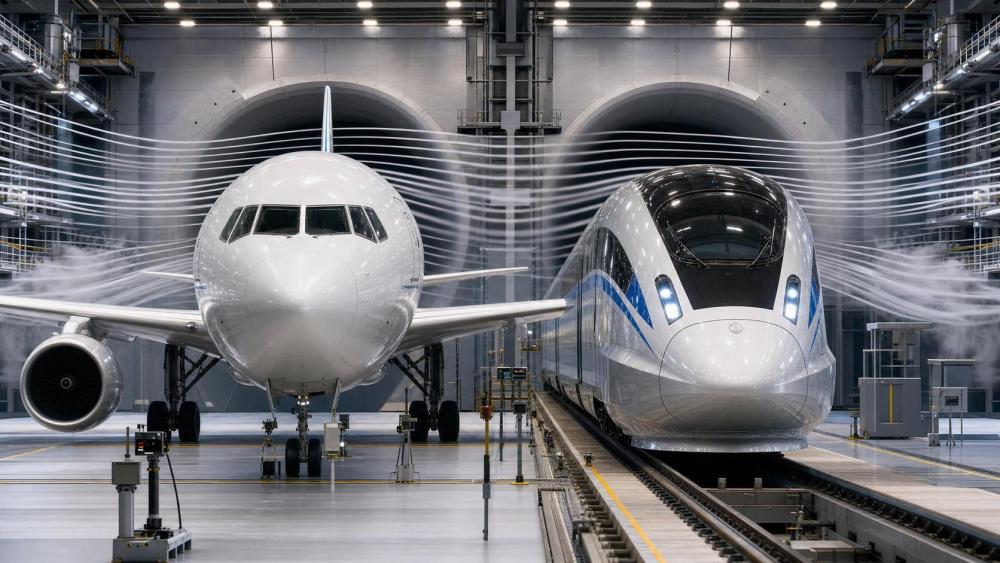
The pressure is coming from several directions at once. Speed targets are rising, energy efficiency standards are tightening, and communities are less tolerant of noise and pressure effects around transport corridors.
In aerospace, fuel burn, thermal loading, boundary-layer behavior, and aeroelastic stability all influence design choices. In high-speed rail, crosswind stability, tunnel entry pressure waves, pantograph uplift, and aeroacoustic noise have become board-level concerns.
That is why extreme aerodynamics solutions are no longer evaluated as isolated technical upgrades. They are increasingly treated as system-level enablers that affect procurement, lifecycle maintenance, route capacity, and export competitiveness.
What extreme aerodynamics solutions actually include
The phrase covers more than sleek outer shapes. It includes the methods used to control airflow under severe operating conditions, where speed, temperature, pressure, and vibration interact continuously.
In aircraft and engines, that can mean contour optimization, inlet flow conditioning, film cooling design, turbine flow path management, drag reduction, and structural integration with titanium forgings or carbon fiber composites.
In high-speed rail, it often involves nose shape optimization, underbody smoothing, bogie shrouding, pantograph fairings, pressure sealing, and measures that reduce micro-pressure waves in tunnels.
The common thread is simple. Extreme aerodynamics solutions aim to keep vehicles faster, quieter, more stable, and more energy efficient without creating new safety or maintenance burdens.
The system view matters more than the part view
A low-drag surface alone does not guarantee value. A stronger aerodynamic shape may add manufacturing complexity, affect repair procedures, or change how sensors, cooling channels, and structural joints behave in service.
That is why leading programs evaluate airflow behavior together with creep resistance, fatigue life, acoustic compliance, inspection access, and digital validation workflows.
Where the strongest commercial value appears
The commercial case usually appears in four places: energy use, asset reliability, certification confidence, and network performance.
- Lower drag reduces fuel or traction energy demand over long operating cycles.
- Better flow control can limit vibration, thermal hotspots, and fatigue accumulation.
- Stronger aerodynamic stability supports smoother certification and route approval.
- Reduced noise and pressure effects improve public acceptance and infrastructure compatibility.
This is particularly relevant in projects where procurement decisions must balance upfront capex with decades of operating exposure. A lower-cost design can become expensive if aerodynamics drive extra maintenance, slower approvals, or reduced usable speed.
How aerospace and high-speed rail use the same logic differently
Aerospace and advanced transit do not face identical conditions, yet both depend on extreme aerodynamics solutions to manage thin performance margins.
The important lesson is that aerodynamic optimization rarely ends at the vehicle shell. It reaches into component supply chains, manufacturing tolerances, inspection methods, and operational rules.
Signals that separate credible solutions from attractive claims
Not every aerodynamic improvement has equal value. In many tenders, the stronger proposals are not the ones with the boldest performance promise, but the ones with clearer validation logic.
Look for evidence across the lifecycle
Credible extreme aerodynamics solutions usually show consistency across simulation, prototype testing, manufacturing repeatability, and field maintenance. A good CFD model is useful, but not enough on its own.
It is worth checking whether the design has been correlated with wind tunnel data, pressure wave measurements, thermal testing, acoustic results, or service records under comparable duty conditions.
Check the certification path early
Aerodynamic changes can alter more than performance. They may affect SIL4-linked safety interfaces, structural substantiation, noise compliance, maintenance documentation, and approval schedules across different markets.
That is where industry intelligence platforms such as AATS add value. They help connect technical claims with certification readiness, supplier capability, and broader project economics.
Why material and maintenance choices belong in the same conversation
Aerodynamics does not work in isolation from materials science. A refined profile may fail commercially if the selected alloy, composite layup, or thermal barrier system cannot tolerate real operating loads.
For aerospace, single-crystal superalloys, film cooling systems, and precision heat treatment often determine whether an aerodynamic gain survives at temperature. For rail, fatigue resistance, sealing durability, and surface integrity influence long-term performance retention.
Maintenance strategy matters just as much. Surface erosion, contamination, wear around pantographs, and unnoticed structural distortion can gradually weaken the benefits of extreme aerodynamics solutions.
That is why predictive maintenance, laser inspection, and condition-based MRO should be viewed as part of the aerodynamic value chain rather than separate afterthoughts.
Practical evaluation points for 2026 programs
When comparing suppliers, concepts, or investment cases, a few questions tend to clarify the real opportunity faster than headline metrics alone.
- Which operating condition creates the highest aerodynamic penalty: cruise, acceleration, tunnel entry, crosswind, or thermal load?
- Is the claimed gain proven only in simulation, or also in testing and service-equivalent conditions?
- What manufacturing controls protect shape accuracy, surface quality, and repeatable performance?
- How does the solution affect inspection intervals, spare strategy, and total maintenance burden?
- Does the design support future route, speed, or export requirements without major redesign?
These questions are useful because they link aerodynamic ambition to business resilience. In 2026, that link often determines whether a design remains competitive after procurement rather than only during bidding.
A practical next step
The most effective way to approach extreme aerodynamics solutions is to build a decision framework that combines performance data, material capability, certification exposure, and maintenance reality.
From there, compare technologies by route profile, thermal environment, speed target, infrastructure limits, and lifecycle economics rather than by drag reduction claims alone.
AATS is useful in that context because it brings together aerospace components, high-speed rail systems, safety technologies, MRO insight, and supplier intelligence within one practical reference environment.
As 2026 design programs move forward, the strongest decisions will likely come from treating extreme aerodynamics solutions as a cross-disciplinary business issue, not only an engineering feature.
Related News
- How fatigue fracture analysis testing identifies crack initiation risksSep 23, 2026Fatigue fracture analysis testing reveals crack initiation risks in aerospace and rail components, enabling stronger qualification, safer maintenance, and lower lifecycle risk.
- How finite element aerospace structural analysis predicts wing fatigue lifeSep 14, 2026Discover how finite element aerospace structural analysis predicts wing fatigue life, from load spectra and joint modeling to crack growth, testing, and maintenance decisions.
- How to qualify titanium aircraft forgings for fatigue-critical partsSep 10, 2026Titanium aircraft forgings for fatigue-critical parts: learn how to qualify material pedigree, grain flow, microstructure, NDT, fatigue testing, and traceability.
- How airframe structural materials affect fatigue life in wing structuresAug 29, 2026Airframe structural materials shape wing fatigue life, inspection needs, corrosion resistance, and repair strategy. Compare aluminum, titanium, and composites.