




Search
Related News
- 00
0000-00
How propulsion system aerodynamics affects fuel burn at cruise - 00
0000-00
How derailment prevention systems are evaluated for high-speed rail safety - 00
0000-00
When does bridge structural health monitoring justify the cost - 00
0000-00
Anatel Approves Spacesail Constellation for Commercial Use in Brazil - 00
0000-00
China Rolls Out Nationwide Cross-Border RMB and FX Cash Pooling for Multinationals
Single Crystal Blade Cooling Limits: What Causes Thermal Failure




Single crystal blade cooling limits are really about failure margin
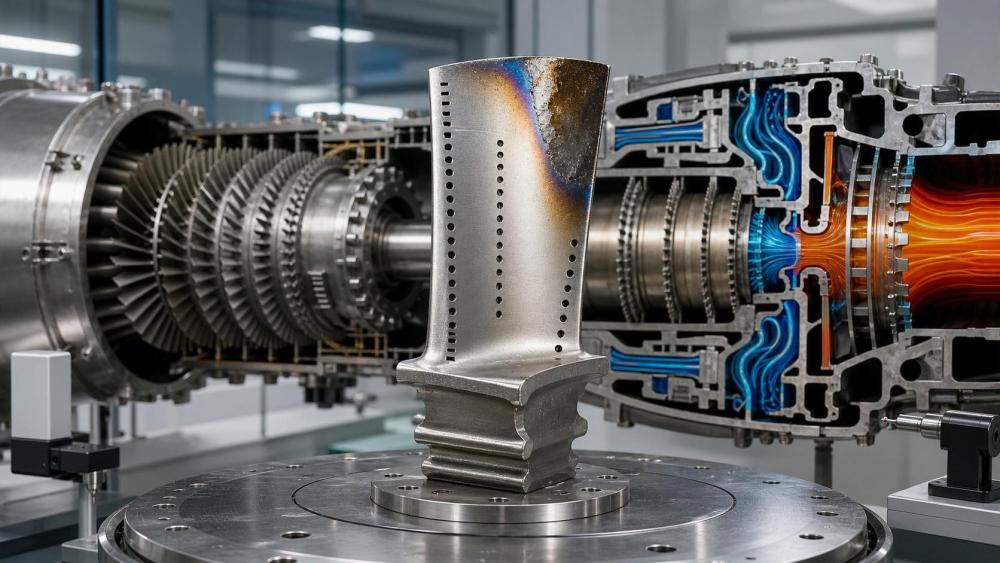
Single crystal blade cooling is not just a design feature. It defines the operating window before heat, oxidation, and stress begin causing permanent damage.
In aero-engine service, that limit is rarely controlled by metal temperature alone. Cooling air quality, coating condition, load profile, and internal passage health all matter.
This is why thermal failure often surprises teams that only track average exhaust temperature. Local hot spots usually tell the real story.
Within the wider AATS coverage of turbine blades, superalloys, MRO, and transport safety, this topic sits at the point where material science meets operational risk.
A practical question follows: when does single crystal blade cooling stop being sufficient, and what signals show the margin is shrinking too fast?
What usually pushes single crystal blade cooling beyond its limit?
The short answer is thermal imbalance. A blade fails when heat input rises faster than the cooling system can remove or redistribute it.
That imbalance can start in several ways. Some are design-related, while others appear later during operation, repair, or maintenance cycles.
- Blocked film cooling holes reduce surface protection and let gas-side temperature attack exposed regions.
- Internal passage fouling restricts airflow and changes pressure distribution inside the blade.
- Coating degradation increases heat transfer into the substrate and accelerates oxidation.
- Over-temperature events during transient operation can create local creep damage before alarms appear.
- Manufacturing variation, including wall thickness drift, changes local cooling effectiveness.
More often, thermal failure is cumulative rather than sudden. A blade may survive many cycles while quietly consuming its remaining life.
That is why single crystal blade cooling should be evaluated as a life-control system, not only as a temperature-control feature.
How can you tell whether the problem is cooling, material, or something upstream?
This is where diagnosis often gets blurred. Surface distress on a blade does not automatically mean the alloy was wrong.
A useful first step is separating symptom from cause. Burn marks, coating spallation, and trailing-edge cracking may share one visible location but come from different mechanisms.
In practical review work, the following table helps frame the first judgment before deeper metallurgical analysis begins.
AATS often treats this kind of issue as a cross-functional problem. Cooling limits connect metallurgy, repair quality, inspection methods, and engine operating behavior.
If one of those areas is reviewed in isolation, the diagnosis may be technically clean but operationally incomplete.
Why do blades still overheat even when the cooling design is advanced?
Because advanced design does not remove sensitivity. It often increases it.
Single crystal blade cooling uses fine internal passages and precise film hole patterns. These features improve performance, but they also narrow tolerance for contamination and repair deviation.
A small deposit inside a passage can alter airflow more than expected. A slight geometry shift after refurbishment can change local exit behavior.
Another issue is that engine upgrades may increase thermal demand faster than legacy inspection criteria evolve. The hardware looks familiar, but its usable margin is different.
This is especially important when comparing parts across fleets, suppliers, or overhaul histories. Similar part numbers do not always mean equivalent cooling performance in service.
For that reason, single crystal blade cooling should be checked against actual repair records, coating cycles, and exposure history, not only drawing intent.
Which inspection points give the earliest warning of thermal failure?
The earliest warnings are usually indirect. By the time a blade shows heavy cracking, the cooling margin has already been consumed.
A better approach is to watch for small changes that indicate deteriorating heat management.
- Shifts in coating texture, color, or roughness around film exits
- Deposit accumulation in leading-edge or serpentine passages
- Dimensional drift after repair, especially at thin-wall sections
- Metallographic evidence of early rafting, creep voids, or oxidation penetration
- Mismatch between expected and measured cooling flow behavior during validation
In actual service programs, combining borescope findings with repair traceability is often more useful than relying on one inspection method alone.
Where possible, trending should include exposure time, event severity, and previous coating or heat-treatment history. Single events matter less than the pattern they create.
What are the most common mistakes when judging single crystal blade cooling risk?
One common mistake is treating temperature exceedance as the only failure trigger. In reality, oxidation, creep, and thermal fatigue reinforce each other.
Another is assuming that a sound single-crystal structure guarantees safe life. Crystal quality matters, but cooling path integrity often decides service survival.
A third mistake appears during repair approval. The part passes dimensional checks, yet internal cleanliness or hole restoration quality remains uncertain.
The more reliable judgment is usually comparative. Ask how this blade differs from its last accepted condition, not only whether it meets a static limit today.
That mindset is familiar across high-reliability transport systems. In rail signaling, traction, or turbine hardware, safety margin is managed through drift detection as much as threshold control.
How should the next review be structured if thermal failure is already suspected?
Start by narrowing the question. Do not ask only whether the blade overheated. Ask where the cooling margin was lost and when that loss likely began.
A focused review usually works best when it follows a short sequence.
- Map visible damage to cooling features, coating zones, and stress concentration areas.
- Check repair and coating history against the current condition.
- Verify whether flow restriction, geometry change, or operating excursion can explain the location pattern.
- Use metallurgical examination to confirm mechanism, not to replace system-level reasoning.
- Update inspection triggers and acceptance criteria if the previous standard missed early signals.
Single crystal blade cooling limits are best managed as part of a broader reliability framework. That is consistent with the AATS view of safety-critical transport assets.
The key takeaway is simple. Thermal failure rarely comes from one dramatic cause. It usually grows from small losses in cooling effectiveness that were measurable earlier.
The next sensible step is to review inspection data, repair records, and thermal exposure together, then redefine the warning signs that matter before the next cycle closes.
Related News
- How Film Cooling Hole Design Affects Turbine Blade Cooling EfficiencyAug 14, 2026Film cooling hole design directly impacts turbine blade cooling efficiency, durability, and performance—discover how geometry, angle, and spacing influence real results.
- How the Single-Crystal Casting Process Affects Blade Creep Life and YieldAug 09, 2026Single-crystal casting process insights for turbine blades: learn how thermal control, orientation, and defect prevention improve creep life, raise yield, and reduce supplier risk.
- How Creep Resistant Alloys Extend Gas Turbine Blade Life at High TemperaturesAug 06, 2026Creep resistant alloys gas turbines rely on can dramatically extend turbine blade life by resisting deformation, oxidation, and thermal fatigue at high temperatures.
- EASA Tightens Nadcap Path for EU-Bound Turbine BladesAug 05, 2026EASA tightens EU-bound turbine blade rules with a same-lab Nadcap HT and MT report—see what exporters must change before 2027.