




Search
Related News
- 00
0000-00
What aerospace materials engineering certification should verify for fastener traceability - 00
0000-00
How propulsion system aerodynamics affects fuel burn at cruise - 00
0000-00
How derailment prevention systems are evaluated for high-speed rail safety - 00
0000-00
When does bridge structural health monitoring justify the cost - 00
0000-00
Anatel Approves Spacesail Constellation for Commercial Use in Brazil
EASA Ties EU Fastener Access to Nadcap HT Audit




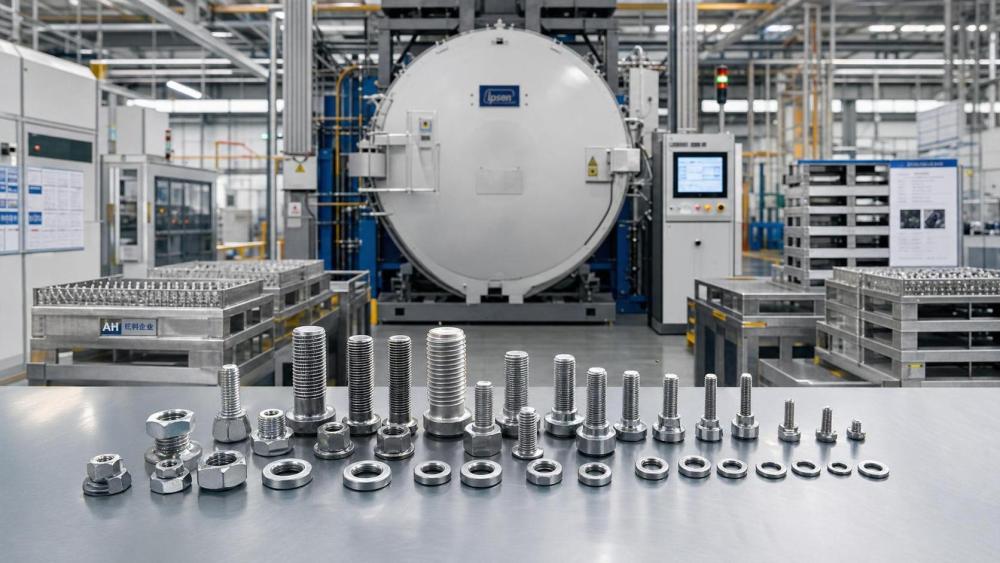
On September 1, 2026, a revised EASA requirement took effect that changes the compliance path for aerospace fastener suppliers shipping to the EU. Based on EASA’s revision notice issued on July 4, 2026, suppliers of aerospace fasteners for the EU market must now bring their heat treatment process into the scope of Nadcap Heat Treating (HT) certification and undergo an independent third-party process audit. For exporters, processors, supply chain coordinators, and customers connected to Airbus-related sourcing, this is worth close attention because the change directly affects qualification, delivery timing, and supply chain access.
What the revised requirement now makes explicit
The confirmed change is straightforward in scope and timing. EASA issued a revision notice on July 4, 2026, and clarified that from September 1, 2026, all suppliers exporting aerospace fasteners to the European Union must include their heat treatment process within Nadcap HT certification coverage.
The requirement also states that the heat treatment process must be subject to an independent third-party process audit. According to the provided information, this directly affects the compliance entry route and delivery cycle of Chinese fastener exporters.
The same information further indicates that suppliers without the required certification will not be able to enter Airbus supply chain tiers at tier two and above.
Where the pressure is likely to appear first
Export-oriented fastener suppliers face an immediate qualification threshold
From an industry perspective, companies directly exporting aerospace fasteners to the EU are the first group likely to feel the impact. The reason is clear: the revised rule is tied to market access and supplier qualification rather than only to internal quality management. The most affected business links are compliance review, customer onboarding, and delivery planning, because the absence of Nadcap HT process coverage now becomes a direct barrier to supply.
Heat treatment operations become a core compliance checkpoint
Processing and manufacturing businesses involved in heat treatment should pay close attention because the new requirement centers on process control, not only on the finished fastener product. Analysis shows that the operational pressure is likely to concentrate on whether the heat treatment process is formally covered by Nadcap HT and whether the process can pass an independent third-party audit within customer timelines.
Airbus-linked sourcing and upstream coordination may tighten
Procurement teams, supply chain service providers, and businesses coordinating deliveries into Airbus-related programs may also be affected. Based on the provided information, suppliers lacking the required certification cannot enter Airbus supply chain tiers at tier two and above. That means the practical impact may appear in supplier screening, order allocation, and schedule coordination, especially where qualification status must be confirmed before supply commitments are made.
What companies should watch in day-to-day execution
Separate the effective requirement from broader market assumptions
What deserves closer attention is the exact confirmed scope of the current change: aerospace fasteners exported to the EU, with heat treatment required to fall under Nadcap HT certification and third-party process audit. Companies should avoid extending the rule beyond what has been confirmed, while still treating the effective date and supply chain access implications as immediate operational matters.
Review whether certification scope matches actual processing activity
For affected suppliers, one practical issue is whether their current qualification status, if any, actually covers the heat treatment process in the required Nadcap HT scope. The distinction matters because a general claim of quality capability is not the same as process coverage under the stated certification requirement.
Prepare for delivery-cycle and customer-communication pressure
Observably, the provided information links the new rule to both compliance access and delivery timing. That means businesses should pay attention to how qualification status, audit readiness, and customer documentation may influence order confirmation and shipment scheduling. Communication with customers and supply chain partners is likely to become more sensitive where certification status affects accepted supplier tiering.
Track whether later official wording changes the practical boundary
Companies should also keep watching for any later official clarification that may refine interpretation, implementation detail, or document expectations. The current input confirms the requirement and its effective date, but practical enforcement often turns on precise wording, so follow-up verification remains necessary.
Why this looks like more than a short-lived adjustment
Analysis shows that this development is better understood as a clear compliance signal rather than a temporary procedural fluctuation. The reason is that the requirement is tied to process auditability and recognized certification scope, which affects whether suppliers can participate in specific aerospace supply chain levels.
At the same time, it is still important to distinguish confirmed facts from broader projections. The confirmed outcome in the provided information is the new access threshold for affected suppliers and the stated restriction on Airbus tier-two-and-above entry without certification. Beyond that, the wider commercial effect still needs continued observation through actual supplier responses, customer enforcement patterns, and follow-up official clarification.
How this update is best understood right now
At this stage, it is more appropriate to understand the EASA update as an operational compliance change with immediate supply chain consequences, not as a general industry headline to note and move past. For businesses tied to EU aerospace fastener exports, especially those connected to Airbus-related sourcing layers, the central issue is whether heat treatment process qualification is already aligned with the stated Nadcap HT and third-party audit requirement.
A measured reading is still necessary. The rule is clear enough to affect market access and delivery planning, but the full range of downstream impact should be assessed through ongoing implementation rather than assumed in advance.
Basis of this article and points for further verification
This article is based on the user-provided news title, event date, and event summary. The confirmed information used here is limited to the stated EASA revision notice, its July 4, 2026 release timing, its September 1, 2026 effective date, the Nadcap HT and third-party audit requirement for aerospace fastener suppliers exporting to the EU, and the stated impact on Chinese exporters and Airbus supply chain tier access.
For this type of development, relevant source categories typically include official notices, company disclosures, industry association updates, authoritative media reporting, and standard- or certification-related documents. A specific official source link was not provided in the input, so continued verification remains necessary. The next points to watch are any later official clarification, implementation wording, and how customers apply the requirement in supplier qualification and delivery arrangements.
Related News
- What aerospace materials engineering certification should verify for fastener traceabilityAug 19, 2026Aerospace materials engineering certification should verify full fastener traceability, lot control, and process linkage. Learn what to check before approving supplier paperwork.
- Anatel Approves Spacesail Constellation for Commercial Use in BrazilAug 16, 2026Anatel approves Spacesail’s LEO constellation for commercial use in Brazil, marking a first for Chinese satellite access in Latin America and opening new telecom opportunities.
- EASA Tightens Fastener Certification for EU ExportsAug 04, 2026EASA tightens fastener certification for EU exports: dual Nadcap HT and NDT approvals are now mandatory. Learn how the rule affects customs clearance, supplier qualification, and on-time aerospace deliveries.
- Aerospace Industrial Depth Suppliers: How to Judge Capacity and QualityJul 08, 2026Aerospace industrial depth suppliers should be judged by process control, quality systems, capacity, and program proof. Learn the key checks to reduce sourcing risk.