




Search
Related News
- 00
0000-00
How safe train control technology reduces headway without raising risk - 00
0000-00
How rail vehicle aeroacoustics affects pass-by noise at high speeds - 00
0000-00
When do composite aircraft structural materials outperform aluminum? - 00
0000-00
When does condition based predictive maintenance pay off for traction converters - 00
0000-00
What aerospace materials engineering certification should verify for fastener traceability
Aerospace Industrial Depth Suppliers: How to Judge Capacity and Quality




Aerospace Industrial Depth Suppliers: How to Judge Capacity and Quality
Choosing among aerospace industrial depth suppliers requires more than checking catalogs or price lists.
For business evaluation work, real capability shows up in materials, process discipline, certification readiness, delivery control, and program history.
That matters even more in aerospace, where a small quality gap can become a major commercial and operational risk.
This guide explains how to evaluate aerospace industrial depth suppliers with practical criteria that support better sourcing decisions.
Why Supplier Depth Matters in Aerospace
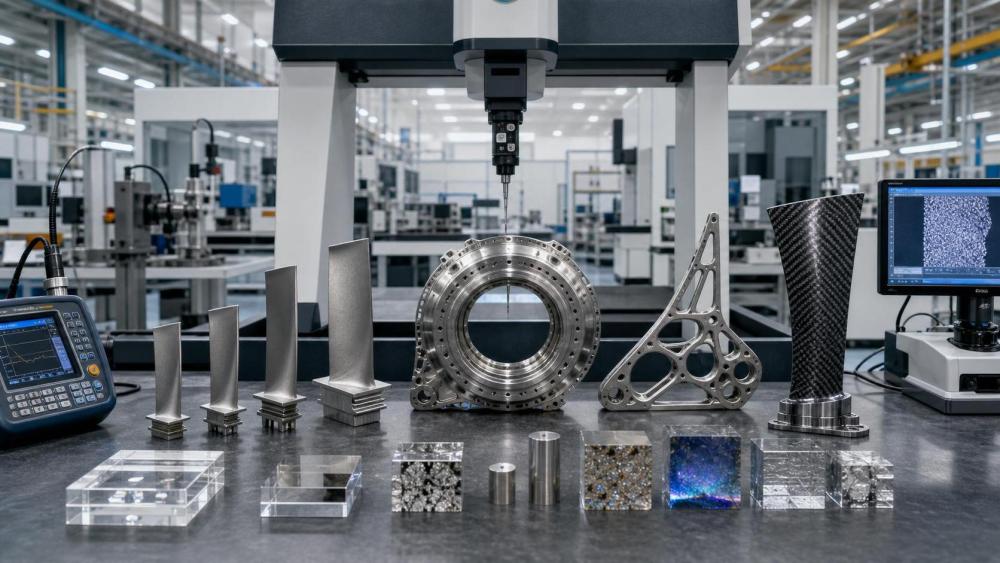
Not every supplier with aerospace keywords has true industrial depth.
Some can machine a part.
Fewer can control metallurgy, heat treatment, traceability, testing, and repeatability across production batches.
That difference is what separates basic vendors from aerospace industrial depth suppliers.
In practical terms, supplier depth means the ability to support demanding applications over time.
Examples include aero-engine turbine parts, aircraft structural components, titanium forgings, and composite assemblies.
It also means understanding why a design fails, not just how to copy a drawing.
From a sourcing perspective, deeper suppliers reduce hidden costs.
They usually manage qualification faster, respond to engineering changes better, and recover from disruptions with less damage.
Start With the Critical Use Case
Before comparing aerospace industrial depth suppliers, define the actual performance requirement.
That sounds obvious, but many evaluations stay too generic.
A bracket for a cabin system is not judged like a turbine blade, engine casing, or flight-critical structural fitting.
So begin with four questions.
- What loads, temperatures, and fatigue cycles will the part face?
- Which process steps are most sensitive?
- What certifications or customer approvals are mandatory?
- What is the cost of failure in service or delay in delivery?
These answers shape the entire evaluation model.
Without them, even a polished supplier audit can miss the real risk.
Check Materials and Process Capability First
The strongest signal from aerospace industrial depth suppliers is process mastery linked to material behavior.
This is especially important for nickel superalloys, titanium alloys, precision castings, and carbon fiber composites.
Ask suppliers to show more than a capability list.
You need evidence that they can hold process stability under production conditions.
What to verify
- Raw material source control and batch traceability
- Heat treatment windows and furnace qualification
- Machining accuracy on difficult geometries
- Surface treatment, coating, and contamination control
- NDT methods such as FPI, X-ray, UT, or CT
- Destructive testing and metallographic analysis capability
In real sourcing, a supplier that understands why creep, fatigue, porosity, or delamination occurs is usually more reliable.
That knowledge base is a major marker of aerospace industrial depth suppliers.
Evaluate Quality Systems Beyond Certificates
AS9100, Nadcap, and customer approvals matter.
Still, certificates alone do not prove operational quality.
The better question is how the quality system behaves under pressure.
For example, how does the supplier handle a nonconformance during a tight delivery schedule?
A mature supplier will show containment, root cause logic, corrective action, and follow-up verification.
Weak suppliers often show documents, but not discipline.
Useful audit questions
- How are special processes validated and requalified?
- What defect trends appeared in the last twelve months?
- How fast can the team close corrective actions?
- Who approves deviations, waivers, and concession requests?
- How is operator competency maintained for critical steps?
These details reveal whether aerospace industrial depth suppliers can protect quality when real production complexity appears.
Measure Capacity With Facts, Not Promises
Capacity is often overstated in supplier presentations.
A serious review of aerospace industrial depth suppliers should separate installed capacity from usable capacity.
Installed capacity is the equipment list.
Usable capacity is what the supplier can deliver consistently with qualified staff, approved processes, and acceptable scrap rates.
This is where many sourcing decisions improve quickly.
When aerospace industrial depth suppliers can show OTD, yield, and bottleneck plans, their claims become much more credible.
Look for Program Proof and Engineering Response
Past performance is not everything, but it matters a lot in aerospace.
The best aerospace industrial depth suppliers can discuss program experience in a concrete way.
They explain qualification steps, recurring issues, design adjustments, and production lessons.
That level of detail is hard to fake.
Pay close attention to engineering responsiveness.
Can the team review drawings, challenge unrealistic tolerances, and suggest process-friendly design adjustments?
In actual business, this often separates stable suppliers from expensive problem creators.
A capable supplier protects quality before production starts.
Watch the Commercial and Compliance Side Too
Technical strength alone is not enough.
Aerospace industrial depth suppliers also need commercial stability and compliance discipline.
Review export experience, contract execution, documentation quality, and responsiveness during RFQ stages.
For international sourcing, document accuracy can become a hidden delivery risk.
It is also worth checking whether the supplier understands customer audit culture and long-cycle program communication.
More mature suppliers tend to manage change control, reporting rhythm, and escalation paths with less friction.
A Practical Shortlist Method
If several aerospace industrial depth suppliers look similar, use a weighted comparison model.
Keep it simple enough to defend internally.
- Process and material capability: 30%
- Quality system performance: 25%
- Usable production capacity: 20%
- Program history and engineering support: 15%
- Commercial reliability and compliance: 10%
Then score each supplier using evidence, not impressions.
This makes discussions cleaner when price pressure enters the decision.
It also helps explain why the cheapest bid may carry the highest lifecycle cost.
Final Decision Signals
The best aerospace industrial depth suppliers usually share a few clear traits.
They understand the failure physics behind the part.
They can prove process control with records.
They know their real bottlenecks.
They respond to risk early, not after failure appears.
And they communicate like long-term program partners.
In the end, choosing aerospace industrial depth suppliers is not about finding a vendor with the best brochure.
It is about selecting a supplier that can protect quality, schedule, certification, and program confidence at the same time.
When your evaluation stays anchored to evidence, the shortlist becomes stronger, and the final sourcing decision becomes easier to defend.
Related News
- What aerospace materials engineering certification should verify for fastener traceabilityAug 19, 2026Aerospace materials engineering certification should verify full fastener traceability, lot control, and process linkage. Learn what to check before approving supplier paperwork.
- Anatel Approves Spacesail Constellation for Commercial Use in BrazilAug 16, 2026Anatel approves Spacesail’s LEO constellation for commercial use in Brazil, marking a first for Chinese satellite access in Latin America and opening new telecom opportunities.
- EASA Tightens Fastener Certification for EU ExportsAug 04, 2026EASA tightens fastener certification for EU exports: dual Nadcap HT and NDT approvals are now mandatory. Learn how the rule affects customs clearance, supplier qualification, and on-time aerospace deliveries.
- Aerospace Industrial Depth Suppliers: How to Judge Capacity and QualityJul 08, 2026Aerospace industrial depth suppliers should be judged by process control, quality systems, capacity, and program proof. Learn the key checks to reduce sourcing risk.