




Search
Related News
- 00
0000-00
How fatigue fracture analysis testing identifies crack initiation risks - 00
0000-00
When should a transit system engineering consultant join an EPC project? - 00
0000-00
What drives aerospace forging price for titanium engine casings? - 00
0000-00
How rail fail safe systems prevent unsafe routes during signal faults - 00
0000-00
What should a rail signaling supplier provide for SIL4 projects?
AS9100 Aerospace Material Standards: Key Audit Points




In aerospace production, material compliance is never a paperwork side task. Under aerospace material standards AS9100, raw material choice, process control, traceability, and release records all shape audit outcomes, product safety, and long-term supplier credibility.
That matters even more in sectors where high temperature, fatigue, vibration, and strict reliability targets define performance. From turbine blades and titanium forgings to carbon fiber structures, material control sits at the center of quality assurance.
For organizations following aerospace programs through platforms such as AATS, the issue is not only passing certification. It is building a system that links specifications, purchasing, processing, inspection, and corrective action into one reliable chain.
Why AS9100 material control deserves closer attention
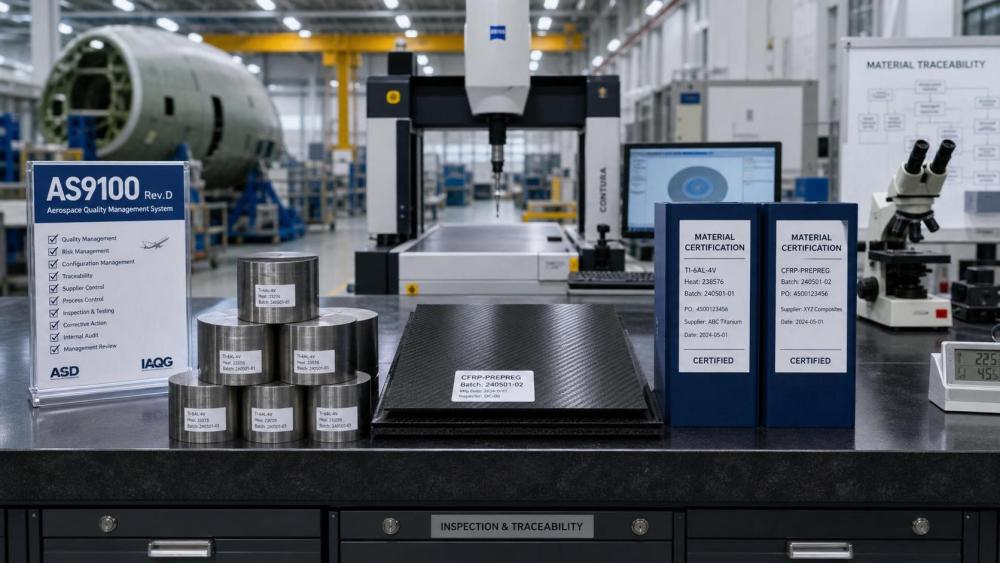
Material nonconformity in aerospace can begin with a small gap. A missing heat number, an outdated revision, or an unapproved substitute alloy may appear minor, yet each can trigger major downstream risk.
AS9100 does not work as a material specification by itself. Instead, it creates the management framework that ensures aerospace material standards are identified, verified, documented, and consistently applied across the supply chain.
This is especially relevant in current market conditions. Aerospace suppliers face tighter customer oversight, more complex subcontracting, and greater scrutiny around special processes, foreign sourcing, and counterfeit prevention.
In practice, aerospace material standards AS9100 become a cross-functional discipline. Engineering defines approved requirements, procurement controls source approval, production protects identification, and quality verifies evidence at every handoff.
What auditors usually mean by material compliance
When auditors review material control, they rarely focus on one certificate alone. They want to see whether the organization can prove that every material used matches design intent and customer requirements.
That proof usually connects several elements:
- material specification and revision status;
- approved supplier status and purchasing controls;
- mill test reports, certificates, and receiving verification;
- lot, batch, or heat traceability through production;
- control of storage, shelf life, and contamination risks;
- disposition records for any deviation or concession.
Simple compliance is not enough if records cannot be linked. A strong system shows continuity from purchase order to finished part, especially for rotating engine parts, structural components, and repair-sensitive assemblies.
Key audit points behind aerospace material standards AS9100
Some audit findings repeat across organizations, even those with experienced teams. Most are not caused by missing awareness. They come from weak integration between departments or poor control over changing requirements.
Specification flow-down
A common issue is incomplete transfer of requirements from engineering documents to procurement and shop-level instructions. If the purchase order omits a revision or testing clause, the problem starts before material arrives.
Supplier approval and surveillance
Approved supplier lists must reflect actual risk. Auditors often examine how suppliers are qualified, how performance is reviewed, and how organizations react when delivery quality declines or certificates raise questions.
Receiving inspection depth
Checking that paperwork exists is not always enough. For critical materials, receiving controls may need certificate review, dimensional confirmation, packaging inspection, identity marking checks, or independent test verification.
Traceability under production pressure
Traceability can fail during cutting, kitting, repacking, or split-lot use. The audit question is straightforward: after material is divided or moved, can the original identity still be proven without guesswork?
Nonconforming material handling
Segregation, labeling, authority for disposition, and customer notification rules are all visible audit areas. Material deviations become serious findings when suspect stock remains physically accessible to production.
Document accuracy and retention
Many organizations lose audit confidence through inconsistent records rather than technical failure. Different dates, unreadable scans, unsigned approvals, or broken links between ERP and quality files can weaken the whole compliance story.
Where material audits become more demanding
Audit intensity usually rises when materials support high consequence applications. Aero-engine hot section components, structural forgings, composite laminates, and safety-critical repairs all invite deeper review.
The same logic appears across advanced transport sectors covered by AATS. Whether the asset is an aircraft structure or a high-speed rail safety subsystem, reliability depends on disciplined control of specifications, process history, and failure risk.
That broader context matters because supply chains now share similar pressures: lifecycle traceability, stricter customer approval paths, growing compliance documentation, and a stronger expectation for preventive quality management.
How to strengthen audit readiness in daily operations
The strongest response to aerospace material standards AS9100 is not a last-minute audit file cleanup. It is a routine operating discipline that makes records accurate before the auditor asks for them.
Several actions tend to produce immediate value:
- align engineering, purchasing, warehouse, and quality terminology for material identity and revision control;
- verify that every approved material has a clear receiving checklist based on risk and part criticality;
- test traceability by selecting random production lots and tracing backward to source evidence;
- review how split lots, remnants, and repackaged materials are marked and controlled;
- check that supplier corrective actions address root cause, not only document replacement;
- link material nonconformance trends to management review and process improvement decisions.
In many facilities, the most useful internal audit test is a transaction trail. Start with a finished part number, then move backward through router, stock issue, certificate, and purchase record. Any broken link reveals a real exposure.
Reading industry signals beyond the audit checklist
Material compliance is increasingly tied to commercial trust. Export programs, MRO partnerships, and supplier qualification decisions often depend on how convincingly an organization manages traceability and technical evidence.
This is one reason technical intelligence platforms such as AATS remain useful. They connect compliance topics with real manufacturing conditions, including special processes, creep resistance, fatigue control, maintenance risk, and lifecycle accountability.
Seen this way, aerospace material standards AS9100 are not limited to certification language. They shape supplier visibility, support design-to-production consistency, and reduce the chance that a hidden material issue becomes a field problem.
A practical next step
A useful next move is to review one high-risk material family in full detail. Titanium forgings, nickel superalloys, bonded composites, or repair materials often reveal where documentation, supplier oversight, and process traceability are strongest or weakest.
From there, compare internal controls against actual audit evidence, not assumed practice. That approach turns aerospace material standards AS9100 into a working management tool rather than a certificate-driven exercise.
When the material chain is clear, approved, and traceable, certification performance improves naturally. More importantly, product integrity stands on firmer ground across the full aerospace supply cycle.
Related News
- What should a rail signaling supplier provide for SIL4 projects?Sep 19, 2026Rail signaling supplier guide for SIL4 projects: explore essential safety evidence, certification scope, interface control, testing, commissioning, and lifecycle support.
- How an aerospace quality management system supports Nadcap complianceSep 16, 2026Aerospace quality management system strategies for Nadcap compliance: strengthen traceability, process control, competence, audits, and corrective action.
- How avionics systems integration affects aircraft certification riskSep 15, 2026Avionics systems integration can elevate aircraft certification risk. Explore key safety, software, interface, EMC, and evidence challenges to prevent costly approval delays.
- How to verify aircraft composite material certification for flight useSep 11, 2026Aircraft composite material certification: verify approved configurations, lot traceability, storage history, test evidence, and cure records before flight release.