




Search
Related News
- 00
0000-00
How train crossing pressure waves in China affect nearby structures - 00
0000-00
How fatigue fracture analysis testing identifies crack initiation risks - 00
0000-00
How a CBTC fallback system keeps trains moving after link loss - 00
0000-00
When should a transit system engineering consultant join an EPC project? - 00
0000-00
What drives aerospace forging price for titanium engine casings?
How to Compare Titanium Fatigue Resistant Materials




How to Compare Titanium Fatigue Resistant Materials
For procurement teams evaluating aerospace and advanced transit applications, comparing titanium fatigue resistant materials is critical to balancing durability, certification readiness, cost, and long-term lifecycle risk.
This guide explains what really matters when reviewing titanium fatigue resistant materials for high-load, vibration-intensive, and safety-critical service.
It focuses on performance indicators, processing routes, supplier controls, and commercial trade-offs that shape smarter selection decisions.
Why fatigue performance matters in titanium selection
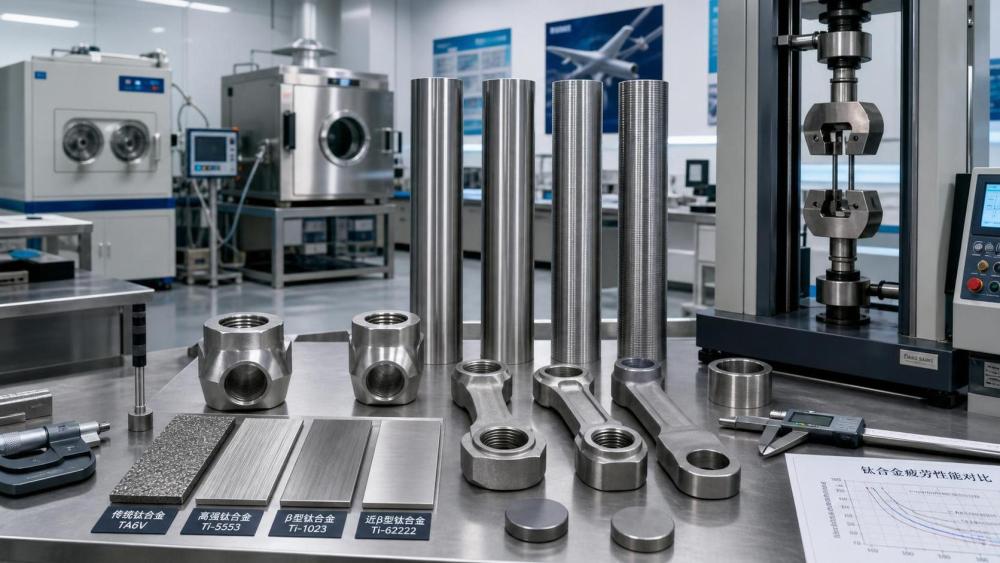
Titanium often enters programs because it offers high strength, low density, and strong corrosion resistance.
But in many real components, fatigue failure decides service life long before static strength becomes the limit.
That is especially true in aircraft structures, engine-adjacent hardware, bogie parts, fasteners, brackets, and vibration-loaded connectors.
When buyers compare titanium fatigue resistant materials, the real question is not just which grade is stronger.
The better question is which material and process combination survives cyclic loading with the lowest lifecycle risk.
This also means fatigue data should be tied to the intended geometry, temperature range, surface condition, and manufacturing route.
Start with the service profile, not the datasheet
A common sourcing mistake is comparing titanium fatigue resistant materials only by generic brochure values.
That approach looks simple, but it hides the loading reality of the final application.
Before asking for quotations, define these conditions clearly:
- Load type, including tension, bending, torsion, or mixed loading.
- Stress ratio and cycle count expectations.
- Operating temperature and thermal cycling exposure.
- Corrosion, moisture, salt, or fretting conditions.
- Required inspection intervals and target service life.
- Part geometry, notch sensitivity, and surface finish needs.
Once that profile is defined, comparing titanium fatigue resistant materials becomes much more objective.
It also reduces the risk of buying a premium alloy that performs well on paper but poorly in service.
Which material properties deserve the closest attention
When evaluating titanium fatigue resistant materials, fatigue strength should lead the discussion, but it cannot stand alone.
Several linked properties shape the real selection outcome:
Fatigue strength and fatigue limit
Ask for fatigue data at relevant cycle ranges, not just ultimate tensile strength.
High-cycle and low-cycle behavior can point to different best-fit titanium fatigue resistant materials.
Fracture toughness
Materials with good fracture toughness resist crack growth better after small defects appear.
That matters in safety-critical structures where damage tolerance is part of the design philosophy.
Notch sensitivity
Sharp corners, holes, and threads can reduce the useful fatigue margin fast.
This is why specimen data alone is never enough when comparing titanium fatigue resistant materials.
Microstructure stability
Alpha, beta, and alpha-beta titanium grades respond differently to heat, stress, and processing history.
Stable microstructure helps maintain predictable fatigue behavior across production lots and service conditions.
Compare grades in context, not in isolation
In many markets, the comparison starts with commercially pure titanium, Ti-6Al-4V, and selected beta titanium alloys.
Each option can be valid, but each fits a different fatigue and supply chain profile.
For many aerospace and advanced transit parts, Ti-6Al-4V remains the baseline benchmark.
Still, the best titanium fatigue resistant materials are often selected by process route and quality discipline, not alloy name alone.
Processing route can change fatigue performance dramatically
This is where selection gets more practical.
Two suppliers may offer the same alloy designation, yet deliver very different fatigue outcomes.
The biggest reasons usually include:
- Forging quality and grain flow orientation.
- Heat treatment consistency and traceability.
- Machining damage, residual stress, and burr control.
- Surface enhancement such as shot peening.
- Inclusion control, cleanliness, and defect screening.
- Welding or joining impact on local microstructure.
From a sourcing perspective, this means process capability should be reviewed alongside raw material certificates.
In actual programs, processing discipline often separates acceptable titanium fatigue resistant materials from risky ones.
What supplier evidence should be requested
A strong supplier does more than quote a grade and a price.
To compare titanium fatigue resistant materials confidently, request evidence in four areas:
Technical validation
- Fatigue test data with loading conditions clearly stated.
- Mechanical property reports by lot and orientation.
- Microstructure, hardness, and fracture analysis records.
Process control
- Heat treatment procedures and furnace qualification.
- NDT capability, including ultrasonic or dye penetrant inspection.
- Traceability from melt source to finished component.
Certification readiness
- AS9100, Nadcap, or equivalent quality credentials where relevant.
- Customer approvals for aerospace or rail safety programs.
- Experience with regulated documentation packages.
Supply stability
- Lot consistency over time.
- Lead time reliability for forged or machined parts.
- Capacity to support long lifecycle programs and spares.
How to weigh cost against lifecycle risk
Lower purchase price can be attractive, especially in competitive tenders.
Still, titanium fatigue resistant materials should be judged by total ownership impact, not just unit cost.
A cheaper option may create hidden cost through:
- Shorter inspection intervals.
- Higher rejection rates during machining or NDT.
- Reduced fatigue margin under field vibration.
- Certification delays caused by incomplete records.
- Unexpected replacement demand in service.
A more expensive source can be the better commercial choice if it lowers failure probability and documentation risk.
That trade-off becomes even more important in export programs and public infrastructure projects with strict accountability.
A practical comparison framework for decision making
If multiple suppliers look technically acceptable, use a weighted matrix.
Score each source of titanium fatigue resistant materials across these dimensions:
- Fatigue performance under relevant cycles and temperatures.
- Process maturity and lot consistency.
- Certification and compliance readiness.
- Surface treatment and finishing capability.
- NDT coverage and traceability depth.
- Commercial competitiveness and delivery reliability.
- Field support, corrective action speed, and long-term responsiveness.
This method keeps the comparison balanced.
It also helps separate true value from marketing claims when comparing titanium fatigue resistant materials across regions and manufacturing models.
Final selection advice
The best titanium fatigue resistant materials are rarely chosen by chemistry alone.
They are chosen by matching alloy behavior, manufacturing control, certification readiness, and lifecycle economics to the actual mission profile.
In practical terms, start with service loads, validate process-sensitive fatigue data, and screen suppliers for traceable execution.
That approach leads to stronger sourcing decisions in aerospace, advanced rail, and other reliability-driven sectors.
When the comparison is structured this way, titanium fatigue resistant materials become easier to evaluate, justify, and deploy with confidence.
Related News
- What drives aerospace forging price for titanium engine casings?Sep 21, 2026Aerospace forging price for titanium engine casings depends on alloy, tooling, Nadcap processing, inspection, volume, and supply risk. Compare quotes confidently.
- China Tightens Export Rules for Titanium Engine CasingsAug 13, 2026China tightens export rules for titanium engine casings with Nadcap heat-treatment review and SIL4 documentation. Learn how the new policy impacts audits, compliance, and shipment timing.
- FAA Tightens Heat-Treatment Rules for Aerospace ForgingsAug 12, 2026FAA tightens heat-treatment rules for aerospace forgings under AC 21.303-2D, raising traceability and Nadcap HT demands. See what suppliers, MROs, and exporters must do now.
- FAA Tightens Nadcap Heat Treatment Rule for Titanium CasingsAug 08, 2026FAA Tightens Nadcap Heat Treatment Rule for Titanium Casings: learn how the 2026 FAA update impacts U.S. export compliance, OEM sourcing, traceability, and delivery readiness.