




Search
Related News
- 00
0000-00
What drives rail vehicle dynamics cost during high-speed bogie design? - 00
0000-00
How rail transit integration testing exposes interface failures before commissioning - 00
0000-00
How to verify aircraft composite material certification for flight use - 00
0000-00
How to qualify titanium aircraft forgings for fatigue-critical parts - 00
0000-00
How to prepare objective evidence for a Nadcap audit
Tags
EASA Tightens Titanium Engine Casing Certification




On July 14, 2026, EASA put into effect a new supplementary certification requirement for titanium engine casings under directive ED-2026-07. The update matters because it adds a mandatory creep-fatigue interaction test under ISO 12107:2023 for newly submitted certification programs and requires Nadcap reports covering both heat treatment and non-destructive testing. For suppliers serving Airbus, Rolls-Royce, and airlines in the Middle East and Southeast Asia, the change is notable not as a routine wording update, but as a compliance step that can affect qualification sequencing and delivery timing.
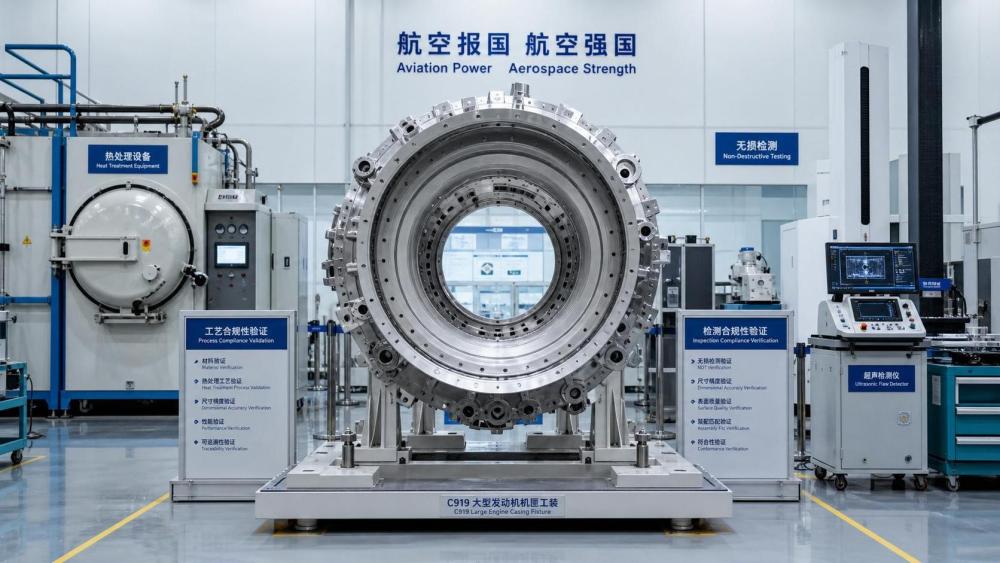
What the New EASA Requirement Confirms
The confirmed facts are limited but commercially significant. EASA's revised 2026 supplementary requirements for titanium engine casings took effect on July 14, 2026 through ED-2026-07. The directive states that all newly submitted titanium engine casing certifications must pass a creep-fatigue interaction test conducted under ISO 12107:2023. It also requires submission of Nadcap certification reports for both heat treatment and non-destructive testing. The stated effect of the change is a direct impact on the compliance path and delivery cycle for global suppliers supporting Airbus, Rolls-Royce, and airlines in the Middle East and Southeast Asia.
Where the Pressure Is Likely to Appear First
Certification-facing manufacturers may see the earliest disruption
From an industry perspective, manufacturers directly preparing new titanium engine casing certification submissions are the most immediately exposed. Their impact point is straightforward: the certification package now needs to include evidence tied to the mandatory creep-fatigue interaction test and the two Nadcap-related reports. What deserves closer attention is whether current program schedules, internal validation steps, and documentation readiness align with this revised submission threshold.
Special process and inspection links move closer to the approval path
Analysis shows that heat treatment and non-destructive testing are no longer peripheral support activities in this context; they sit closer to the certification gate because Nadcap documentation for both is explicitly required. For processing and inspection service providers, the main issue is not generalized demand, but whether their certification status and reporting package match the needs of titanium engine casing programs entering new approval cycles.
Supply chains serving OEMs and airline customers may need to rework timing assumptions
Suppliers supporting Airbus, Rolls-Royce, and operators in the Middle East and Southeast Asia may be affected through qualification timing, customer communication, and delivery planning. Observably, when a compliance path changes at the certification stage, the operational pressure can shift downstream into order confirmation, milestone alignment, and shipment expectations. The key variable to watch is how customers begin reflecting the new requirement in sourcing, contract language, or technical review checkpoints.
What Companies Should Review Now
Check which programs qualify as new submissions
What deserves closer attention is the boundary of application in actual business workflows. The confirmed text applies to newly submitted certifications, so companies should distinguish between programs already in process and those that will enter submission after the rule took effect. That distinction can shape planning, evidence preparation, and customer discussions.
Reassess test readiness against ISO 12107:2023
Analysis shows that the addition of a mandatory creep-fatigue interaction test is not only a technical item but also a scheduling issue. Companies involved in titanium engine casings should review whether their internal or external test arrangements can support certification-ready evidence under ISO 12107:2023, and whether that work needs to be reflected earlier in development and approval timelines.
Verify Nadcap document completeness, not only certification status
The new requirement refers specifically to Nadcap reports for heat treatment and non-destructive testing. In practice, companies should pay attention not just to whether a supplier or processor holds relevant approvals, but whether the required reports are available, current, and usable within a certification file. That difference can matter when a customer asks for document traceability rather than a general qualification statement.
Prepare for customer-facing timeline discussions
Observably, a rule change that affects compliance paths can quickly become a delivery discussion. Suppliers may need to revisit how they communicate lead times, approval dependencies, and submission milestones to OEM and airline-side counterparts. The practical focus is less about broad strategy and more about preventing misalignment between technical compliance work and promised delivery windows.
Why This Looks Like More Than a Routine Update
This section is analysis rather than confirmed fact. It is more appropriate to understand this as an actionable regulatory signal with immediate procedural consequences, especially for companies tied to new certification activity. The update does not by itself prove a wider market outcome, but it does indicate that testing evidence and special-process documentation are being treated as more explicit certification conditions for titanium engine casings. For the industry, the point is not to overstate the scope, but to recognize that the compliance burden has become more defined.
How the Industry Should Read It for Now
A balanced reading is that this is a near-term compliance change with possible longer-term implications if customers and supply chains begin standardizing around the revised expectation. Based on the confirmed information, the immediate consequence is procedural: newly submitted certification programs now face a more specific evidence package. Analysis shows that the broader commercial effect still depends on how OEMs, suppliers, and downstream customers translate the requirement into sourcing and delivery practice. For now, it is best understood as a concrete rule change that merits close operational follow-up rather than a fully settled market shift.
Source Scope and What Still Needs Verification
This article is based on the user-provided news title, event date, and event summary regarding EASA's 2026 supplementary certification requirements for titanium engine casings. For this type of development, relevant source categories would usually include official regulatory notices, company statements, industry association updates, authoritative media coverage, and standards organization documents. A specific official source link was not provided in the input, so the exact wording and any subsequent interpretive guidance still need continued verification. Further attention should be given to any later official clarifications on application boundaries, documentation expectations, and how affected customers reflect the requirement in actual procurement and delivery workflows.
Related News
- China Tightens Export Rules for Titanium Engine CasingsAug 13, 2026China tightens export rules for titanium engine casings with Nadcap heat-treatment review and SIL4 documentation. Learn how the new policy impacts audits, compliance, and shipment timing.
- FAA Tightens Heat-Treatment Rules for Aerospace ForgingsAug 12, 2026FAA tightens heat-treatment rules for aerospace forgings under AC 21.303-2D, raising traceability and Nadcap HT demands. See what suppliers, MROs, and exporters must do now.
- FAA Tightens Nadcap Heat Treatment Rule for Titanium CasingsAug 08, 2026FAA Tightens Nadcap Heat Treatment Rule for Titanium Casings: learn how the 2026 FAA update impacts U.S. export compliance, OEM sourcing, traceability, and delivery readiness.
- How to Evaluate an Engine Casing Supplier for Material Traceability and Nadcap ComplianceAug 04, 2026Engine casing supplier evaluation starts with traceability and Nadcap scope, not shop claims. Learn how to verify records, special processes, and audit red flags before approval.