




Search
Related News
- 00
0000-00
What drives rail vehicle dynamics cost during high-speed bogie design? - 00
0000-00
How rail transit integration testing exposes interface failures before commissioning - 00
0000-00
How to verify aircraft composite material certification for flight use - 00
0000-00
How to qualify titanium aircraft forgings for fatigue-critical parts - 00
0000-00
How to prepare objective evidence for a Nadcap audit
Tags
Aerospace Machining Tolerances That Affect Part Quality




In aerospace machining, tolerance is never just a drawing requirement. It directly shapes how a part fits, how loads move through it, and how long it can survive under vibration, heat, pressure, and repeated cycling.
That is why small dimensional shifts can become large quality issues. A bore that drifts by a few microns, a surface that finishes too rough, or a wall thickness that varies too much can all affect reliability.
For organizations tracking aerospace components through production, inspection, certification, and MRO, the real question is not whether tolerances matter. It is which machining tolerances most strongly influence part quality, risk exposure, and release confidence.
Why tolerance control carries so much weight
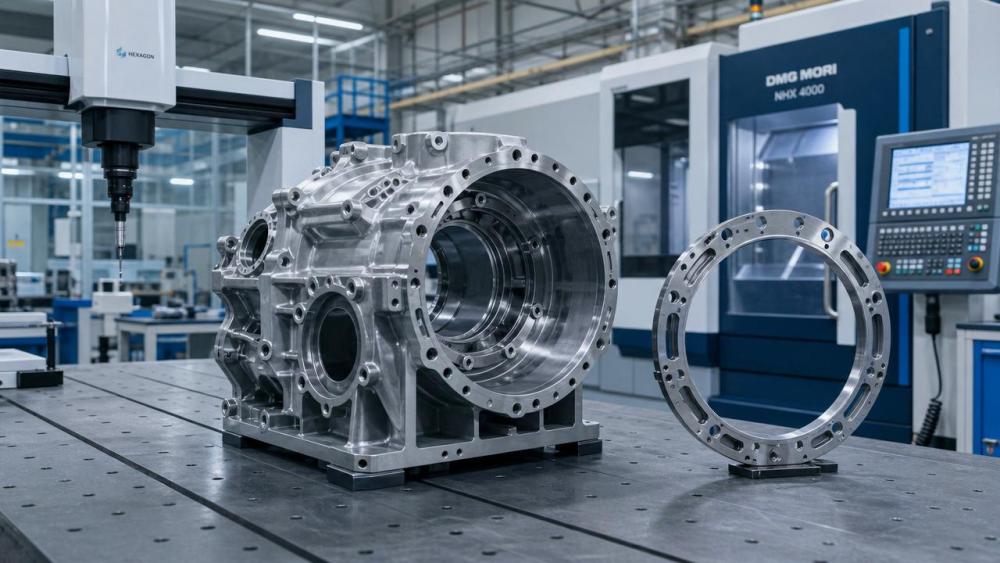
Aerospace machining deals with parts that operate in narrow safety margins. Engine casings, structural brackets, turbine hardware, landing system elements, and titanium fittings all depend on predictable geometry.
Unlike many industrial products, these parts rarely fail because of one dramatic defect. More often, quality loss begins with accumulated variation that affects alignment, contact stress, airflow, sealing, or fatigue resistance.
This is also why aerospace machining is closely tied to compliance systems such as Nadcap, process validation, traceable inspection, and special process control. Dimensional discipline supports both safety and audit readiness.
From the broader AATS industry view, this issue fits a larger pattern seen across high-reliability transport systems. Whether in aero-engine parts or rail safety hardware, repeatable manufacturing tolerance is a foundation of lifecycle performance.
The tolerances that most often affect part quality
Not every dimension has the same consequence. In aerospace machining, several tolerance groups tend to drive quality outcomes more than others.
Size tolerances
Diameter, thickness, slot width, and overall length affect assembly fit first. If size control is unstable, downstream inspection and installation become inconsistent, even when other features appear acceptable.
This is especially critical for interference fits, sealing lands, bearing seats, and fastener interfaces. A part may pass visual checks yet still create preload loss, leakage risk, or premature wear.
Geometric tolerances
Flatness, roundness, cylindricity, concentricity, position, and perpendicularity often reveal the true capability of aerospace machining. These tolerances influence how loads distribute once the part enters service.
A bore can meet diameter limits while still being out of round. A flange can meet thickness targets while still losing sealing performance because flatness drifted beyond functional limits.
Surface finish tolerances
Surface roughness is not cosmetic in aerospace components. It can change friction, coating adhesion, crack initiation behavior, and airflow response in high-performance environments.
For titanium, nickel alloys, and heat-resistant materials, the machining process can also introduce smeared surfaces, torn edges, or residual stress patterns that affect quality beyond Ra values alone.
Wall thickness and profile control
Thin-wall aerospace parts are highly sensitive to variation. Local overcutting can reduce stiffness, while excess stock can increase weight or disturb balance in rotating applications.
Profile tolerances matter strongly in parts with aerodynamic or thermal functions, including airfoils, housings, ducts, and cooling-related features.
How these tolerances translate into real failure risk
Tolerance nonconformance does not always cause immediate rejection in the field. Sometimes the greater risk is hidden performance loss that only appears after repeated use.
This link between geometry and service behavior explains why aerospace machining quality cannot be judged by dimensional pass rates alone. Functional criticality matters more than raw inspection volume.
Features that deserve closer scrutiny
Certain component features routinely deserve tighter monitoring because they amplify the effect of small variation.
- Bearing seats and bores, where size and roundness directly affect load transfer.
- Fastener holes, where positional error can create assembly stress or force mismatch.
- Sealing faces, where flatness and finish influence leakage resistance.
- Thin ribs and pockets, where distortion during machining can alter stiffness.
- Complex contoured surfaces, where profile error can affect airflow or thermal behavior.
- Edges and blend radii, where poor transition quality can trigger fatigue cracks.
In practical aerospace machining reviews, these features often deserve stronger process capability evidence than non-critical external dimensions.
What makes tolerance control difficult in aerospace machining
The challenge is not only tight drawing limits. Aerospace materials and part geometry make stable machining more difficult than standard industrial work.
Material behavior
Titanium alloys, nickel-based superalloys, and hardened aerospace steels generate heat, tool wear, springback, and chatter. That makes dimensional drift more likely over time.
Part distortion
Thin structures can move during clamping, roughing, heat treatment, or release from fixtures. A part may measure differently at separate stages unless the process route anticipates that movement.
Complex datum strategy
Many aerospace components depend on multi-feature relationships. If datum selection is weak, measurement may look acceptable while the part still fails its functional assembly condition.
Special process interaction
Coating, shot peening, heat treatment, and finishing can all alter final dimensions. Tolerance planning needs to account for the full manufacturing chain, not just the CNC stage.
A more useful way to read tolerance data
A pass or fail report is only a starting point. Better judgment comes from connecting inspection results to function, trend, and process behavior.
For example, repeated movement toward one side of tolerance may indicate fixture bias, tool wear, thermal shift, or probing inconsistency. That is often more valuable than a single acceptance result.
This is where cross-referencing machining data with fatigue concerns, fracture risk, and maintenance history becomes useful. AATS regularly frames industrial topics in this connected way, linking process capability with lifecycle reliability.
- Review critical dimensions by functional severity, not only by quantity.
- Track drift patterns across batches, machines, and tool changes.
- Separate cosmetic variance from safety-relevant variance.
- Verify that measurement datums reflect real assembly conditions.
- Compare dimensional findings with downstream nonconformance and MRO feedback.
Where quality and safety decisions should focus next
The most effective aerospace machining oversight usually starts with a narrower question: which tolerances are truly critical to fit, load path, sealing, thermal exposure, or fatigue life?
Once those features are defined, process reviews become more practical. Inspection plans can prioritize meaningful control points. Supplier evaluation can focus on demonstrated capability rather than generic claims.
It also becomes easier to compare machining risk across materials, part families, and production routes. That matters for qualification, export readiness, maintenance planning, and long-term compliance confidence.
A strong next step is to map critical aerospace machining tolerances against three filters: functional consequence, process stability, and detectability. That framework often reveals where hidden quality risk is still sitting inside an apparently compliant part.
Related News
- China Tightens Export Rules for Titanium Engine CasingsAug 13, 2026China tightens export rules for titanium engine casings with Nadcap heat-treatment review and SIL4 documentation. Learn how the new policy impacts audits, compliance, and shipment timing.
- FAA Tightens Heat-Treatment Rules for Aerospace ForgingsAug 12, 2026FAA tightens heat-treatment rules for aerospace forgings under AC 21.303-2D, raising traceability and Nadcap HT demands. See what suppliers, MROs, and exporters must do now.
- FAA Tightens Nadcap Heat Treatment Rule for Titanium CasingsAug 08, 2026FAA Tightens Nadcap Heat Treatment Rule for Titanium Casings: learn how the 2026 FAA update impacts U.S. export compliance, OEM sourcing, traceability, and delivery readiness.
- How to Evaluate an Engine Casing Supplier for Material Traceability and Nadcap ComplianceAug 04, 2026Engine casing supplier evaluation starts with traceability and Nadcap scope, not shop claims. Learn how to verify records, special processes, and audit red flags before approval.