




Search
Related News
- 00
0000-00
What should a rail signaling supplier provide for SIL4 projects? - 00
0000-00
What drives thermal barrier coating cost for turbine blade repairs? - 00
0000-00
What drives rail grinding vehicle cost over its service life? - 00
0000-00
How an aerospace quality management system supports Nadcap compliance - 00
0000-00
How avionics systems integration affects aircraft certification risk
How Predictive Maintenance Systems Cut Rolling Stock Downtime




How Predictive Maintenance Systems Cut Rolling Stock Downtime
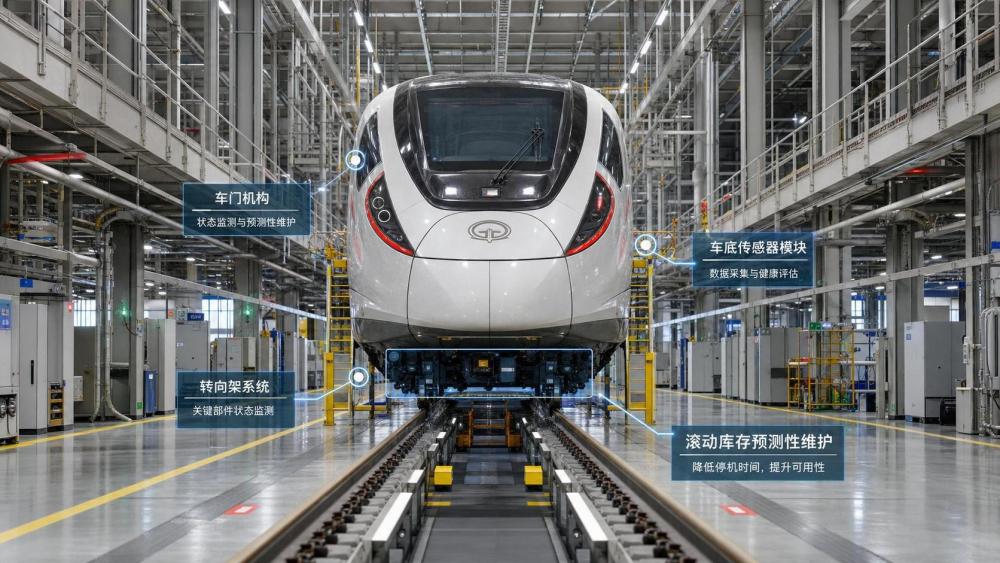
Unplanned failures rarely start with a dramatic event.
More often, a bearing runs hotter, a gearbox vibrates differently, or a door cycle slows down.
Those early signals are easy to miss in busy rail operations.
That is where predictive maintenance systems rolling stock programs change the game.
They turn condition data into maintenance timing, work orders, and parts decisions before service is affected.
For operators, the value is clear.
Lower downtime, fewer in-service faults, better fleet availability, and longer component life.
For maintenance teams, the shift is even more practical.
Instead of reacting to breakdowns, they can plan inspections around real condition trends.
This matters across high-speed EMUs, metro fleets, regional trains, and mixed rolling stock environments.
When assets run more hours and schedules tighten, every maintenance window counts.
Why traditional maintenance misses the real problem
Time-based maintenance still has an important role.
It supports compliance, routine safety checks, and baseline overhaul planning.
But fixed intervals do not always match actual wear.
One train may face higher vibration, steeper gradients, heavier passenger load, or harsher braking cycles.
Another may run under lighter duty and still receive the same scheduled work.
This creates two familiar risks.
- Parts are replaced too early, raising cost without adding reliability.
- Hidden degradation continues between inspections and becomes a failure event.
Predictive maintenance systems rolling stock strategies address both issues.
They combine onboard sensing, historical failure patterns, and analytics models.
The result is condition-based action, not guesswork.
In practical terms, the system asks a better question.
Not “when is the next interval,” but “what is changing right now, and how fast?”
How predictive maintenance systems rolling stock platforms work
A strong system starts with good data capture.
Sensors track variables linked to failure modes, not just general operating values.
That usually includes temperature, vibration, current draw, pressure, cycle counts, and fault codes.
From there, analytics software looks for drift, threshold breaches, and pattern combinations.
The most useful outputs are simple and actionable.
- A ranked alert showing which asset needs attention first.
- A probable fault mode, such as bearing wear or insulation degradation.
- A time estimate for intervention before operational risk becomes unacceptable.
- A recommended maintenance action and required spare parts.
This is why predictive maintenance systems rolling stock deployments work best when linked to CMMS and depot workflows.
An alert alone is not enough.
The real value appears when alerts trigger inspection planning, labor scheduling, and parts allocation.
That connection reduces delay between detection and action.
Where downtime reduction happens first
Not every subsystem delivers the same early return.
The fastest gains usually come from assets with frequent faults, expensive failures, or hard-to-detect wear.
In rolling stock, these areas stand out.
- Traction systems: motor temperature, inverter behavior, and current anomalies can flag developing electrical issues.
- Bogies and bearings: vibration signatures often reveal wear before visible damage appears.
- Doors: cycle-time drift and motor load changes help prevent service delays at stations.
- Braking equipment: pressure variation and response timing support safer intervention planning.
- HVAC units: compressor patterns and thermal performance can predict comfort-related failures.
- Pantographs: contact force changes and wear trends reduce overhead line interaction risk.
From a maintenance perspective, this prioritization matters.
It keeps predictive maintenance systems rolling stock projects focused on downtime drivers, not just available sensor points.
That approach also makes ROI easier to prove.
A practical deployment path for maintenance teams
Successful adoption rarely starts with a full-fleet digital overhaul.
A phased rollout is more realistic and usually more effective.
1. Start with failure history
Review repeat defects, service delays, and component removals over the last 12 to 24 months.
That baseline identifies where predictive maintenance systems rolling stock tools can deliver the first measurable impact.
2. Map the failure mode to the signal
Do not collect data just because it is available.
Match each failure mode with the condition indicator most likely to reveal it early.
3. Define alert thresholds carefully
If thresholds are too sensitive, teams drown in false alarms.
If they are too loose, problems are caught too late.
Threshold tuning should use real fleet behavior, seasonality, and route differences.
4. Connect alerts to work execution
An alert should point to a maintenance decision, not sit in a dashboard queue.
This means clear escalation rules, depot responsibility, and inspection procedures.
5. Measure operational outcomes
Track mean time between failures, fleet availability, delay minutes, unscheduled removals, and spare consumption.
That keeps the program tied to business value.
Common barriers and how to avoid them
Even good technology can disappoint if implementation is weak.
Several issues appear again and again in rail projects.
The stronger programs treat predictive maintenance systems rolling stock deployment as an operations change, not just a software purchase.
That mindset is often the difference between pilot success and long-term fleet value.
What better decisions look like in daily service
The biggest advantage is not more data.
It is better timing.
A train can stay in service until the next planned depot slot.
A part can be staged before inspection starts.
A technician can check the likely failure point first.
A fleet manager can avoid pulling an entire unit out of operation too early.
This is how predictive maintenance systems rolling stock programs cut downtime in real life.
They reduce emergency work, improve labor use, and make maintenance windows more productive.
They also support safer, more reliable transport performance over the asset lifecycle.
For organizations managing high-speed rail, metro, or regional fleets, the direction is increasingly clear.
Use predictive maintenance systems rolling stock tools where failure patterns, data quality, and work execution can connect.
Start small, prove value, then expand by subsystem and fleet class.
That path is practical, measurable, and far more sustainable than reactive repair cycles.
When every hour of availability matters, earlier insight becomes a direct maintenance advantage.
Related News
- What drives rail vehicle dynamics cost during high-speed bogie design?Sep 13, 2026Rail vehicle dynamics cost explained: discover the key factors shaping high-speed bogie design budgets, validation scope, safety, and lifecycle value.
- How derailment prevention systems are evaluated for high-speed rail safetyAug 17, 2026Derailment prevention systems for high-speed rail are evaluated through simulation, testing, integration, and lifecycle risk analysis—see what truly proves safety.
- How Extreme Rail Dynamics Affect Crosswind Stability Limits in High-Speed EMU BogiesAug 11, 2026Extreme rail dynamics crosswind stability is critical to high-speed EMU bogies. Discover how wind, suspension, and wheel-rail interaction define safety margins and smarter evaluation.
- How Rail Vehicle Dynamics Affect Ride Stability, Wheel Wear, and SpeedAug 10, 2026Rail vehicle dynamics explained: discover how bogies, suspension, and wheel-rail contact shape ride stability, wheel wear, and safe speed for smarter rail evaluation.