



Search
Related News
- 00
0000-00
How safe train control technology reduces headway without raising risk - 00
0000-00
How rail vehicle aeroacoustics affects pass-by noise at high speeds - 00
0000-00
When do composite aircraft structural materials outperform aluminum? - 00
0000-00
When does condition based predictive maintenance pay off for traction converters - 00
0000-00
What aerospace materials engineering certification should verify for fastener traceability
Tags
DB Tightens ICE4.2 Body Validation Requirements




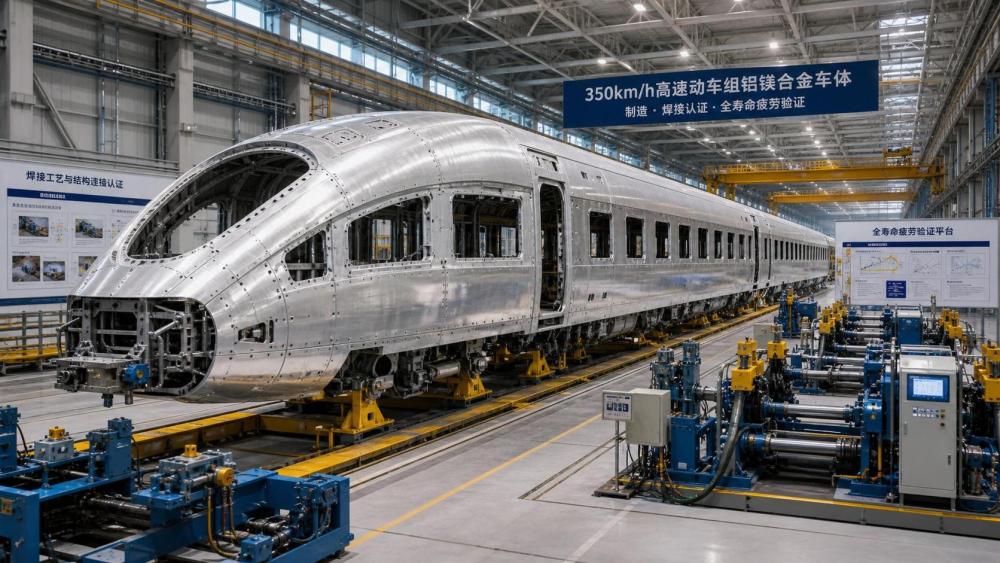
On July 8, 2026, Deutsche Bahn released the second-batch tender for its ICE4.2 high-speed EMU procurement, a 350 km/h program that places sharper technical demands on aluminum-magnesium alloy carbody structures. For train builders, carbody fabricators, welding teams, and engineering validation service providers, the development is notable because the bid now combines EN 15085 CL2 welding certification with a full-life fatigue simulation requirement tied to ANSYS nCode DesignLife, extending the compliance burden beyond manufacturing capability into documentable lifecycle verification.
What the tender now requires
According to the information provided, Deutsche Bahn issued the second-batch procurement tender for the ICE4.2 high-speed EMU on July 8, 2026, under reference DB-EMV-2026-07-ICE42-B. The tender concerns a 350 km/h train platform.
The stated requirement is that bidders using aluminum-magnesium alloy carbody structures must complete EN 15085 CL2 welding certification. In addition, bidders must submit a full-lifecycle fatigue simulation report based on ANSYS nCode DesignLife.
The simulation scope specified in the tender covers operating conditions equivalent to 20 years or 12 million kilometers. Based on the event summary provided, this requirement is expected to raise both the technical response threshold and the validation timeline for Chinese high-speed train carbody exporters.
Where the pressure is likely to appear first
Carbody manufacturers face a broader proof burden
From an industry perspective, the immediate impact is likely to fall on manufacturers responsible for aluminum-magnesium alloy carbody structures. The issue is not only whether a structure can be produced, but whether its welding quality and fatigue performance can be demonstrated in a form acceptable to the buyer. What deserves closer attention is the shift from product delivery toward traceable engineering evidence tied to a defined lifecycle condition.
Engineering and simulation service providers move closer to the bid core
Analysis shows that validation work may become a more central part of tender preparation. Where fatigue simulation is explicitly named and linked to ANSYS nCode DesignLife, engineering teams and external technical service providers are more likely to be involved earlier in the bid cycle. The practical effect may appear in model preparation, assumptions alignment, reporting format, and coordination between design, welding, and verification functions.
Export-oriented bidders may see longer preparation cycles
For companies targeting overseas high-speed rail opportunities, the effect may be felt in qualification readiness and bid timing. Observably, when certification and lifecycle simulation are both required, the preparation window may extend beyond normal commercial quoting activity into a more document-intensive pre-bid process. What these companies need to watch is whether internal engineering data, certification status, and supporting records are already organized for external review.
Procurement and delivery teams may need tighter upstream coordination
The tender language also matters for procurement-side and project delivery roles. Even without adding new commercial facts, it is reasonable to observe that stricter technical validation requirements can affect supplier screening, submission sequencing, and customer communication. The operational focus is likely to be on whether technical files, certification evidence, and simulation outputs can be aligned early enough to avoid delays during bid submission or clarification rounds.
What companies should track now
Check whether certification status is bid-ready
Companies involved in aluminum-magnesium alloy carbody work should first verify whether their EN 15085 CL2 welding certification status is current, complete, and usable in an external tender context. The issue is not only possession of certification, but also whether the supporting documentation can be presented clearly and consistently during bid review.
Review fatigue verification capability against the stated lifecycle scope
The tender specifically references ANSYS nCode DesignLife and a 20-year or 12 million kilometer operating condition. Analysis shows that firms should compare their existing fatigue analysis workflows against that stated scope rather than treating simulation as a general supporting exercise. The gap, if any, may lie in model depth, reporting structure, or the ability to connect simulation outputs back to the carbody design and welding condition.
Separate official requirements from internal assumptions
What deserves closer attention is the difference between what the tender explicitly requires and what companies may infer from prior projects or internal standards. In practical terms, teams should anchor their response to the exact tender language already disclosed, while keeping room to adjust if later clarifications appear through official channels.
Prepare for longer internal coordination before submission
Observably, this kind of requirement can place more pressure on coordination across design, manufacturing, certification, and customer-facing teams. Companies should pay attention to document ownership, response timelines, and the completeness of technical submission packages, especially where overseas project communication depends on a consistent explanation of compliance evidence.
Why this looks more like a qualification signal than a one-off detail
Analysis shows that this development is better read as a signal about how technical access to high-speed rolling stock procurement may be assessed, rather than as a simple specification update. The combination of welding certification and full-life fatigue simulation points to a stronger emphasis on verifiable structural reliability within the tender process itself.
At the same time, it is more appropriate to understand this as an evolving industry signal rather than a finalized market outcome. The provided information confirms the tender requirement, but it does not by itself establish how widely similar conditions will be adopted elsewhere, how strictly they will be interpreted in practice, or how bidders will adapt over time. That is why the industry still needs to keep watching follow-on disclosures and implementation details.
How this development is best understood today
In current terms, the Deutsche Bahn tender update matters because it tightens the evidentiary standard around aluminum-magnesium alloy carbody participation in a high-speed EMU procurement. The main significance lies less in a single certification label and more in the explicit pairing of welding compliance with lifecycle fatigue verification.
From an industry perspective, this is best understood as a concrete near-term change in bid preparation requirements and a longer-term signal that structural validation may carry more weight in export-facing rail projects. It does not yet justify broad conclusions beyond the disclosed tender, but it does justify closer attention from manufacturers, engineering teams, and service providers involved in overseas high-speed rail business.
Basis of this article and points for continued verification
This article is based on the user-provided news title, event date, and event summary concerning Deutsche Bahn's July 8, 2026 ICE4.2 second-batch tender and its stated requirements for EN 15085 CL2 welding certification and ANSYS nCode DesignLife-based full-lifecycle fatigue simulation.
For this type of industry update, relevant source categories typically include official tender notices, company announcements, industry association disclosures, authoritative media reporting, and standards-related documentation. A specific official source link was not provided in the input, so the exact publication record and any later clarification documents still require continued verification.
Further observation should focus on whether official wording changes, whether additional tender interpretation emerges, and how the requirement affects qualification timing, validation scope, and bid preparation practices across export-oriented high-speed rail suppliers.
Related News
- How Aluminum Alloy Rail Car Body Welding Affects Fatigue Life and Repair RatesJul 30, 2026Aluminum alloy rail car body welding directly shapes fatigue life and repair rates. Learn how joint design, process control, and inspection reduce cracks, maintenance costs, and lifecycle risk.
- EN 15085-2:2026 Raises EU Rail Welding Entry RulesJul 22, 2026EN 15085-2:2026 raises EU rail welding entry rules, tightening traceability, qualification, and CE support via ISO 3834-2:2023. See who is affected and how to prepare now.
- DB Sets EN 15085 CL2+ Bar in 2026 High-Speed EMU TenderJul 10, 2026DB sets EN 15085 CL2+ bar in its 2026 high-speed EMU tender, raising the threshold for rail suppliers. See what TÜV SÜD welding certification and fatigue simulation demands mean for bidding.
- DB Tightens ICE4.2 Body Validation RequirementsJul 09, 2026DB Tightens ICE4.2 Body Validation Requirements: learn how EN 15085 CL2 welding and ANSYS nCode DesignLife fatigue proof are reshaping high-speed rail bids, compliance planning, and exporter readiness.