




Search
Related News
- 00
0000-00
How safe train control technology reduces headway without raising risk - 00
0000-00
How rail vehicle aeroacoustics affects pass-by noise at high speeds - 00
0000-00
When do composite aircraft structural materials outperform aluminum? - 00
0000-00
When does condition based predictive maintenance pay off for traction converters - 00
0000-00
What aerospace materials engineering certification should verify for fastener traceability
Moving Block Signaling Standards Explained for CBTC Project Planning




Moving block signaling standards sit at the center of serious CBTC project planning. They influence how safely trains can run, how closely they can follow, and how confidently a system can be evaluated over decades of service.
For rail programs facing tighter capacity targets and stricter assurance demands, standards are not background paperwork. They shape architecture, positioning accuracy, redundancy logic, SIL4 evidence, and the practical quality of supplier comparisons.
That is why moving block signaling standards matter beyond signaling teams alone. They affect procurement strategy, civil integration, rolling stock interfaces, maintenance planning, and the long-term risk profile of transit infrastructure investment.
What Moving Block Means in a CBTC Context
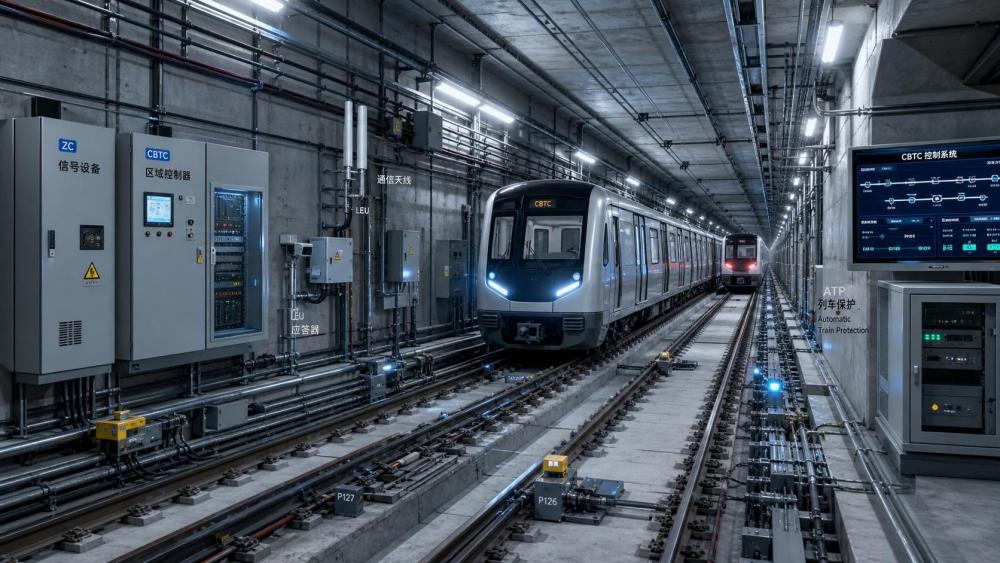
At a basic level, moving block replaces fixed track sections with dynamic separation based on each train’s real-time position, speed, braking profile, and safety margin.
In practice, this allows shorter headways than traditional fixed block signaling, especially on dense metro corridors where throughput and recovery time are constant operational concerns.
But the concept only works when core functions are tightly controlled. Train localization, communication latency, onboard protection logic, and wayside supervision must behave within defined safety boundaries.
This is where moving block signaling standards become essential. They define the expectations for safety integrity, system behavior, failure handling, verification methods, and interface discipline.
Why Standards Matter More Than the Headline Capacity Gain
CBTC discussions often start with headway reduction. That is understandable, but it is only part of the evaluation picture.
A modern transit authority also needs confidence that the chosen solution will remain safe under degraded modes, maintainable during service life, and governable across software revisions.
Moving block signaling standards help create that confidence by setting a common reference for design assurance. Without them, performance claims can look impressive while critical assumptions stay buried.
From an industry perspective, this mirrors wider transport safety practice. AATS often tracks similar logic across aerospace and rail: high performance only matters when it is paired with disciplined certification and traceable risk control.
The Main Questions Standards Help Answer
- How is safe separation calculated under normal and degraded operating conditions?
- What evidence supports SIL4 functions and hazard mitigation claims?
- How accurate is train positioning when wheel slip, communication loss, or sensor drift occurs?
- What redundancy is built into onboard, wayside, and radio components?
- How will software changes be validated across the lifecycle?
The Standards Landscape Behind Moving Block Signaling
There is no single global document that fully defines moving block control. Instead, projects rely on a framework of railway safety, software, hardware, communication, and system assurance standards.
The most referenced baseline usually includes CENELEC standards such as EN 50126, EN 50128, and EN 50129. These cover RAMS processes, software assurance, and safety case expectations.
Depending on geography and project structure, IEC, IEEE, local transit authority rules, cybersecurity guidance, and operator-specific performance requirements may also apply.
For technical evaluation, the point is not simply whether a bidder lists these documents. The more useful question is how those standards are translated into architecture, testing, and operational constraints.
Where Evaluation Usually Gets Difficult
Many proposals appear compliant at a document level. Difficulty emerges when the system must be judged under real operational conditions rather than brochure-level descriptions.
For example, train positioning accuracy is rarely just a sensor specification issue. It is a system issue involving odometry correction, balise references, map quality, wheel wear, and fault detection logic.
The same applies to headway claims. Advertised minimum intervals may depend on ideal braking conditions, low passenger loading variation, or communication performance that is difficult to maintain in mixed environments.
Moving block signaling standards help expose these dependencies because they require assumptions, hazards, and performance limits to be documented rather than implied.
Common Areas That Deserve Closer Reading
- Definition of the train integrity function and who owns it
- Fallback mode when continuous communications are interrupted
- Boundary conditions for mixed traffic or legacy interfaces
- Evidence that maintenance access supports claimed availability
- Cybersecurity treatment where radio and control networks overlap
How Standards Influence Architecture and Procurement
In project planning, standards are not only technical references. They directly affect contract structure, interface allocation, acceptance testing, and the depth of supplier obligations.
A bidder offering moving block control should be able to explain how its architecture supports fail-safe operation, how independent channels are separated, and how degraded service remains predictable.
This matters for rolling stock integration as well. Onboard ATP, ATO, radio equipment, braking interfaces, and diagnostics need a coherent safety relationship, not just nominal compatibility.
In that sense, moving block signaling standards provide a shared language between signaling suppliers, train builders, infrastructure contractors, and lifecycle maintenance teams.
That broader view aligns with the AATS approach to advanced transport systems. Technical choices are strongest when they are examined together with service reliability, compliance evidence, and lifecycle economics.
Practical Scenarios for Using Moving Block Signaling Standards
The value of standards becomes clearer when linked to actual planning scenarios rather than abstract compliance language.
New Metro Corridors
For a new line, moving block signaling standards help set baseline expectations early. This includes capacity targets, automation grade assumptions, depot interfaces, and migration provisions.
Brownfield Upgrades
On existing networks, the harder issue is coexistence. Legacy interlockings, platform screen doors, track circuits, and mixed fleets can limit the practical benefit of moving block control.
Cross-Border or Multi-Supplier Programs
Where several suppliers share responsibility, standards help reduce ambiguity. Interface documents, assurance evidence, and verification ownership need to be controlled with unusual precision.
A Useful Evaluation Framework
A strong review of moving block signaling standards usually works best when it combines performance, assurance, and maintainability in one decision structure.
- Check whether capacity claims are tied to documented operating assumptions.
- Review how SIL4 functions are partitioned across onboard and wayside equipment.
- Confirm that train positioning tolerances include degraded and abnormal conditions.
- Examine the maturity of safety case evidence, not only final compliance statements.
- Ask how software updates, obsolescence, and spare strategy will be governed.
- Compare vendor claims using identical operational scenarios and acceptance criteria.
This approach turns moving block signaling standards into a decision tool. It helps separate genuine system maturity from attractive but weakly supported claims.
What to Examine Next
The next step is usually not another generic technology summary. It is a structured comparison of project-specific assumptions, interfaces, and evidence paths.
A practical review can start with headway targets, fleet characteristics, communication environment, fallback modes, and required maintenance windows. From there, each requirement can be mapped against the applicable moving block signaling standards.
That process creates a clearer basis for tender language, technical clarification, and lifecycle risk review. It also makes later decisions on integration, testing, and acceptance more defensible.
Where the market offers several CBTC options, the best comparisons usually come from disciplined questions, not longer supplier presentations. Standards provide the framework for asking those questions well.
Related News
- How safe train control technology reduces headway without raising riskAug 23, 2026Safe train control technology explained: learn how moving block, SIL4 design, and fail-safe control cut headway while protecting braking distance, reliability, and real-world rail capacity.
- EASA Tightens SIL4 Rules for EU-Bound CBTC ExportsAug 09, 2026CBTC exports to the EU face tighter SIL4 compliance as EASA updates rules. Learn the March 2027 deadline, IV&V impact, and how suppliers can protect market access.
- How Unmanned Rail Operations Signaling Affects Headway, Safety, and Recovery TimeAug 07, 2026Unmanned rail operations signaling shapes headway, safety, and recovery time. Discover how CBTC, positioning accuracy, and degraded-mode design determine real driverless rail performance.
- EASA Extends SIL4 Rules to CBTC CertificationAug 07, 2026EASA extends SIL4 rules to CBTC certification, reshaping market access, audits, and procurement. Learn what suppliers, bidders, and EU-focused buyers must prepare now.