




Search
Related News
- 00
0000-00
What drives rail vehicle dynamics cost during high-speed bogie design? - 00
0000-00
How rail transit integration testing exposes interface failures before commissioning - 00
0000-00
How to verify aircraft composite material certification for flight use - 00
0000-00
How to qualify titanium aircraft forgings for fatigue-critical parts - 00
0000-00
How to prepare objective evidence for a Nadcap audit
Moving Block Signaling Metro: Capacity Gains and Migration Risks




Moving Block Signaling Metro: Capacity Gains and Migration Risks
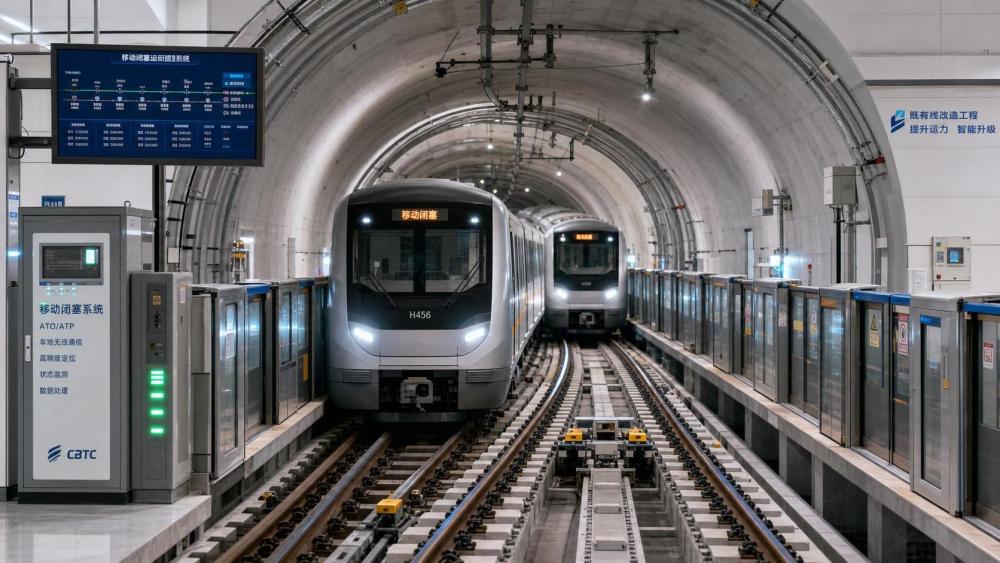
Moving block signaling metro projects are drawing serious attention for one clear reason: they can unlock more capacity without always building new lines.
For dense urban networks, that promise matters. Passenger peaks are sharper, service expectations are higher, and expansion budgets are rarely simple.
A moving block signaling metro also supports more flexible operations. Headways can shrink, train regulation can improve, and recovery after disruption can become faster.
But the decision is not just about technology performance. The harder question is whether migration risk can be controlled across the full network lifecycle.
In practice, selection teams must assess capacity gain, safety assurance, interoperability, retrofit complexity, operational disruption, and long-term supplier strategy together.
That is where many projects become more complicated than early business cases suggest. The value is real, but so are the migration risks.
This article breaks down how to evaluate a moving block signaling metro with a practical lens, especially when existing fixed block or mixed signaling assets remain in service.
Why moving block signaling metro systems change the capacity equation
The core advantage of a moving block signaling metro is dynamic train separation. Safe distance is calculated from real-time train position and braking performance.
That differs from fixed block signaling, where track is divided into predefined sections. Fixed blocks are proven, but they can limit throughput on crowded corridors.
With CBTC moving block control, the network can often support shorter headways. More trains can run per hour, especially where dwell times and junction use are tightly managed.
The benefit is not only about peak capacity. A moving block signaling metro can also improve timetable resilience and reduce spacing inefficiency during off-nominal operations.
On lines with severe crowding, even a small headway reduction can produce meaningful passenger flow gains. That can defer expensive civil expansion.
More importantly, the signaling upgrade can create room for future automation strategies, including higher grades of automatic train operation.
- Higher train frequency on constrained corridors
- Better regulation at junctions and turnbacks
- More accurate train positioning and traffic management
- Stronger support for unattended or semi-automated operation
- Potential lifecycle value through better network utilization
Still, capacity claims should be tested carefully. Not every metro gains the same value from moving block signaling.
Station dwell discipline, rolling stock door reliability, power supply margins, depot throughput, and platform management can all become limiting factors.
Where the migration risks usually appear
A moving block signaling metro is rarely deployed on a blank sheet. Most projects must coexist with legacy assets, old interlockings, and mixed fleet conditions.
That creates migration risk across technical, operational, and contractual layers. Early optimism often fades when transition staging becomes detailed.
Legacy system integration
The first major issue is integration with existing signaling and control equipment. Interfaces may be poorly documented or built around outdated proprietary logic.
Interlockings, ATS layers, platform screen doors, telecom backbones, and depot systems all need interface certainty. Any weak interface can delay commissioning.
Mixed fleet and onboard retrofit
A moving block signaling metro may require onboard equipment changes across several train series. Space, power, cooling, and cabling constraints can differ widely.
Older fleets often need more customization. That pushes cost higher and can create uneven reliability during the first years of operation.
Safety validation and SIL4 assurance
Safety approval is another critical path. A moving block signaling metro must demonstrate robust fail-safe behavior under degraded and abnormal conditions.
That means formal evidence for train localization, communications integrity, braking curves, fallback modes, and software safety processes aligned with SIL4 expectations.
Project disruption during cutover
Cutover is often underestimated. Weekend possessions look manageable on paper, but network dependency chains make change windows fragile.
Any issue in testing, data configuration, or operator training can spill into public service disruption. That becomes a governance issue, not just an engineering issue.
How to evaluate a moving block signaling metro business case
A credible business case should move beyond headline capacity claims. The right question is how much usable capacity the network can actually absorb.
Decision quality improves when benefits are tested against operational constraints, asset condition, maintenance capability, and procurement structure.
A strong moving block signaling metro assessment should include a before-and-after operating model. That model must reflect actual dwell behavior and degraded mode rules.
It should also compare options. In some cases, an upgraded fixed block system, selective CBTC deployment, or corridor-based modernization may offer better value.
Selection criteria that matter more than vendor claims
Vendor presentations often focus on reference lines and theoretical headways. Useful, but not enough for a high-stakes moving block signaling metro decision.
The more reliable indicators are execution depth, migration discipline, interface transparency, and evidence from comparable brownfield networks.
- Request line-specific migration methodology, not generic rollout diagrams.
- Check whether the moving block signaling metro supplier has delivered mixed-mode transitions at similar scale.
- Review software update governance, cybersecurity controls, and configuration management discipline.
- Confirm local maintenance training, spare strategy, and response commitments.
- Test contract clarity on performance guarantees, interface ownership, and acceptance criteria.
Another useful filter is openness. Proprietary dependence may simplify initial integration, but it can limit future competition and raise lifecycle costs.
That does not mean open architecture solves everything. It means the moving block signaling metro strategy should support maintainability and upgrade flexibility over decades.
Practical ways to reduce migration risk
Migration risk can be reduced, but only with disciplined staging. The best projects treat transition design as a primary workstream from day one.
A moving block signaling metro rollout usually performs better when the organization avoids a single, compressed transformation window.
- Build a phased commissioning plan with measurable exit gates.
- Use simulation and shadow operation before full traffic cutover.
- Prioritize interface inventory early, including undocumented legacy behavior.
- Separate safety evidence generation from last-minute acceptance pressure.
- Create joint governance across operations, maintenance, IT, and engineering.
It also helps to define success in operational terms, not only technical terms. A working moving block signaling metro must be maintainable under real service conditions.
That includes fault response, staff competence, software patch control, and robust fallback operation when communications or positioning degrade.
Final decision view
A moving block signaling metro can deliver genuine strategic value. For overloaded urban rail systems, the upside in capacity and operational agility is hard to ignore.
Yet the strongest decisions come from a balanced view. Capacity gains matter only when migration risk, safety validation, and lifecycle support are equally well handled.
In practical terms, the right choice is the moving block signaling metro solution that fits network reality, not the one with the most ambitious headline metrics.
A disciplined evaluation should test corridor demand, asset compatibility, cutover strategy, supplier maturity, and long-term maintainability in one decision frame.
When those factors are aligned, a moving block signaling metro becomes more than a technology upgrade. It becomes a durable capacity strategy with lower long-term operational risk.
Related News
- How safe train control technology reduces headway without raising riskAug 23, 2026Safe train control technology explained: learn how moving block, SIL4 design, and fail-safe control cut headway while protecting braking distance, reliability, and real-world rail capacity.
- EASA Tightens SIL4 Rules for EU-Bound CBTC ExportsAug 09, 2026CBTC exports to the EU face tighter SIL4 compliance as EASA updates rules. Learn the March 2027 deadline, IV&V impact, and how suppliers can protect market access.
- How Unmanned Rail Operations Signaling Affects Headway, Safety, and Recovery TimeAug 07, 2026Unmanned rail operations signaling shapes headway, safety, and recovery time. Discover how CBTC, positioning accuracy, and degraded-mode design determine real driverless rail performance.
- EASA Extends SIL4 Rules to CBTC CertificationAug 07, 2026EASA extends SIL4 rules to CBTC certification, reshaping market access, audits, and procurement. Learn what suppliers, bidders, and EU-focused buyers must prepare now.