




Search
Related News
- 00
0000-00
What drives rail vehicle dynamics cost during high-speed bogie design? - 00
0000-00
How rail transit integration testing exposes interface failures before commissioning - 00
0000-00
How to verify aircraft composite material certification for flight use - 00
0000-00
How to qualify titanium aircraft forgings for fatigue-critical parts - 00
0000-00
How to prepare objective evidence for a Nadcap audit
Tags
CBTC Train Control vs Fixed Block: What Changes in Capacity




CBTC Train Control vs Fixed Block: What Changes in Capacity
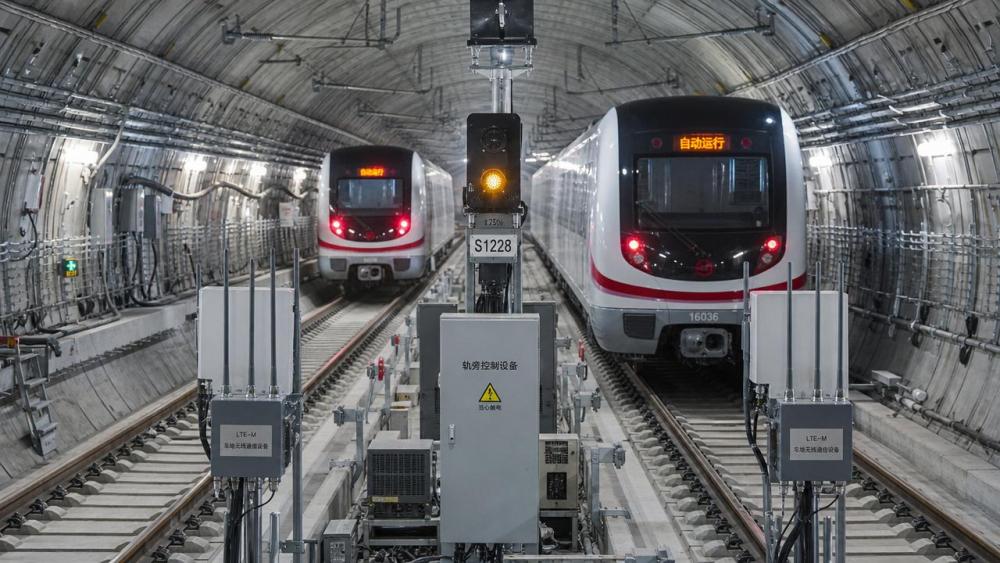
For urban rail upgrades, capacity is rarely just a timetable issue. It is a commercial, operational, and safety decision.
That is why CBTC train control keeps appearing in investment reviews, tender planning, and modernization studies.
Compared with fixed block signaling, CBTC train control changes how trains are separated, how traffic is recovered, and how infrastructure is used.
The most important question is simple: what really changes in line capacity, and what does that mean for a selection decision?
In practical terms, CBTC train control usually supports shorter headways, more stable throughput, and better use of existing assets.
But the value case depends on network constraints, rolling stock readiness, operating rules, and migration risk.
A solid comparison needs more than headline claims. It should link signaling performance to service output, disruption recovery, and lifecycle return.
What Fixed Block Limits First
Fixed block systems divide the track into predefined sections. A train can enter the next section only when operating rules say it is safe.
This approach is proven and widely understood. It also becomes restrictive when ridership grows and timetable density increases.
The core limitation is that separation is based on fixed infrastructure logic, not the train’s exact real-time position and braking profile.
As a result, safe spacing often includes conservative margins. Those margins protect safety, but they also consume usable capacity.
Another issue appears during disturbances. A delayed train in a fixed block environment can create knock-on delays faster than many planners expect.
Recovery can be slow because train spacing, route release, and control logic are less flexible.
For lines already close to peak saturation, the fixed block model often reaches a ceiling before platforms, depots, or vehicles do.
Typical fixed block capacity constraints
- Longer minimum headways driven by block length and conservative safety margins.
- Lower service stability when dwell time variation starts to accumulate.
- Less efficient recovery after late departures, route conflicts, or temporary speed restrictions.
- Higher dependence on civil changes if extra capacity is needed.
How CBTC Train Control Changes Capacity Logic
CBTC train control works differently because it relies on continuous train location updates and more precise movement authority management.
In many architectures, this allows trains to run with separation based more closely on actual conditions.
That is the real reason capacity can improve. The system reduces wasted spacing, not safety discipline.
When people describe moving block benefits, they usually mean better precision in train spacing and control response.
For a business case, the first measurable effect is shorter achievable headway. The second is more consistent throughput across the peak period.
CBTC train control also improves traffic management during disruptions. That point is often undervalued in early procurement discussions.
A line does not gain value only from running more trains. It gains value from keeping service dependable when operations become messy.
What usually improves with CBTC train control
- Shorter headways through more precise train separation.
- Higher trains-per-hour performance in peak windows.
- Better schedule adherence under variable dwell conditions.
- Faster service recovery after minor incidents.
- Greater operating flexibility for turnbacks, merges, and branch management.
Capacity Is More Than Headway
One common mistake is reducing the whole comparison to headway alone. That is too narrow for a real selection decision.
Capacity should be read across several layers: trains per hour, passenger flow, timetable resilience, and recoverability after disruption.
CBTC train control often performs better because it supports these layers together, not just one isolated indicator.
For example, a line may achieve a theoretical headway target, but still fail to deliver usable capacity if dwell management remains unstable.
In that case, the right question becomes whether CBTC train control can stabilize operations enough to protect real throughput.
This is where integration matters. Vehicle performance, platform layout, power supply, depots, and automatic train operation all affect results.
From a commercial angle, the strongest projects are the ones that connect signaling upgrade value to network-wide performance metrics.
Capacity evaluation dimensions
- Minimum achievable headway in normal conditions.
- Sustained trains-per-hour performance during peak service.
- Passenger throughput at constrained stations and junctions.
- Delay propagation under disturbance scenarios.
- Time needed to return to planned service.
Where CBTC Train Control Creates the Strongest Business Case
CBTC train control is not equally valuable on every line. The business case becomes stronger when bottlenecks are clearly signaling-related.
Dense metro corridors, high-frequency suburban sections, and networks with difficult junctions often see the clearest returns.
Lines facing fleet expansion without easy civil enlargement are also strong candidates.
In those cases, CBTC train control can unlock hidden infrastructure value by using track and rolling stock more efficiently.
The value case is even better when the upgrade also improves reliability, automation readiness, and maintenance visibility.
That said, the strongest signal is not marketing language. It is measurable operational pain that the current system cannot solve economically.
What to Check Before Choosing CBTC Train Control
A good procurement decision should test promises against operational reality. That means looking beyond theoretical capacity claims.
Start with the current constraint map. Is the main problem signaling, dwell time, power, rolling stock, or terminal turnback?
If signaling is only a secondary bottleneck, capacity gains may underperform expectations.
Migration strategy is another major issue. Brownfield conversion can affect cost, schedule, and service continuity more than technology brochures suggest.
Interoperability, cybersecurity, SIL4 assurance, fallback operation, and onboard retrofit scope also deserve early review.
In real projects, lifecycle maintenance capability matters almost as much as commissioning performance.
Practical due diligence checklist
- Verify the current root cause of capacity loss.
- Compare theoretical and sustained headway values.
- Review brownfield migration complexity and possession needs.
- Check onboard equipment retrofit impact across the fleet.
- Assess supplier support, spare strategy, and software lifecycle plan.
- Model disruption recovery, not only normal operations.
A Clearer Decision Framework
So, what changes in capacity when comparing CBTC train control with fixed block? Usually, both the quantity and quality of capacity improve.
Quantity means more trains can run safely. Quality means service remains more stable when the network is under pressure.
That combination is why CBTC train control often becomes the preferred option for dense urban corridors and expansion-limited systems.
Still, the right decision is not automatic. It depends on whether signaling is the real bottleneck and whether the upgrade plan is commercially disciplined.
The strongest evaluations connect technology selection to headway, reliability, resilience, retrofit scope, and lifecycle economics in one model.
If that analysis shows clear operational relief without disproportionate migration risk, CBTC train control is not just a signaling upgrade.
It becomes a capacity strategy, a service quality strategy, and a long-term asset value decision.
The next practical step is to test the line with scenario-based modeling, then align supplier evaluation with measurable capacity outcomes.
Related News
- How safe train control technology reduces headway without raising riskAug 23, 2026Safe train control technology explained: learn how moving block, SIL4 design, and fail-safe control cut headway while protecting braking distance, reliability, and real-world rail capacity.
- EASA Tightens SIL4 Rules for EU-Bound CBTC ExportsAug 09, 2026CBTC exports to the EU face tighter SIL4 compliance as EASA updates rules. Learn the March 2027 deadline, IV&V impact, and how suppliers can protect market access.
- How Unmanned Rail Operations Signaling Affects Headway, Safety, and Recovery TimeAug 07, 2026Unmanned rail operations signaling shapes headway, safety, and recovery time. Discover how CBTC, positioning accuracy, and degraded-mode design determine real driverless rail performance.
- EASA Extends SIL4 Rules to CBTC CertificationAug 07, 2026EASA extends SIL4 rules to CBTC certification, reshaping market access, audits, and procurement. Learn what suppliers, bidders, and EU-focused buyers must prepare now.