




Search
Related News
- 00
0000-00
What drives rail vehicle dynamics cost during high-speed bogie design? - 00
0000-00
How rail transit integration testing exposes interface failures before commissioning - 00
0000-00
How to verify aircraft composite material certification for flight use - 00
0000-00
How to qualify titanium aircraft forgings for fatigue-critical parts - 00
0000-00
How to prepare objective evidence for a Nadcap audit
Nickel Based Creep Alloy: What Determines High-Temperature Service Limits?




Nickel Based Creep Alloy: What Determines High-Temperature Service Limits?
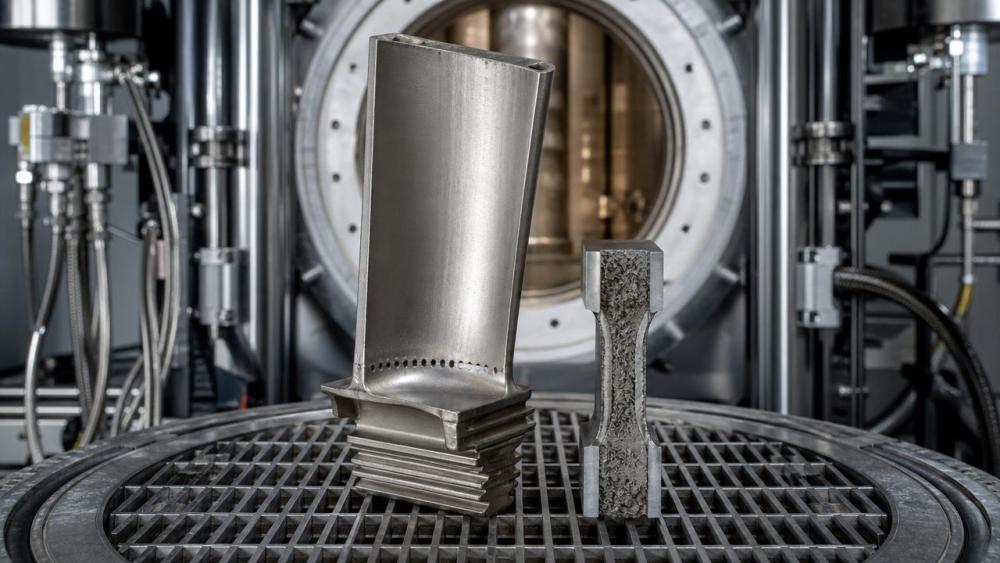
A nickel based creep alloy defines how far high-temperature components can safely perform in turbines, aerospace structures, and other heat-critical systems.
But the real service limit never comes from one property alone.
It comes from a balance between temperature, stress, time, environment, and manufacturing quality.
That is why the same nickel based creep alloy can perform well in one engine zone and fail early in another.
In practical engineering, the question is not only “How hot can it go?”
The better question is “How long can it survive at that temperature under real loading conditions?”
For aerospace and advanced transport programs, that difference matters.
It affects turbine blade life, casing integrity, hot-section maintenance intervals, and total lifecycle cost.
This article breaks down what sets the real limit of a nickel based creep alloy and how to assess it more accurately.
Why high-temperature service limits are not a single number
A datasheet often shows a maximum use temperature.
However, that value is only a simplified reference.
A nickel based creep alloy does not fail because temperature alone becomes too high.
It usually fails because temperature works together with stress and exposure time.
At elevated temperature, atoms move more easily.
That slow atomic movement leads to creep deformation, microstructural coarsening, oxidation, and eventually crack initiation.
So the service limit of a nickel based creep alloy is really a time-dependent limit.
A part may withstand 1050°C briefly, yet become unacceptable for 20,000-hour service.
This is especially important in aero-engine blades, vanes, combustor hardware, and heat-exposed structural parts.
The more realistic view includes four linked questions:
- What is the metal temperature during service?
- What stress level does the component actually carry?
- How many hours or cycles must it survive?
- How aggressive is the surrounding environment?
Once these conditions change, the practical limit of the nickel based creep alloy changes as well.
Composition: the first driver of creep resistance
Composition is where temperature capability begins.
Nickel provides the matrix stability needed for high-temperature strength.
Then alloying elements control what that matrix can resist.
Aluminum and titanium support gamma prime strengthening.
Chromium improves oxidation and corrosion resistance.
Cobalt, tungsten, molybdenum, tantalum, rhenium, and niobium influence solid-solution strengthening and phase stability.
In simple terms, a stronger nickel based creep alloy resists deformation by making dislocation movement more difficult.
But there is a trade-off.
If composition becomes too heavily optimized for strength, the alloy may become harder to cast, weld, repair, or stabilize over long service periods.
It may also become more sensitive to brittle topologically close-packed phases.
This is why material selection is not about chasing the highest published strength value.
It is about selecting a nickel based creep alloy with the right balance for the target duty profile.
What composition usually needs to balance
- Creep strength at the intended temperature range
- Oxidation and hot corrosion resistance
- Castability or forgeability
- Heat-treatment response
- Repair and joining compatibility
- Long-term phase stability
Microstructure: where service limits become real
Even the best chemistry can underperform if the microstructure is wrong.
For a nickel based creep alloy, grain size, grain orientation, precipitate shape, and carbide distribution all matter.
That is why equiaxed, directionally solidified, and single-crystal forms can show very different service limits.
Grain boundaries are useful in some situations, but they are also weak points during high-temperature creep.
Reducing transverse grain boundaries can dramatically improve creep life in turbine applications.
This explains the value of directional solidification and single-crystal blade technology.
The gamma prime phase is equally important.
Its size, fraction, and spacing strongly influence the creep behavior of a nickel based creep alloy.
If precipitates coarsen too much during service, strength drops.
If heat treatment is inconsistent, property scatter increases.
In real procurement and qualification work, this means process control matters almost as much as alloy design.
Microstructural checks that affect service confidence
- Grain structure and orientation quality
- Gamma prime morphology and volume fraction
- Carbide and boride distribution
- Porosity, inclusions, and segregation level
- Heat-treatment consistency across batches
Stress, temperature, and time: the core creep equation
This is the center of the whole issue.
A nickel based creep alloy may look excellent in short-term tensile data and still disappoint in long-term creep rupture tests.
That happens because creep is controlled by temperature, stress, and exposure duration together.
Higher stress accelerates deformation.
Higher temperature accelerates diffusion.
Longer time allows damage to accumulate.
This is why Larson-Miller parameters, creep curves, and rupture life plots remain useful in material comparison.
They help estimate how a nickel based creep alloy behaves beyond short test windows.
Still, test interpretation must stay realistic.
Lab conditions are cleaner and more stable than actual hot-section service.
Stress concentrations, thermal gradients, vibration, and transient overloads can reduce the real margin.
A practical way to judge the limit
- Define actual metal temperature, not only gas temperature.
- Map steady and cyclic stress in the critical region.
- Set target life in hours, cycles, and inspection intervals.
- Check creep rupture data against realistic safety margins.
- Include local stress raisers such as holes, fillets, and cooling passages.
This approach gives a more useful limit than a simple maximum temperature claim.
Oxidation, corrosion, and coating interaction
Many service assessments focus only on mechanical creep.
In reality, environmental attack often sets the earlier limit.
A nickel based creep alloy may retain strength, yet lose section thickness or crack resistance because of oxidation or hot corrosion.
This becomes more serious in engines using aggressive fuels, marine exposure, contaminated air, or repeated thermal cycling.
Protective oxide scale quality matters.
So does coating compatibility.
A thermal barrier coating can lower metal temperature and extend life.
But if coating adhesion, diffusion behavior, or thermal expansion matching is poor, new failure risks appear.
So the service limit of a nickel based creep alloy is often a system limit, not just a base-metal limit.
The alloy, coating, cooling design, and operating environment must work together.
Manufacturing route and defect control
From recent industry changes, manufacturing consistency has become an even clearer signal.
A nickel based creep alloy is only as reliable as the process used to make it.
Casting defects, residual segregation, heat-treatment variation, and repair history can all reduce actual life.
This also explains why certification, traceability, and process audits matter in aerospace supply chains.
For example, two suppliers may offer the same nominal nickel based creep alloy.
Yet their creep performance may differ because cleanliness, solidification control, and inspection discipline are not equal.
In business terms, this means material grade alone is not enough for supplier evaluation.
Capability evidence matters.
What buyers and engineers should verify
- Melting and remelting route
- Casting or forging process window
- Heat-treatment records and control limits
- NDT coverage and defect acceptance standards
- Repair limits, weld procedures, and reinspection rules
- Qualification data tied to actual production practice
How to select the right nickel based creep alloy
Selection should start from the component mission, not from the alloy name.
That sounds obvious, but in real projects it is often skipped.
A nickel based creep alloy for a turbine blade root is not chosen the same way as one for a combustor, seal part, or structural hot bracket.
The best decision usually comes from matching several factors at once.
This also means a more expensive nickel based creep alloy is not automatically the better commercial decision.
If the operating temperature does not justify it, cost and processing complexity may outweigh the benefit.
Final takeaway for technical evaluation
The high-temperature service limit of a nickel based creep alloy is set by interaction, not by a single label.
Composition provides the potential.
Microstructure makes that potential real.
Stress, temperature, and time define the creep demand.
Oxidation, corrosion, coatings, and process quality decide whether the alloy can keep performing in service.
In practical evaluation work, the most useful question is not the highest advertised temperature.
It is whether the nickel based creep alloy can hold its structure, dimensions, and damage tolerance for the required life.
That is the standard that supports safer engines, more reliable hot-section parts, and better long-term procurement decisions.
If selection or sourcing is the next step, begin with real duty conditions, then compare alloy data, process capability, and lifecycle risk together.
Related News
- How to evaluate a thermal barrier coating supplier for turbine bladesSep 07, 2026Thermal barrier coating supplier evaluation guide for turbine blades—compare process control, approvals, testing, traceability, and lifecycle value with confidence.
- When do ultra high temp materials outperform nickel superalloys?Aug 31, 2026Ultra high temp materials outperform nickel superalloys when heat, cooling demand, weight, and lifecycle limits require smarter material choices. Explore key selection factors.
- What to check before choosing a single crystal turbine blade supplierAug 25, 2026Single crystal turbine blade supplier selection starts with process control, alloy capability, cooling feature accuracy, traceability, and lead-time risk. Learn what buyers should check before requesting quotes.
- How Film Cooling Hole Design Affects Turbine Blade Cooling EfficiencyAug 14, 2026Film cooling hole design directly impacts turbine blade cooling efficiency, durability, and performance—discover how geometry, angle, and spacing influence real results.